Grinding mushrooms: from dry raw material to powder and extract
What mushroom powder is under the Codex standard, how particle size affects the yield of compounds during extraction, where useful grinding ends and how to store the powder.
Author: Volodymyr Sobol
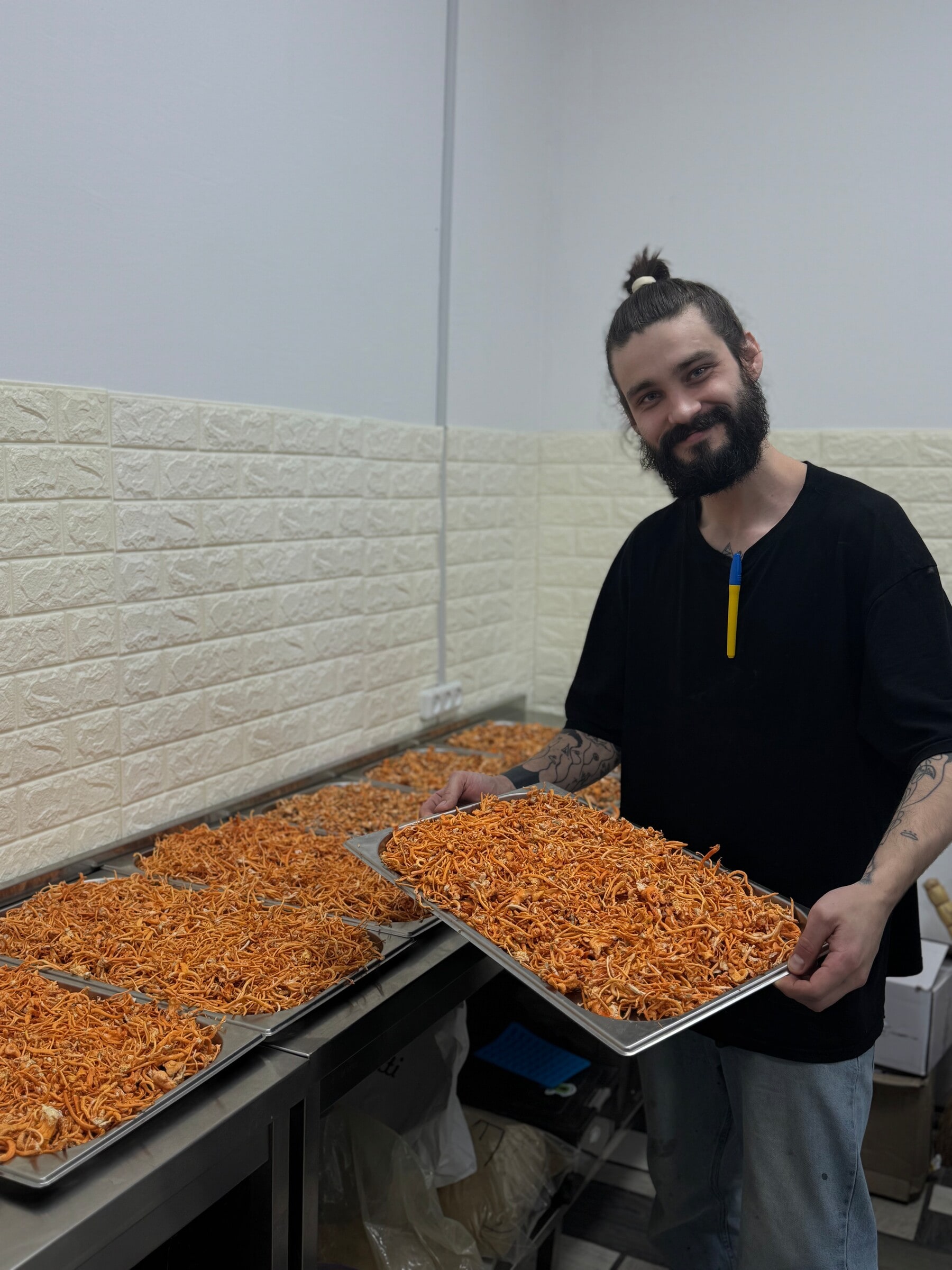
Grinding is a short step between drying and extraction, but a good deal depends on it. We grind the dry raw material, and from there it goes two ways: part of it becomes mushroom powder, the rest becomes raw material for extraction. The two paths have different requirements. The powder must be uniform and dry so that it does not cake during storage. Raw material for extraction must be ground finely enough for the solvent to reach the mushroom tissue, but not so finely that the fine fraction clogs the filter.
This article looks at what counts as mushroom powder under the international food standard, how particle size affects the yield of compounds during extraction, where the limit of useful grinding lies, why it is important not to overheat the raw material during grinding, what makes reishi special and how to store the finished powder. How the raw material is brought to a dry state is covered in the article on drying.
What mushroom powder is
The international food standard Codex Alimentarius for edible fungi and fungus products (CXS 38-1981) distinguishes two types of ground raw material:
- mushroom grits — coarsely ground dried mushrooms of a single species;
- mushroom powder — dried mushrooms of a single species, ground so finely that the powder passes through a sieve with 200 µm openings.
For both, the standard sets a moisture limit: no more than 13% for grits and no more than 9% for powder, by mass. Mineral impurities (sand, soil) in the powder must not exceed 2%. In a separate clause, the standard points out that dried mushrooms, grits and powder must be protected from moisture and from insects, "especially moths and mites".
Codex is a reference point for international trade, not the law of every country, but it is the convenient benchmark for what can honestly be called a powder.
Why grind before extraction
The general rule for extracting plant and mushroom raw material is stated in a review of extraction methods in the journal Chinese Medicine: the finer the particles, the better the result. The same review also names the limit: particles that are too fine retain dissolved compounds and make filtration harder.
For mushrooms there are several direct measurements.
| Mushroom | What was compared | Result | Source |
|---|---|---|---|
| Reishi (Ganoderma lucidum) | triterpenoid yield from 30, 50, 80 and 300 mesh powder | 0.74% → 0.75% → 0.78% → 1.09% | Zhang F. J. et al., 2018 |
| Lion's mane (Hericium erinaceus) | polysaccharide yield from raw material sifted through 40 and 60 mesh sieves | 4.29% and 5.87% | review by Ge F. et al., 2025 |
| Shiitake (Lentinula edodes), stems | polysaccharide yield in the first minute | ultrafine powder 1.37%, 40 mesh powder 0.14% | Zhang H. N. et al., 2025 |
| Cordyceps (Cordyceps militaris) | ultrafine grinding to particles smaller than 15 µm | cordycepin yield higher by 9.49% | Shi H. et al., 2019 |
Mesh is the number of sieve openings per inch: the higher the number, the finer the sieve. For reference: a 30 mesh sieve has openings of about 0.6 mm, 60 mesh about 0.25 mm, 300 mesh about 0.05 mm.
The table comes with caveats. The two figures for lion's mane are taken from different studies, and the authors of the review themselves write that the relationship between particle size and polysaccharide yield still needs to be studied. We could not find direct comparisons for oyster mushroom, king oyster or pioppino. Still, the direction is the same in all the studies: ground raw material releases compounds faster and more completely than pieces do.
The explanation is simple. A solvent works only where it touches the tissue. The smaller the particles, the larger the contact area and the shorter the path for compounds from inside a particle to the outside. In the shiitake study, the polysaccharide yield depended directly on how much the grinding had destroyed the cell walls.
The limit of useful grinding
A 2026 review in the journal Foods defines conventional grinding as grinding after which the median particle size exceeds 100 µm, and ultrafine grinding as grinding after which it is below about 25 µm. Ultrafine grinding noticeably changes the properties of the powder:
- lion's mane powder had a mean particle size of 243.6 µm after a roller mill and 5.5 µm after a jet mill; its solubility in water rose from 35.2% to 53.1%, and proteins and polysaccharides were extracted better (Phat C. et al., 2015);
- in powder made from shiitake stems, the median particle size after a jet mill fell to 3.21 µm, and half of the polysaccharides dissolved 8 minutes faster than from conventional powder (Wang W. et al., 2023).
But beyond a point the effect turns against grinding. Cordyceps powder ground in a ball mill began to clump at the 16th hour (An Y. et al., 2019). In chaga powder, particle size was smallest after 2 hours of grinding and then grew again. The authors of the Foods review list the risks of excessive grinding: particles sticking together, breakdown of heat-sensitive compounds, poorer taste and high energy costs. A very fine powder also absorbs more moisture and oxidises faster.
For extraction, the conclusion is simple: nanoparticles are not needed. It is enough to grind the raw material so that the solvent wets the whole mass evenly and so that after extraction it can be separated by filtration. A powder that is too fine gives a cloudy extract that is hard to filter.
Heat during grinding
During grinding, the raw material heats up from friction. The Foods review states specifically that strong frictional heat during coarse grinding can irreversibly destroy nutrients and biologically active compounds, and that prolonged grinding in ball mills causes noticeable heating. Jet mills grind with a stream of compressed air: as the air expands it absorbs heat, so the chamber hardly heats up. Modern mills increasingly have cooling modules, for example with liquid nitrogen.
We could not find direct measurements of how mushrooms specifically heat up during grinding. The closest example is spices. During conventional grinding of turmeric, the powder heated up to 71 °C, and if the raw material was cooled to 5 °C before grinding, to 63 °C (Shanmugasundaram et al., 2018).
Why this matters for mushrooms can be seen from drying studies. In a study of lion's mane and brown birch bolete (Leccinum scabrum), the greatest losses of phenolic compounds and ergosterol occurred during drying at 70 °C; in lion's mane the content of phenolic compounds fell by 17% (Gąsecka M. et al., 2020). Grinding is a shorter process than drying, but the logic is the same: the longer the raw material is heated, the more it loses. So it is better to grind in batches and let the raw material and the mill cool down than to grind one large batch for a long time.
Reishi is a special case
Reishi has a woody texture and is not considered a culinary mushroom: its fruiting body is as hard as bark. Most of the triterpenoids, of which more than 380 have been described in reishi, are concentrated in the fruiting body and the spores (Plosca M. P. et al., 2025).
Dried whole, the fruiting body is hard to grind. So reishi is cut while still fresh. In one drying study, fresh fruiting bodies with a moisture content of about 78% were cut into 2 × 2 cm slices 2 mm thick, dried, and then ground in a mechanical mill (Naseri M. et al., 2023).
Reishi spore powder is a separate product. The spore has a hard double wall, and it is deliberately broken so that the spore releases its contents. In a 2024 study, ultrafine grinding at low temperature preserved the structure of the spore powder better than mechanical grinding at room temperature (Qi Y. et al., 2024). This article deals only with fruiting bodies.
Fermented mycelium on grain
Grain overgrown with mycelium after solid-state fermentation is ground in the same way as mushrooms, only after it has been fully dried. In published protocols it looks like this:
- lion's mane on wheat: the fermentation product was sterilised for 60 minutes at 121 °C, dried with hot air at 50 °C and ground into powder (Sun S. K. et al., 2021);
- oyster mushroom on legumes: the mass was freeze-dried, ground and sifted through a 60 mesh sieve, and the flour was stored in a refrigerator (Noori S. M. A. et al., 2025).
The specifications of commercial powders of mycelium on oats state that at least 95% of the powder passes through a 60 mesh sieve and that the moisture content is 3.5–3.9% (Chrysostomou P. P. et al., 2024; Mahadevan K. et al., 2025). These studies were carried out together with the powder manufacturer, so they are more an example of an industrial specification than an independent assessment.
What equipment is used for grinding
The mills most often found in studies of mushroom powder are:
- hammer mills — for shiitake (powder with particles smaller than 0.5 mm), oyster mushroom (60 mesh sieve), reishi;
- knife mills — including for reishi;
- jet, ball and vibratory mills — for ultrafine grinding.
The Foods review compares the types of mill. A jet mill gives particles of 1–20 µm and hardly heats the raw material. A ball mill gives 1–100 µm, but heats the raw material through friction, and prolonged friction of the balls against the chamber walls can introduce fine particles of metal or ceramic into the powder. A vibratory mill gives 1–50 µm and also heats the raw material quickly unless it is cooled.
Dust
Any fine organic powder burns. The US Occupational Safety and Health Administration (OSHA) explicitly classes flour, starch, spices and grain as combustible dust: if such dust is suspended in the air at a certain concentration, it can explode. An explosion requires five conditions: dust, an ignition source, oxygen, a cloud of dust in the air and an enclosed space. OSHA considers dust with particles smaller than 420 µm hazardous, that is, dust that passes through a No. 40 sieve. Mushroom powder is exactly that.
In practice this means an extractor or dust collector next to the mill, regular removal of dust from surfaces, and no open flames or sparks nearby.
Storing the powder
Dry powder readily absorbs moisture from the air. In a study of button mushroom powder, hygroscopicity was 9.8% for powder dried in a drying oven and 11.2% for freeze-dried powder; water activity was 0.67 and 0.53 (Shams R. et al., 2022). The authors consider a water activity of 0.20–0.40 microbiologically safe for dry products. The finer the powder, the more it absorbs moisture, cakes and oxidises (Foods review, 2026).
So the powder is packed airtight immediately after grinding. In studies of mushroom powders, they were stored in sealed bags or closed containers at 4 °C. Codex separately requires the powder to be protected from moisture, moths and mites.
What this means in practice
- We grind only well-dried raw material: damp powder cakes and spoils.
- Hard, large fruiting bodies, like those of reishi, we cut before drying, not after.
- We choose the degree of grinding to suit the purpose: for powder — fine and uniform; for extraction — such that the solvent wets the whole mass and the extract can be filtered.
- We grind in batches so that the raw material does not overheat.
- An extractor next to the mill; we remove dust regularly.
- We pack the powder airtight straight away and store it in a dry, cool place.
The next step for raw material that goes to extraction is dual extraction with water and ethanol.
Sources
Standards and safety
- Codex Alimentarius. General Standard for Edible Fungi and Fungus Products, CXS 38-1981. FAO/WHO.
- OSHA. Combustible Dust and Hazard Communication Guidance for Combustible Dusts, OSHA 3371-08, 2009.
Particle size and extraction
- Zhang Q. W., Lin L. G., Ye W. C., 2018. Techniques for extraction and isolation of natural products: a comprehensive review. Chinese Medicine 13, 20.
- Zhang F. J., Qu J. T., Wang Q., 2018. 超微粉碎技术对灵芝中三萜类成分溶出的影响 (effect of ultrafine grinding on the yield of reishi triterpenoids). China Pharmacy 29(5).
- Ge F. et al., 2025. Bioactive Polysaccharides from Hericium erinaceus: Extraction, Structure, Bioactivities, and Applications. Molecules 30(8), 1850.
- Zhang H. N., Liu Y., Zhang H., Wan Q. Z., Wang Y., 2025. Effect of different drying and grinding techniques on the physicochemical properties and biological activities of fungal polysaccharides. Food & Medicine Homology 2, 9420045.
- Shi H., Zhang M., Bhandari B., Wang Y., Yi S., 2019. Effects of superfine grinding on the properties and qualities of Cordyceps militaris and its spent substrate. Journal of Food Processing and Preservation 43(11), e14169.
Ultrafine grinding and powder properties
- Yang J. et al., 2026. Superfine Grinding for Edible Powders: Mechanisms, Quality Regulation, Limitations, and Synergistic Strategies. Foods 15(12), 2050.
- Phat C. et al., 2015. Characterization of Hericium erinaceum powders prepared by conventional roll milling and jet milling. Journal of Food Engineering 145, 19–24.
- Wang W. et al., 2023. Article on ultrafine grinding of shiitake stems, in Chinese. Science and Technology of Food Industry 44(23), 101–109.
- An Y., Sun Y., Zhang M., Adhikari B., Li Z., 2019. Effect of ball milling time on physicochemical properties of Cordyceps militaris ultrafine particles. Journal of Food Process Engineering 42(4), e13065.
- Shams R. et al., 2022. Effect of Maltodextrin and Soy Protein Isolate on the Physicochemical and Flow Properties of Button Mushroom Powder. Frontiers in Nutrition 9, 908570.
Heat
- Shanmugasundaram et al., 2018. Low temperature grinding of turmeric. Agricultural Engineering International: CIGR Journal 20(3), 215–220.
- Gąsecka M. et al., 2020. The effect of drying temperature on bioactive compounds and antioxidant activity of Leccinum scabrum and Hericium erinaceus. Journal of Food Science and Technology 57(2), 513–525.
Reishi
- Plosca M. P., Chiș M. S., Fărcaș A. C., Păucean A., 2025. Ganoderma lucidum — From Ancient Remedies to Modern Applications: Chemistry, Benefits, and Safety. Antioxidants 14(5), 513.
- Chrysostomou P. P. et al., 2024. A toxicological assessment of Ganoderma lucidum and Cordyceps militaris mushroom powders. Frontiers in Toxicology 6, 1469348.
- Naseri M., Movagharnejad K., Nanvakenari S., 2023. Comparison of the dried properties of Ganoderma lucidum produced by the convective dryer and infrared dryer. Scientific Reports 13, 12636.
- Qi Y. et al., 2024. Effects of different wall-breaking methods on the nutrient release of Ganoderma lucidum. Journal of the Science of Food and Agriculture 104(11), 6657–6666.
Fermented mycelium and mills
- Sun S. K., Ho C. Y., Yen W. Y., Chen S. D., 2021. Effect of Water and Ethanol Extracts from Hericium erinaceus Solid-State Fermented Wheat Product on the Protection and Repair of Brain Cells in Zebrafish Embryos. Molecules 26(11), 3297.
- Noori S. M. A., Hojjati M., Sorourian R., 2025. Enhancing Nutritional Quality and Functionality of Legumes: Application of Solid-State Fermentation With Pleurotus ostreatus. Food Science & Nutrition 13, e70783.
- Mahadevan K. et al., 2025. A toxicological assessment of Hericium erinaceus (Lion's mane) and Trametes versicolor (Turkey tail) mushroom powders. Frontiers in Toxicology 7, 1651442.
- Examples of grinding in studies of mushroom powder: Foods 14(3), 539, 2025 (oyster mushroom), Foods 14(14), 2428, 2025 (shiitake), AMB Express 15, 104, 2025 and Veterinary Sciences 11, 675, 2024 (reishi).
Related mushrooms
Materials for growing
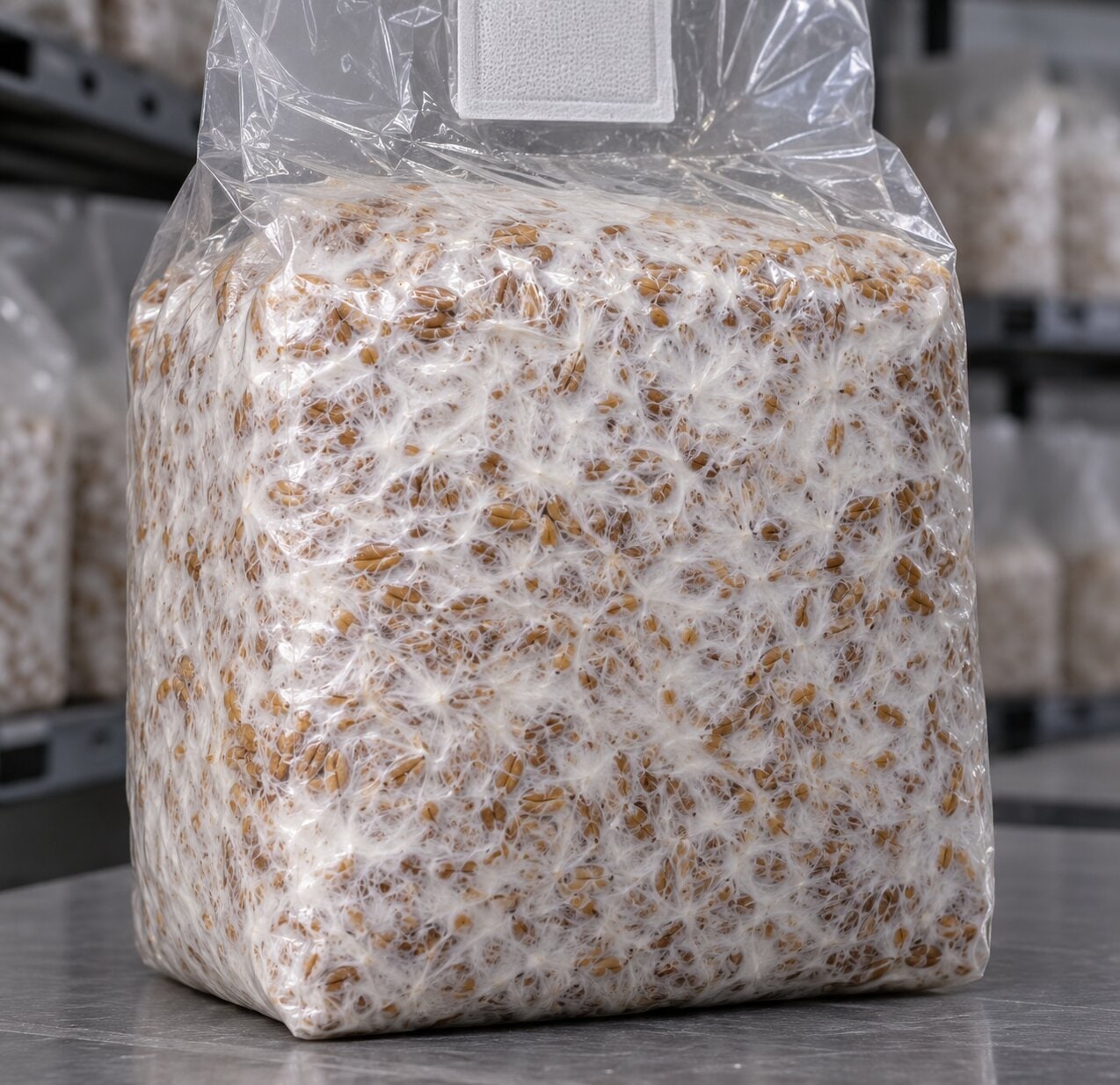
Master grain spawn — 5 kg bag
GREEBZ master grain spawn of the chosen culture. A pure culture on sterile grain substrate. Available in a choice of cultures — list the ones you need in your request. Master spawn is intended for further propagation and the production of production spawn. Grown from a pure culture under sterile laboratory conditions. Specifications - Format: grain spawn in a filter bag (grow bag), 5 kg - Substrate: sterile grain - Producer: GREEBZ
Made by us
On request
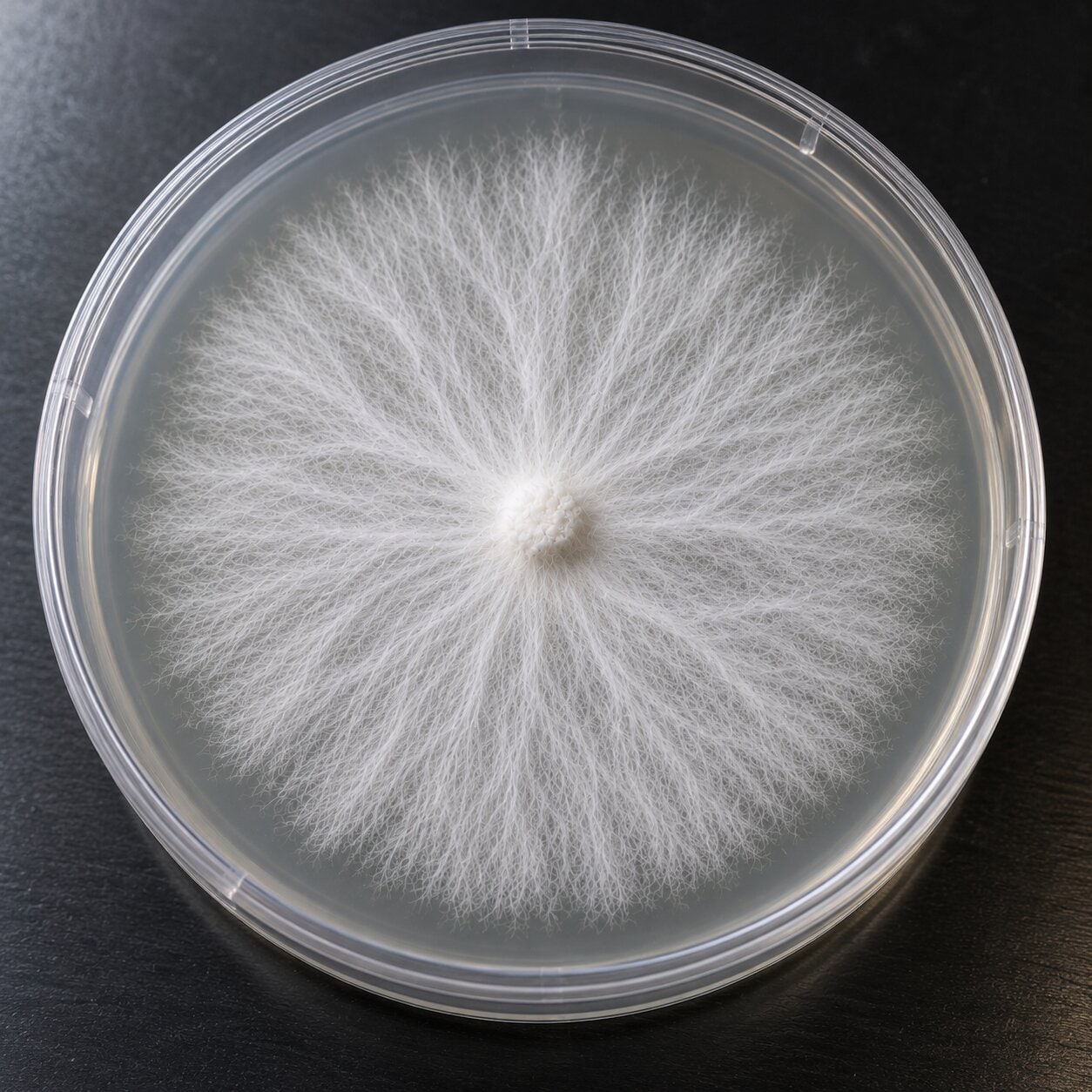
Pure mushroom culture — Petri dish
Pure GREEBZ mushroom cultures on a sterile agar nutrient medium. Available in a choice of cultures — list the ones you need in your request. Pure mushroom cultures grown under laboratory conditions on a sterile agar nutrient medium in Petri dishes. They are intended for further propagation of the culture, transfer to fresh nutrient medium and the production of grain spawn. One chosen culture = one Petri dish. Specifications - Format: pure culture on a sterile agar nutrient medium in a Petri dish - Producer: GREEBZ
Made by us
On request
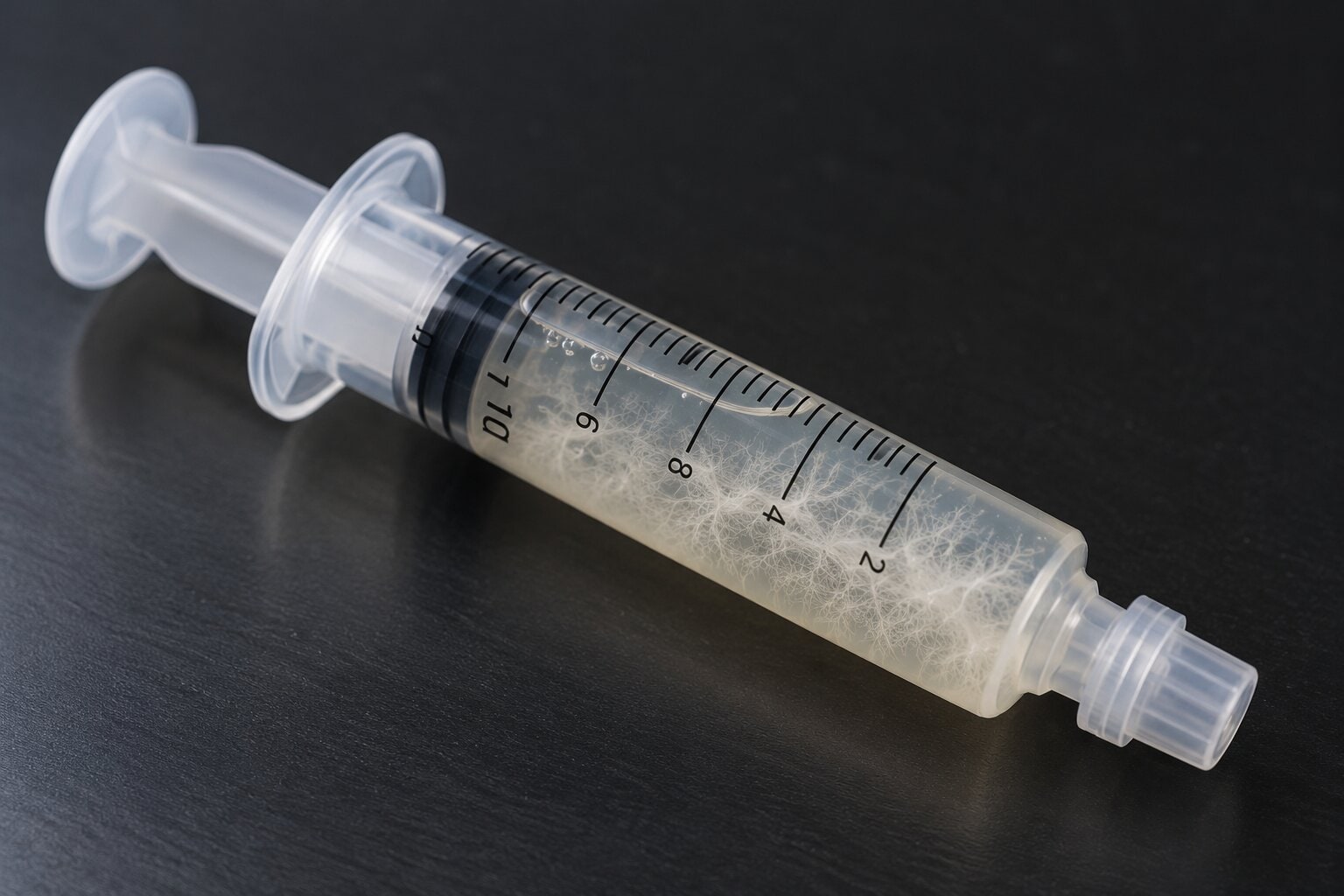
Liquid culture — 10 ml Luer Lock syringe
Pure GREEBZ mushroom liquid cultures. Available in a choice of cultures — list the ones you need in your request. The liquid culture is grown from a pure culture under sterile laboratory conditions. It is intended for inoculating grain substrate and producing grain spawn. Specifications - Format: liquid culture in a sterile Luer Lock syringe, 10 ml - Producer: GREEBZ
Made by us
On request
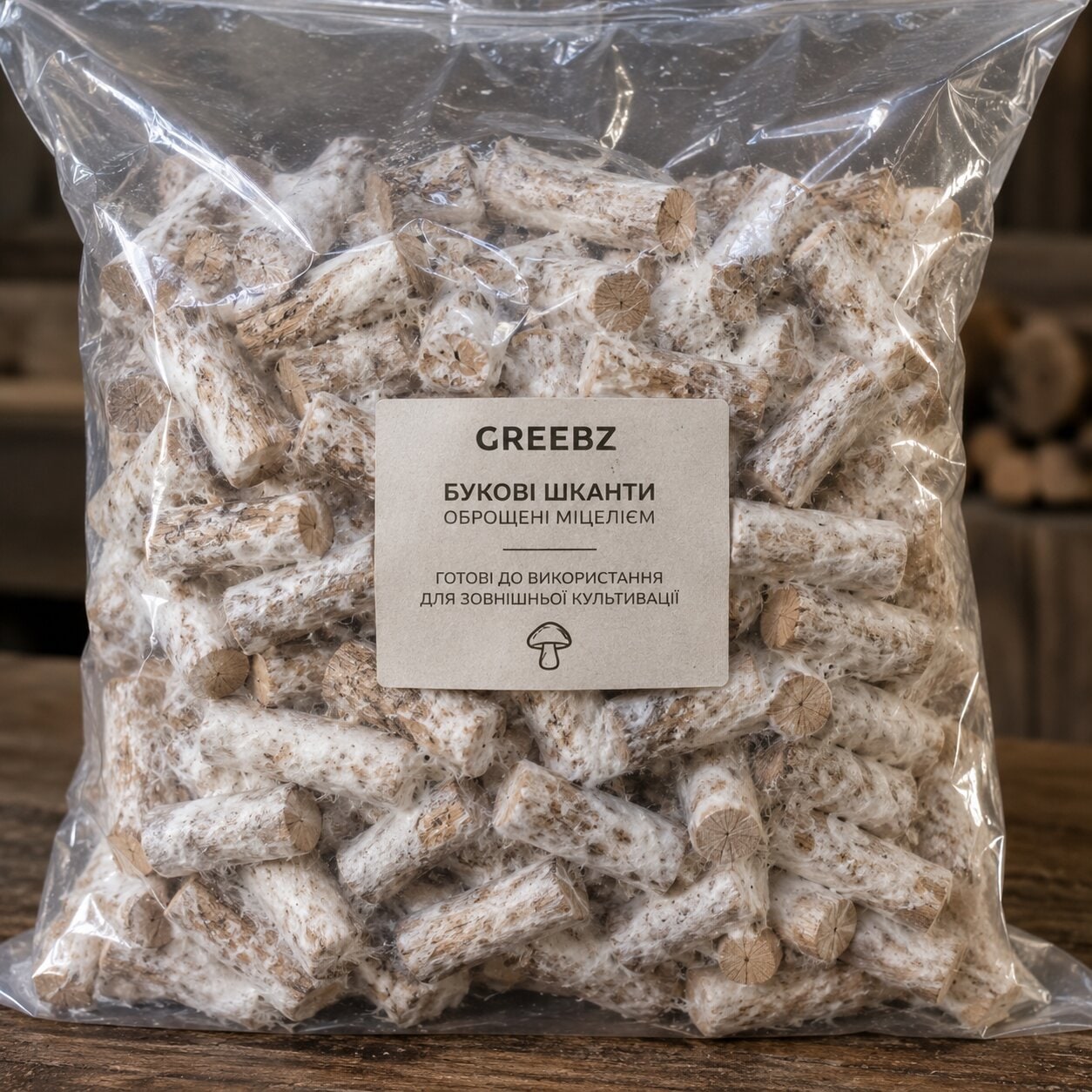
Beech plug spawn colonised with mycelium
Beech dowels colonised with the mycelium of the chosen culture. Ready to use for growing mushrooms outdoors on wood. Pack of 250–300 g. Available in a choice of cultures — list the ones you need in your request. One chosen culture = one pack of dowels. What's included - Beech dowels colonised with the mycelium of the chosen culture Important: wax and cotton wadding are not included. What you'll need for inoculation For working with the dowels we also recommend preparing: - Wax — to seal the holes after inserting the dowels. It closes the inoculation site and protects it from drying out and from the outside environment. - Cotton wadding — can be used for extra treatment and closing of the prepared holes. You will also need: - a drill; - a drill bit of the right diameter for the dowel; - a tool for inserting the dowels; - wood suitable for cultivation. Wax, cotton wadding and tools are bought separately. Specifications - Format: beech dowels colonised with the mycelium of the chosen culture - Pack weight: 250–300 g - Producer: GREEBZ
Made by us
On request
Other entries
Need help with your process?
Describe what's happening, even if you don't know the cause. We'll work it out together.