Concentrating extract: rotary evaporator, vacuum, combining fractions
How vacuum lowers the boiling point, what settings makers advise and studies use for mushroom extracts, why water and ethanol fractions are concentrated apart, and what to do with foam.
Author: Volodymyr Sobol
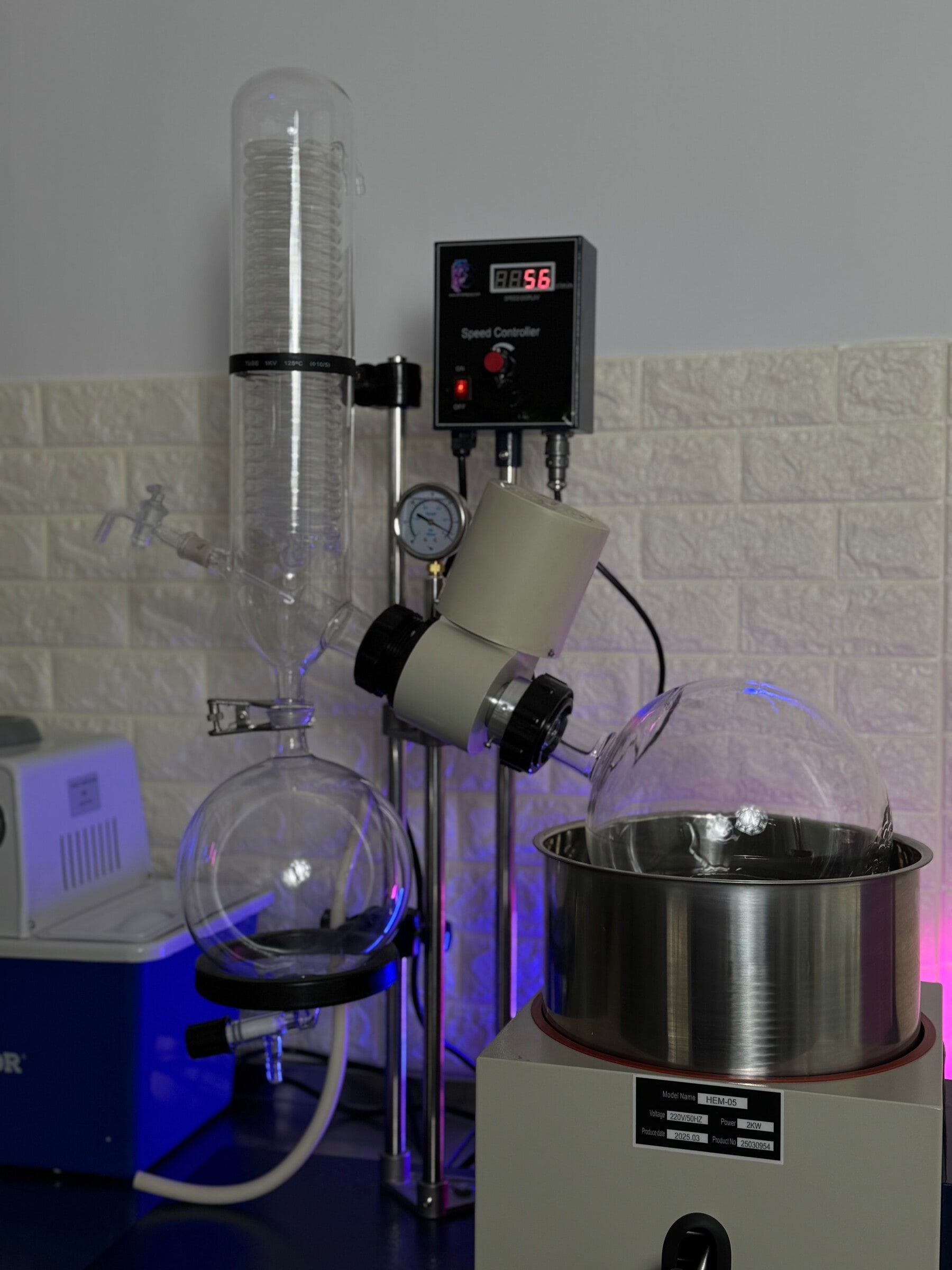
After extraction and filtration we have two liquids: the water fraction and the ethanol fraction. Each contains only a little of the mushroom's compounds and a lot of solvent. To get a concentrate, the solvent has to be removed without overheating the compounds themselves. We concentrate each fraction on a rotary evaporator: under vacuum the solvent evaporates at a lower temperature, which is gentler on heat-sensitive compounds. We then combine the concentrated water and ethanol fractions.
This article covers how a rotary evaporator works and why vacuum lowers the boiling point, which settings equipment manufacturers recommend and which temperatures are used for mushroom extracts in studies, why the water and ethanol fractions are concentrated separately, what to do about foam, and why the combined fractions need to be checked. How the fractions themselves are obtained is covered in the article on dual extraction.
How a rotary evaporator works
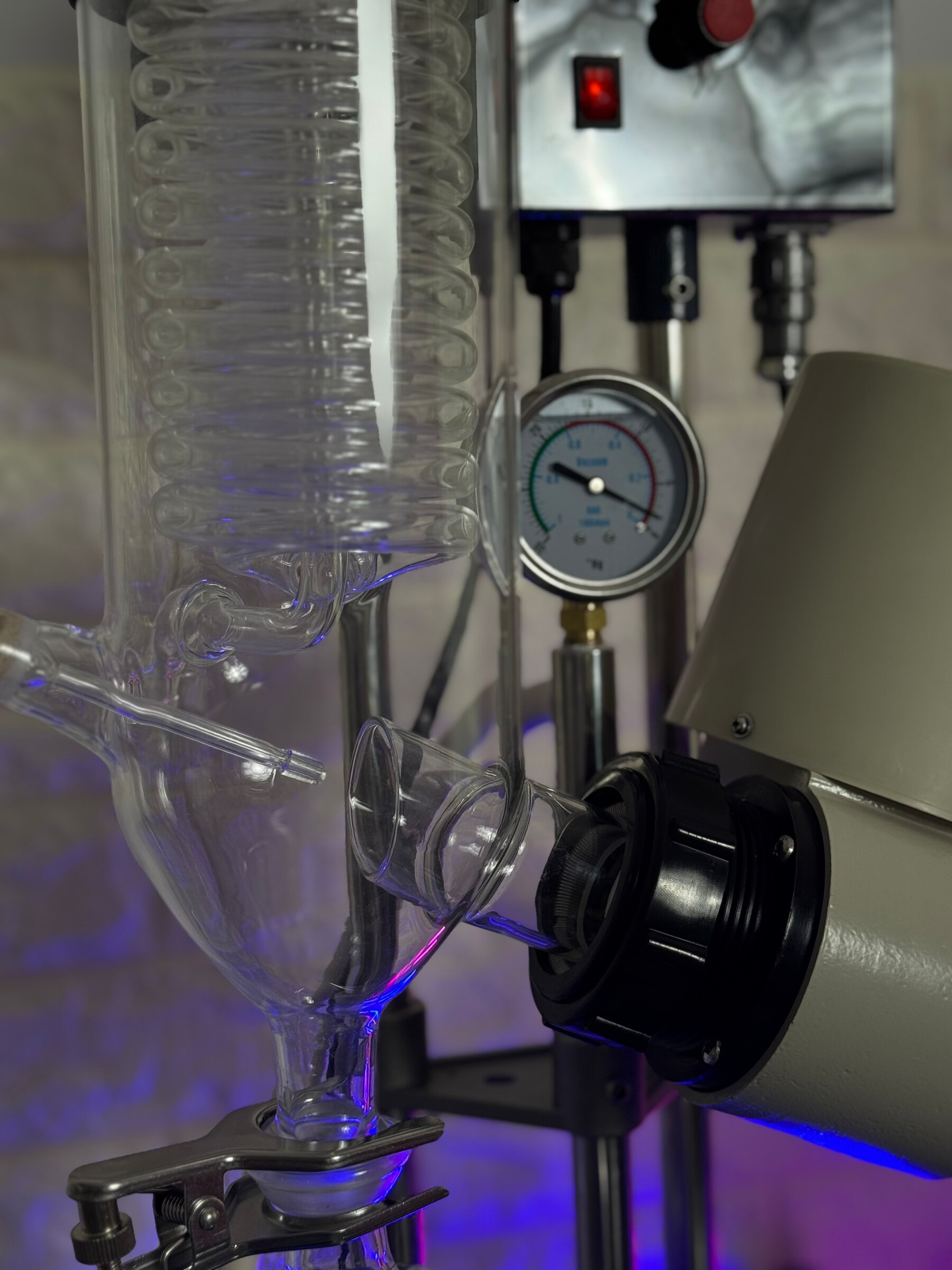
The design of the evaporator can be seen from the description in a patent held by the manufacturer Heidolph. A flask containing the liquid is lowered into a heated bath and rotated. The rotation spreads the liquid in a thin film over the inner wall of the flask, the surface area increases, and evaporation speeds up. At the same time, the pressure in the system is reduced to lower the boiling point of the solvent. The vapour passes into the condenser, condenses, and the liquid solvent drains into the receiving flask.
The manufacturer BUCHI advises setting the highest rotation speed: that way the liquid evaporates faster, foams less and bumps less. For viscous samples, on the other hand, the rotation is slowed down.
Vacuum lowers the boiling point
At normal pressure, ethanol boils at 78–79 °C and water at 100 °C. If the pressure is lowered, both will boil at a much lower temperature. The solvent table used with BUCHI evaporators gives the pressure needed for a solvent to boil at 40 °C:
| Solvent | Boiling point at normal pressure | Pressure for boiling at 40 °C | Energy to evaporate 1 g |
|---|---|---|---|
| Ethanol | 79 °C | 175 mbar | 879 J |
| Water | 100 °C | 72 mbar | 2261 J |
The table is taken from the University of Cape Town's operating procedure for the BUCHI evaporator; a fact sheet from TU Braunschweig gives the same pressure values.
The table shows at once why water and ethanol behave so differently. For water to boil at the same temperature, the pressure has to be about 2.4 times lower, and evaporating each gram of water takes about 2.6 times more energy than a gram of ethanol.
The "Delta 20" rule
For the evaporator to work efficiently, the temperatures of the bath, the vapour and the condenser have to differ. BUCHI formulates this as the "Delta 20" rule: the condenser should be about 20 °C colder than the vapour, and the bath about 20 °C hotter. A typical example: bath 50 °C, vapour 30 °C, condenser 10 °C.
For heat-sensitive samples, BUCHI recommends a gentler setting — bath 40 °C, vapour 20 °C, condenser 0 °C — and a correspondingly deeper vacuum. The price is speed: in the manufacturer's test with acetone, with the bath at 80 °C the solvent was distilled off about four times faster than with the bath at 40 °C.
The condenser has a limit too. According to BUCHI, it works best when condensate covers about two-thirds of its height. If condensate appears beyond the condenser, or the vacuum pump is pumping continuously, the condenser is overloaded and some of the vapour is getting past it.
What temperatures are used for mushroom extracts
In studies of mushroom extracts, the concentration temperature usually does not exceed 50 °C:
| Mushroom and fraction | Concentration conditions | Source |
|---|---|---|
| Lion's mane, water extract | reduced pressure, 45 °C | Yang Y. et al., 2022 |
| Reishi, water extract | 50 °C | Shady R. M. et al., 2025 |
| Reishi and other Ganoderma, 70% ethanol | 40 ± 2 °C, "to prevent thermal degradation of biologically active compounds" | Khanal S. et al., 2026 |
| Cordyceps, ethanol extract | 175 mbar, 40 °C | Valdez-Solana M. A. et al., 2022 |
We could not find a direct study comparing concentration temperature with the quality of a mushroom extract. But it is known from extraction studies, for example, that cordycepin starts to break down above 60–70 °C, and that prolonged heating makes polysaccharide molecules smaller (more on this in the article on dual extraction). That is why we use gentle settings for concentration, even if it takes longer.
Why we concentrate the fractions separately
There are three reasons.
Different settings. As the table above shows, water needs a deeper vacuum and much more energy than ethanol. Run separately, each fraction can be processed at a setting chosen specifically for its solvent.
Ethanol and water do not separate in a single pass. In an example based on BUCHI materials, if a mixture of 50% ethanol and 50% water (by mass) is split into two equal parts, the condensate will contain 71% ethanol, and the residue in the flask will still contain 29%. On top of that, ethanol and water form an azeotrope — a mixture of 95.6% ethanol by mass that can no longer be separated by ordinary distillation (Gupta O. et al., 2022). In other words, if the fractions are mixed before concentration, the ethanol will stay in the mixture for a long time.
Polysaccharides do not like ethanol. Polysaccharides precipitate when ethanol is added to a water solution, and this begins well before 70–80%. In a study of shaggy ink cap mycelial polysaccharides, they were precipitated in fractions at 40, 60 and 80% ethanol; at lower ethanol concentrations the largest molecules precipitate first (Chen R. et al., 2026). If an ethanol extract with a high ethanol content is added to the water concentrate, some of the polysaccharides may simply end up at the bottom.
So we first remove the solvent from each fraction, and only then combine them. The order varies between producers and researchers: for example, in a 2025 lion's mane study, the water filtrate was combined with the ethanol fraction and they were concentrated together (Kała K. et al., 2025).
Foaming and bumping
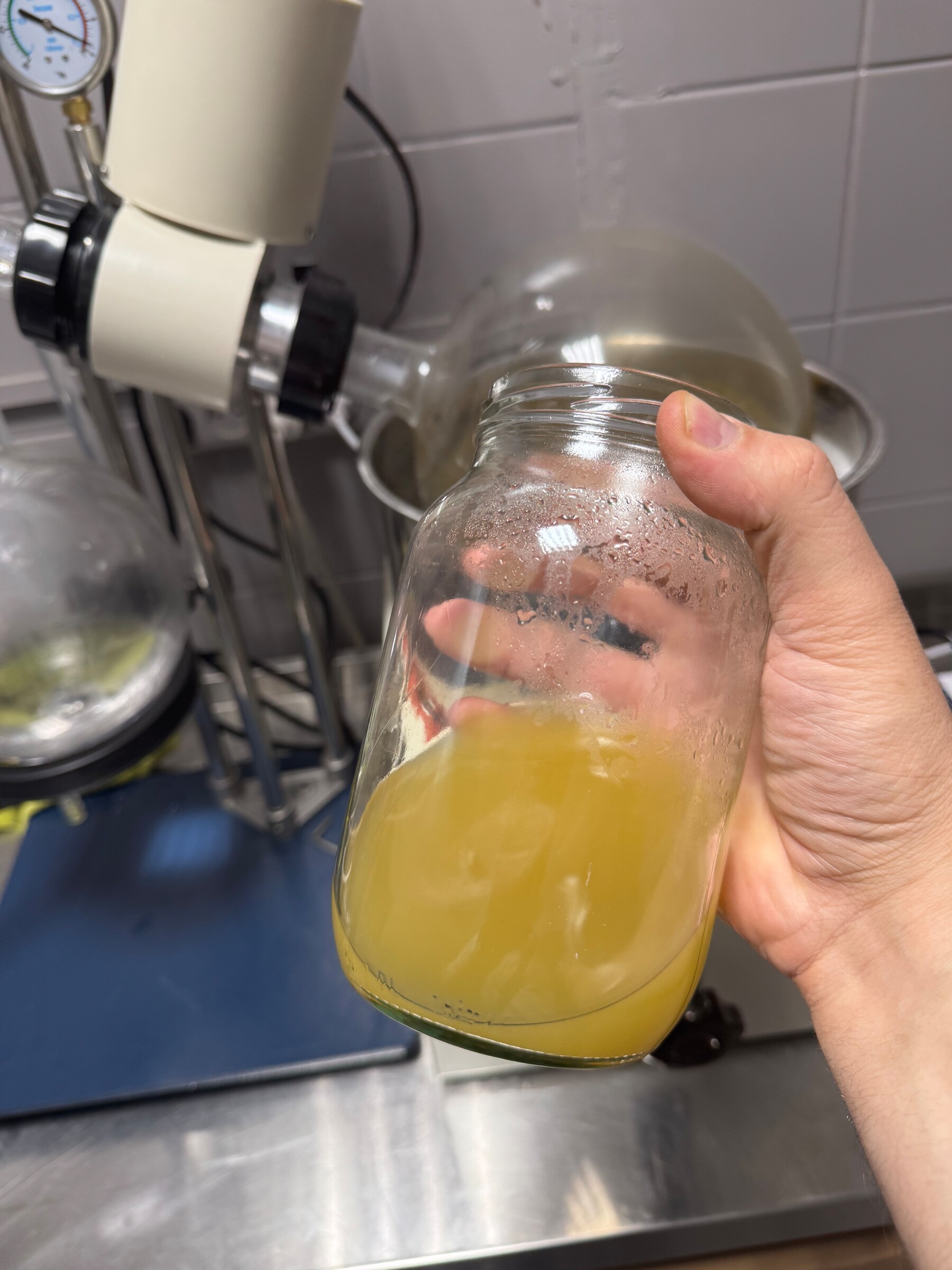
Water-based mushroom extracts are prone to foaming. A BUCHI specialist attributes foam in extracts to natural surfactants present in plant and mushroom raw material. For mushrooms, separate measurements support this: an extract from oyster mushroom by-products had a high foaming capacity (83.55%), which the authors link to the interaction of polysaccharides and proteins (Bermúdez-Gómez P. et al., 2026). That it is specifically these compounds that make the extract foam in the evaporator is our assumption; we could not find direct measurements.
What helps:
- lower the pressure gradually, not straight to the working value — this is what BUCHI recommends;
- do not make the vacuum deeper than necessary: according to a vacuum pump manufacturer, if the pressure for ethanol drops well below 179 mbar (at 40 °C), evaporation becomes too violent, the liquid foams and bumps, and yield and quality fall;
- do not overheat the flask or spin it faster than needed: according to a Heidolph specialist, bumping is caused by too much heat, too much rotation or too much vacuum;
- fill the flask no more than halfway and fit a bump trap between the flask and the condenser, so that foam does not get into the condenser and the receiving flask.
The ethanol comes back, but not all of it
The ethanol that has passed through the condenser collects in the receiving flask. By a vacuum equipment manufacturer's estimate, an efficient condenser recovers about 95% of the ethanol: from 10 litres, roughly 9.5 litres that can be used again. But the recovered ethanol is diluted with water (see above), so its strength has to be checked before reuse.
Some ethanol, meanwhile, remains in the concentrate. In a reishi study, the ethanol extract was additionally heated on a water bath at 80 °C after the evaporator to remove residual solvent (Guo W. et al., 2026). Korean researchers achieved residual ethanol below 5000 ppm — the limit accepted for residual solvents — by adding water and repeating the evaporation (Lee H. G., Kim J. H., 2022). How much ethanol remains in our concentrate we determine at the next step — concentrate testing.
Combining the fractions
We combine the concentrated water and ethanol fractions. Even after concentration, this is a mixture of compounds that dissolve differently in water and ethanol, and some of them may precipitate. In a study of a liquid reishi preparation on a water–alcohol base, almost 9% of all the extracted compounds, mainly triterpenoids and phenolic compounds from the ethanol extract, did not dissolve in the mixture and precipitated; the authors kept them in suspension with a thickener (Bidegain M. A. et al., 2020).
That is exactly why combining the fractions is followed by concentrate testing, and another filtration before glycerine is added.
Industrial scale
At large production sites, falling film evaporators are used instead of rotary evaporators. In these, the liquid runs down the inner walls of heated tubes as a thin film, usually under vacuum, and spends very little time in the unit — this gives gentle evaporation and good product quality; the manufacturer lists extracts among the typical products of such units (GEA). The principle is the same as in a rotary evaporator: a thin film, reduced pressure, minimum time in the heat.
What this means in practice
- We concentrate each fraction separately, at a setting suited to its solvent.
- We keep the bath temperature gentle and get the evaporation rate we need from the vacuum, not from heat.
- We lower the pressure gradually and do not fill the flask more than halfway, to avoid foaming and bumping.
- We watch the condenser: an overloaded condenser lets vapour through.
- We check the strength of the recovered ethanol before reusing it.
- We combine the fractions only after concentration, and then always test the concentrate.
References
Equipment and settings
- Hans Heidolph GmbH & Co. KG, 2022. Rotary evaporator, patent US11273387B2.
- BÜCHI Labortechnik AG, 2015. Your Evaporation Guide — Temperature difference (Short Note 213).
- BÜCHI Labortechnik AG, 2017. Tips & Tricks from the Experts: Rotary Evaporation.
- BÜCHI. Foam is foe in rotary evaporation. Manufacturer's blog.
- University of Cape Town, Department of Chemistry, 2023. SOP: BÜCHI Rotary Evaporator.
- TU Braunschweig, ICTV. Rotationsverdampfer Heidolph Hei-VAP Distimatic. Equipment fact sheet.
- BRANDTECH Scientific / VACUUBRAND. Optimizing Extractions with Vacuum. Manufacturer's material.
- Tennenhouse E. How to Deal with Solvent Bumping and Foaming During Lab Evaporation. Lab Manager.
- Nichols L. Step-by-Step Procedures for Rotary Evaporation. Organic Chemistry Lab Techniques, Chemistry LibreTexts, section 5.6B.
- Scientist Live, 2013. Rectification of two component solvents using rotary evaporator. Based on BUCHI materials.
- GEA Wiegand GmbH, 2021. Evaporation Technology — Applications, types, efficiency.
Ethanol, water and polysaccharides
- Gupta O. et al., 2022. Graphene Oxide-Carbon Nanotube (GO-CNT) Hybrid Mixed Matrix Membrane for Pervaporative Dehydration of Ethanol. Membranes 12(12), 1227. Only the azeotrope data are taken from this paper.
- Chen R. et al., 2026. Fractional ethanol precipitation modulates the structure and function of Coprinus comatus mycelial polysaccharides: alleviation of DSS-induced injury in Caco-2 cells via regulation of mitochondrial function. Frontiers in Nutrition 13, 1743246. Only the precipitation data are taken from this paper.
- Kała K. et al., 2025. Influence of Plant-Based Substrate Composition and Extraction Method on Accumulation of Bioactive Compounds in Hericium erinaceus Fruiting Bodies. Molecules 30(15), 3094.
- Bermúdez-Gómez P. et al., 2026. Ultrasound-Assisted Extraction of Polysaccharides from Pleurotus ostreatus By-Products: Box–Behnken Optimization and Low-Fat Cookies Formulation. Foods 15(10), 1764.
- Bidegain M. A., Palma S. D., Cubitto M. A., 2020. Formulation and Evaluation of a Lingzhi or Reishi Medicinal Mushroom, Ganoderma lucidum, Nutraceutical Hydroalcoholic Suspension. International Journal of Medicinal Mushrooms 22(8), 719–730.
Concentration conditions in studies
- Yang Y. et al., 2022. Polysaccharides from Hericium erinaceus Fruiting Bodies: Structural Characterization, Immunomodulatory Activity and Mechanism. Nutrients 14(18), 3721. Only the concentration conditions are taken from this paper.
- Shady R. M. et al., 2025. Unlocking Reishi's secrets: nutritional and medicinal traits of Ganoderma lucidum isolated from tree bark in Egypt. AMB Express 15, 104. Only the concentration conditions are taken from this paper.
- Khanal S. et al., 2026. Multivariate chemometric profiling of Himalayan Ganoderma isolates: linking host and altitude to nutritional, antioxidant, and metabolomic diversity. RSC Advances 16(38), 42996–43006.
- Valdez-Solana M. A. et al., 2022. Cordyceps militaris Inhibited Angiotensin-Converting Enzyme through Molecular Interaction between Cordycepin and ACE C-Domain. Life 12(9), 1450. Only the concentration conditions are taken from this paper.
- Guo W. et al., 2026. Integrated Microbiome and Metabolomics Analysis Reveals That Ganoderma lucidum Triterpenoids Ameliorate Colitis Associated with the Modulation of the Gut Microbiota and Metabolic Profiles. Foods 15(11), 2016. Only the method of removing residual solvent is taken from this paper.
- Lee H. G., Kim J. H., 2022. Removal of residual ethanol by rotary evaporation, in Korean. Korean Chemical Engineering Research 60(2), 237.
Related mushrooms
Materials for growing

GREEBZ functional mushroom extract set
A gift set of three GREEBZ functional mushroom liquid extracts in a branded box. The set includes extracts of lion's mane, Cordyceps militaris and reishi. What's in the set - Lion's mane — liquid extract - Cordyceps militaris — liquid extract - Reishi — liquid extract
Made by us
On request
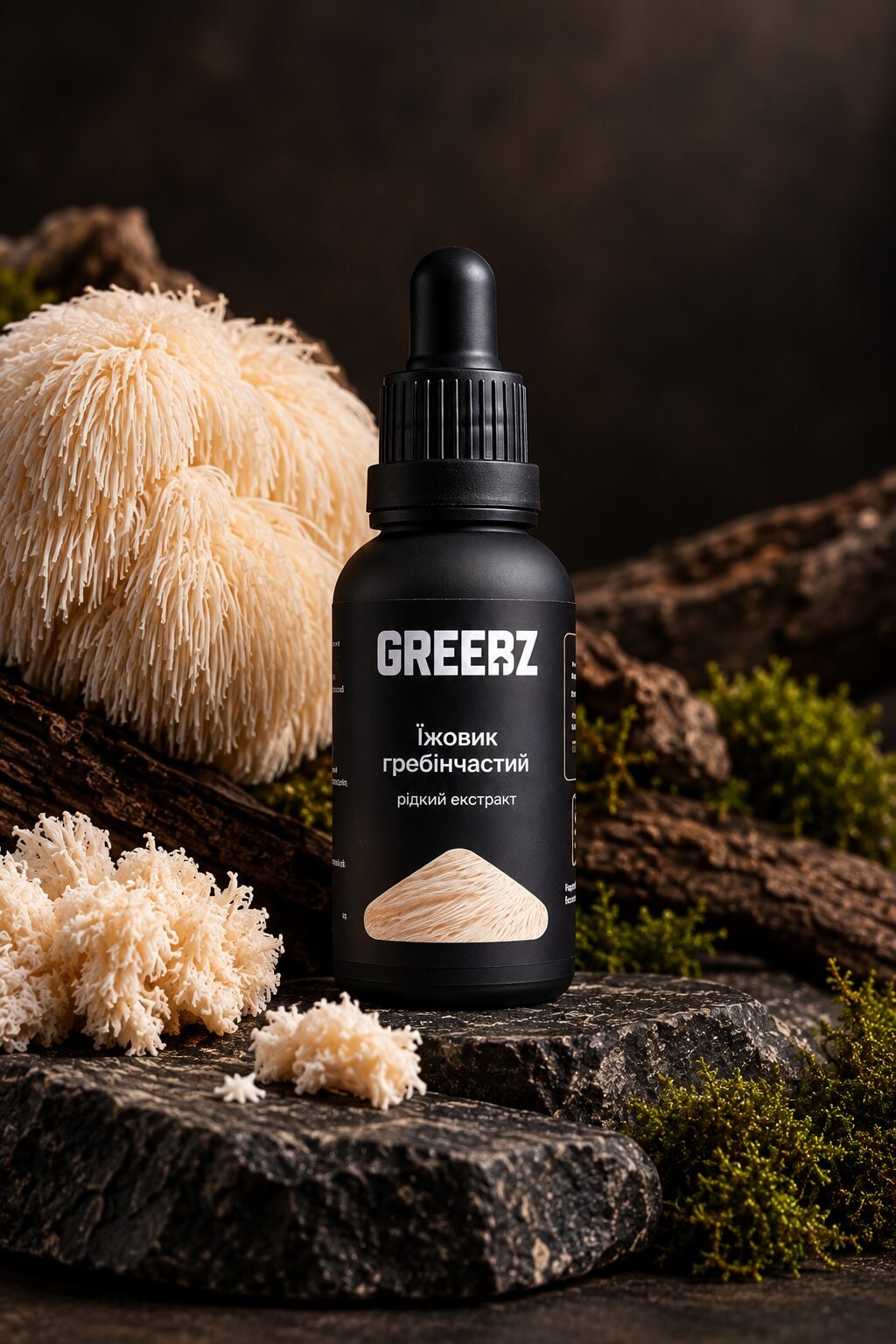
Lion's mane — GREEBZ liquid extract
A 30% liquid extract of lion's mane (Hericium erinaceus) from GREEBZ's own production. We use controlled mushroom raw material from our own production. Extraction is carried out in a Soxhlet apparatus, followed by vacuum concentration. Hericium erinaceus is studied as a source of various groups of fungal compounds. Whether specific compounds are present in the finished product, and in what amounts, requires separate laboratory analysis. Specifications - Species: Hericium erinaceus - Concentration: 30% - Method: Soxhlet extraction followed by vacuum concentration - Format: liquid extract in a dropper bottle - Volume: 30 ml - Producer: GREEBZ
Made by us
On request
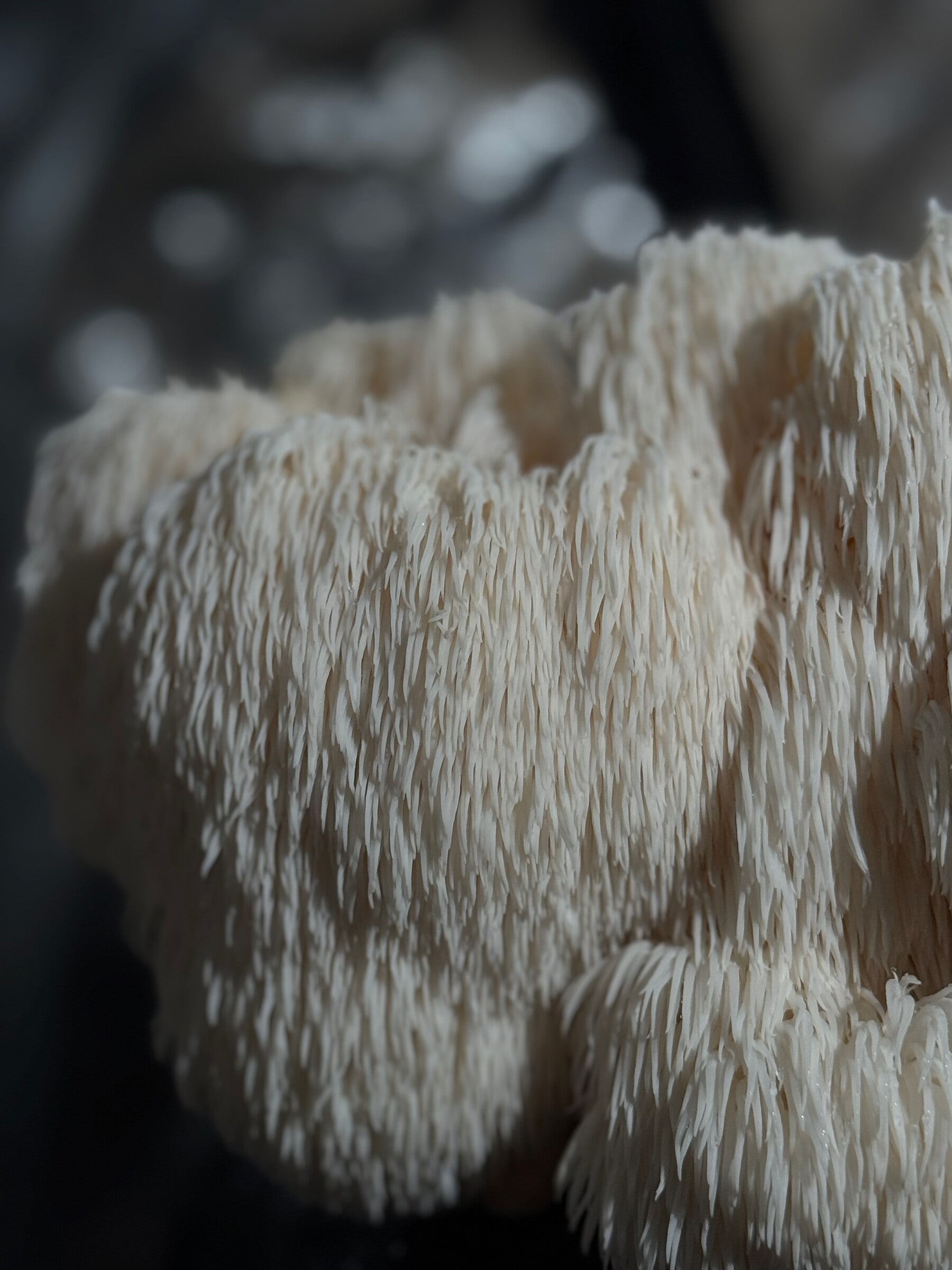
Fresh lion's mane
Fresh lion's mane (Hericium erinaceus) fruiting bodies grown by GREEBZ. Fresh lion's mane grown under controlled conditions in GREEBZ's own production. The product is supplied fresh after harvest. Specifications - Format: fresh fruiting bodies - Unit of sale: 1 kg - Producer: GREEBZ
Made by us
On request
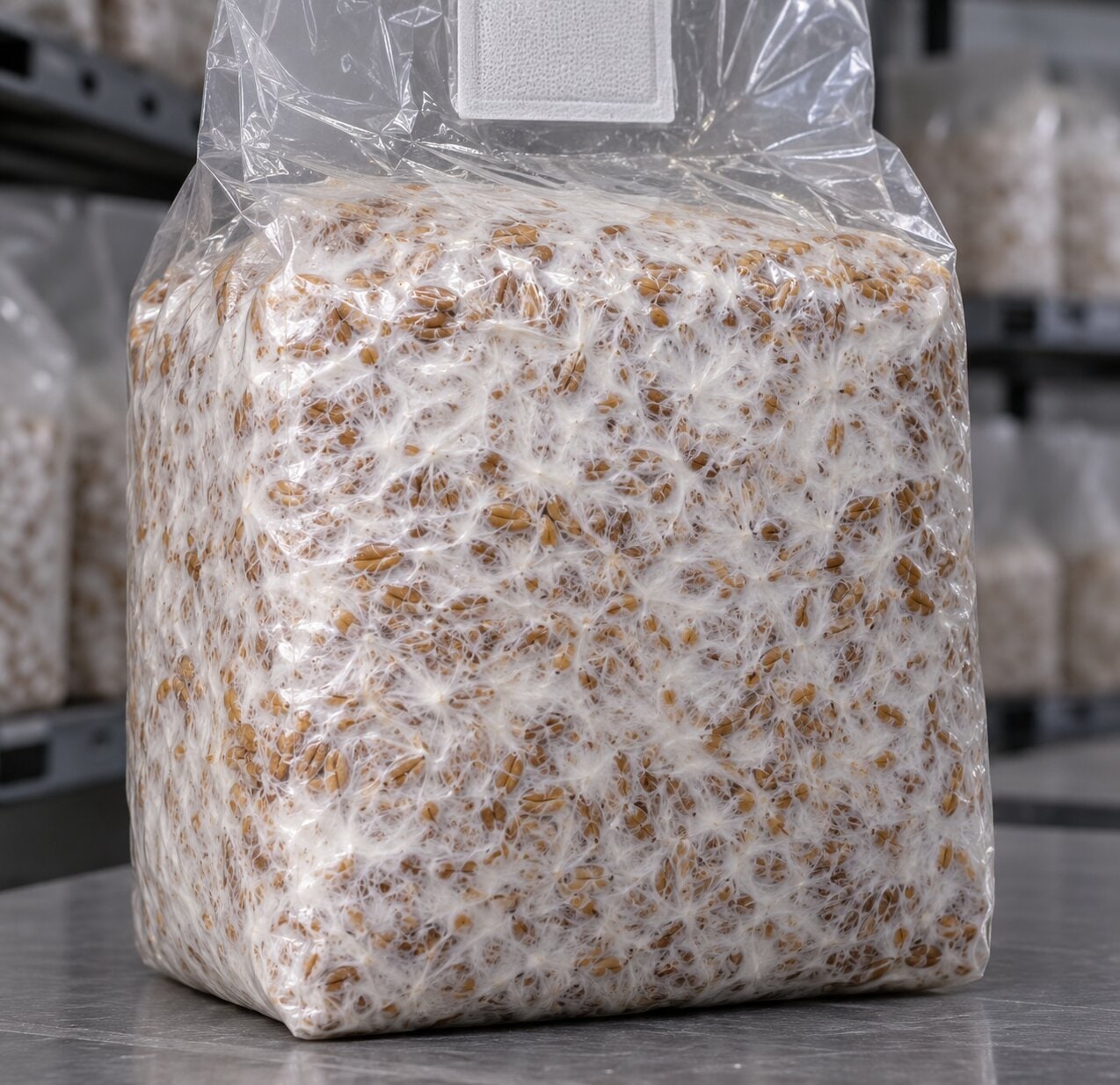
Master grain spawn — 5 kg bag
GREEBZ master grain spawn of the chosen culture. A pure culture on sterile grain substrate. Available in a choice of cultures — list the ones you need in your request. Master spawn is intended for further propagation and the production of production spawn. Grown from a pure culture under sterile laboratory conditions. Specifications - Format: grain spawn in a filter bag (grow bag), 5 kg - Substrate: sterile grain - Producer: GREEBZ
Made by us
On request
Other entries
Need help with your process?
Describe what's happening, even if you don't know the cause. We'll work it out together.