Concentrate control: dry residue, ethanol and marker compounds
How dry residue and residual ethanol are determined, which markers are checked for reishi, lion's mane, cordyceps and tiger milk mushroom, and why "polysaccharides" on a label are not β-glucans.
Author: Volodymyr Sobol
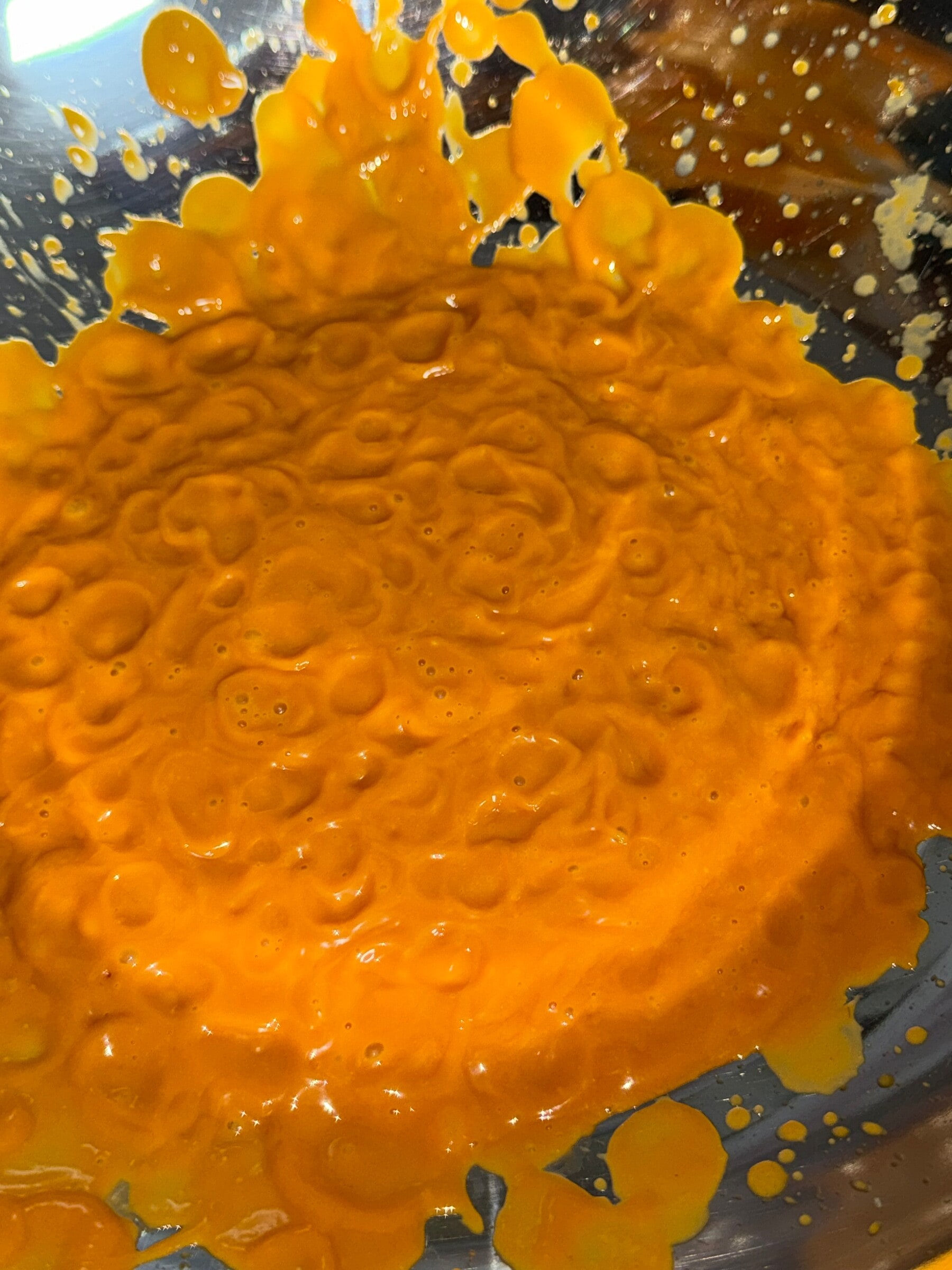
After extraction and concentration we have a concentrate — a mixture of the water and ethanol fractions. By eye it tells you nothing about itself: how much dissolved matter it contains, how much ethanol is left, whether it contains what the mushroom was extracted for. That is why we do the main control right here, after the fractions are combined: we determine the dry residue and residual ethanol, and marker compounds are checked in a laboratory. Individual fractions are also checked earlier when needed.
This article covers how dry residue and ethanol content are determined by pharmacopoeial methods, which markers are checked for reishi, lion's mane, cordyceps and tiger milk mushroom, why "polysaccharides" and "β-glucans" are not the same thing, and how the results of control are linked to the next step — adjusting the concentration.
Most of the methods described come from the European Pharmacopoeia and the guidelines of the European Medicines Agency (EMA). These are requirements for medicinal products, not for food, so for us they are a reference point — a proven way to do control correctly.
Dry residue
Dry residue is the mass of substances left after a liquid extract has been completely dried. It shows how much of the mushroom's dissolved matter is in the concentrate.
The European Pharmacopoeia method (2.8.16) is simple. A sample of the extract — 2.00 g or 2.0 ml — is evaporated in a flat dish on a water bath, then dried in a drying oven at 100–105 °C for 3 hours, cooled in a desiccator and weighed. The result is expressed as a percentage by mass or in grams per litre. The same gravimetric method, at 105 °C for 3 hours, is also used to determine the water-soluble substances of reishi under the procedure of the Chinese Pharmacopoeia.
Dry residue is a standard parameter in specifications for liquid extracts. For example, in draft monographs of the Austrian Pharmacopoeia, the requirement for hawthorn tincture is at least 3.5% dry residue, and for nettle tincture at least 2.0%.
For a quick estimate, a refractometer is sometimes used, which shows dissolved solids in degrees Brix. But the Brix scale is calibrated for sucrose solutions and intended for juices and soft drinks; organic acids, minerals and amino acids shift the reading (MEBAK, method B-530.01.070). In a concentrate that contains ethanol and has a completely different composition, a refractometer can only be an internal quick guide, checked against the gravimetric method.
Residual ethanol
After concentration, the ethanol does not evaporate completely. You need to know how much is left, because both the composition of the concentrate and how it will behave later when mixed with glycerol depend on it.
The pharmacopoeial method for ethanol (2.9.10) is distillation: the ethanol is distilled off from the dissolved substances, the density of the distillate is measured with a pycnometer or hydrometer, and tables are used to convert it to percent by volume. The alternative is gas chromatography. The ethanol content of tinctures is stated directly in specifications: in the draft hawthorn tincture monograph mentioned above it is 65–70% by volume.
For ethanol as a residual solvent there is also a generally accepted limit. The ICH Q3C guideline classifies ethanol as a class 3 solvent with low toxicity and considers residues of up to 50 mg per day acceptable without further justification, which corresponds to 5000 ppm, or 0.5%. But this limit applies to solvent left over from manufacturing, not to ethanol that is deliberately left in the product, as in a tincture: the guideline explicitly excludes such cases. If a product contains only class 3 solvents, ICH allows them to be determined even by a non-specific method — loss on drying — provided the method has been validated.
Ethanol also matters for microbiological stability. The EMA reflection paper on the microbiology of herbal preparations states that ethanol at a concentration of 60–95% has a pronounced bactericidal and fungicidal effect on vegetative forms of microorganisms, but does not act on bacterial spores.
Marker compounds
A marker is a substance used to check that an extract really contains what the mushroom should contain, and that batches are comparable with one another. Each mushroom has its own markers, and each requires its own method. We do these analyses in a laboratory.
Polysaccharides and β-glucans
The most common mistake on the labels of mushroom products is to put an equals sign between "polysaccharides" and "β-glucans". The usual colorimetric methods for total polysaccharides (phenol–sulphuric acid, anthrone) count all sugars, including starch, and non-saccharide substances can take part in the colour reaction or absorb light at the same wavelength. This is how the error is explained by the authors of a Chinese study of 15 batches of reishi, in which polysaccharides were determined by the anthrone method of the Chinese Pharmacopoeia (1.04–3.19%) and compared with other methods (Zeng M. et al., 2023).
Starch in mushroom products is not rare. In a check of 19 reishi dietary supplements bought in the USA, starch-like polysaccharides, which are absent from the reishi fruiting body, were found in 13 products, and only 5 (26.3%) matched the composition on the label. The authors state plainly that starch and maltodextrin must not be counted when determining reishi polysaccharides (Wu D. T. et al., 2017). There is especially a lot of starch in products made from mycelium grown on grain: in fermented grain, α-glucans (starch) made up 33–68%, compared with less than 2% in genuine chaga (Windsor C. et al., 2025; the authors work for a company that produces mushroom extracts).
A specific method for mushroom β-glucans was described by McCleary and Draga (2016): first all glucans are determined after acid hydrolysis, then α-glucans (starch and glycogen) separately with enzymes, and β-glucans are calculated as the difference. According to the instructions of the manufacturer of the kit for this assay, the method is not suitable if the sample contains other β-glucans, for example cellulose, and α-glucans that the enzymes have not broken down inflate the result.
Cordycepin and adenosine
For cordyceps the markers are cordycepin and adenosine; they are determined by high-performance liquid chromatography with detection at 260 nm. In one study, an extract of Cordyceps militaris fruiting bodies contained 3.02 mg/g cordycepin and 1.99 mg/g adenosine (Prommaban A. et al., 2022). Different studies give very different figures; even the substrate strongly affects cordycepin: cordyceps grown on one of the insects had 34 times more cordycepin than cordyceps grown on silkworm (Turk A. et al., 2022). That is why cordycepin has to be measured in every batch, not taken from the literature.
Reishi triterpenoids
The total triterpenoid content of reishi is determined colorimetrically with vanillin and perchloric acid, expressed as oleanolic acid. The method is simple but not very specific: saponins and oleic acid can affect the result (Zeng M. et al., 2023). It is more accurate to determine individual ganoderic acids, for example A and D, by chromatography at 254 nm (Tian J. et al., 2024).
For reference: the Chinese Pharmacopoeia requires dried reishi fruiting bodies to contain at least 0.90% polysaccharides and 0.50% triterpenoids (Wang L. et al., 2020). And in the check of supplements mentioned above, triterpenes characteristic of reishi were found in only 8 of 19 products (Wu D. T. et al., 2017).
Lion's mane
For lion's mane the markers are hericenones and hericenes, characteristic of fruiting bodies, and erinacines, characteristic of mycelium. In 2026 a method was described that determines them together with ergosterol in a single analysis; erinacine A was not detected in the fruiting body samples, while the mycelium contained about 0.2 mg/g (Tang Y. et al., 2026; the study was funded by a producer company). So a marker also shows what the product is made from — fruiting bodies or mycelium.
Tiger milk mushroom
For tiger milk mushroom (Lignosus rhinocerotis) the main group of substances is glucans. In water extracts, β-glucans made up 82–93% of all glucans (Nallathamby N. et al., 2018, citing Lau et al., 2013).
From control to adjustment
The European Pharmacopoeia and EMA divide herbal extracts into three types:
- standardised — adjusted to a defined content of constituents with known therapeutic activity;
- quantified — adjusted to a defined range of active markers by blending batches;
- "other" — defined by the manufacturing process and the specification; markers in them are used only for control, and the name and content of the marker are not stated on them.
For mushroom extracts, which have no officially recognised active substance, the closest type is "other". In that case dry residue and markers are tools for control and batch comparability, not a promise on the label. That is exactly why the pages for our extracts say that the presence and amount of specific compounds require a separate laboratory analysis: a figure without a method means little.
Based on the results of control, the concentrate is brought to the target concentration — that is the next step of the process.
Microbiology and metals
The European Pharmacopoeia provides, for extracts where this is necessary, for testing of microbiological purity, heavy metals, aflatoxins and pesticide residues. For herbal raw materials, among which the pharmacopoeia also counts mushrooms, typical heavy metal limits are cadmium no more than 1.0 ppm, lead no more than 5.0 ppm, mercury no more than 0.1 ppm. EMA notes that contaminants in a preparation are usually not tested again if they have been tested in the raw material. That is why we control heavy metals at intake — in the grain and the substrate.
What this means in practice
- The main control is after the fractions are combined; individual fractions are checked when we need to find the cause of a deviation.
- We determine dry residue by the gravimetric method and use the refractometer only as a quick guide.
- We determine residual ethanol to know the actual composition of the concentrate before mixing it with glycerol.
- We check markers in a laboratory with specific methods: β-glucans separately from total polysaccharides, cordycepin and ganoderic acids by chromatography.
- We always read the result of an analysis together with its method.
- Based on the results of control, we move on to adjusting the concentration.
Sources
Pharmacopoeia and guidelines
- European Pharmacopoeia, 2.8.16 "Dry residue of extracts", 2.9.10 "Ethanol content", monographs 0765 "Extracts" and 1433 "Herbal drugs" — from the text of the British Pharmacopoeia 2012, which reproduces Ph. Eur.
- ICH, 2024. Q3C(R9) Impurities: Guideline for Residual Solvents.
- EMA, 2022. Guideline on specifications: test procedures and acceptance criteria for herbal substances, herbal preparations and herbal medicinal products, EMA/HMPC/CHMP/CVMP/162241/2005 Rev. 3.
- EMA, 2015. Reflection paper on microbiological aspects of herbal medicinal products and traditional herbal medicinal products, EMA/HMPC/95714/2013.
- BASG (Austria). Draft monographs of the Austrian Pharmacopoeia: hawthorn tincture, nettle tincture.
- MEBAK. Soluble Dry Matter (Extract) — Refractometric Method, B-530.01.070.
Polysaccharides and β-glucans
- McCleary B. V., Draga A., 2016. Measurement of β-Glucan in Mushrooms and Mycelial Products. Journal of AOAC International 99(2), 364–373.
- Megazyme (Neogen). Mushroom and Yeast Beta-Glucan Assay Procedure, K-YBGL. Manufacturer's instructions.
- Wu D. T. et al., 2017. Evaluation on quality consistency of Ganoderma lucidum dietary supplements collected in the United States. Scientific Reports 7, 7792.
- Windsor C. et al., 2025. Comparative Study of Chaga (Inonotus obliquus) Dietary Supplements Using Complementary Analytical Techniques. International Journal of Molecular Sciences 26(7), 2970.
- Zeng M., Xie M. J., Zhu Z. Y., Yu Y. T., Zhang M., 2023. Quality evaluation of reishi from different cultivation bases, in Chinese. Chinese Traditional and Herbal Drugs 54(21), 7193.
Other markers
- Prommaban A. et al., 2022. Comparison of chemical profiles, antioxidation, inhibition of skin extracellular matrix degradation, and anti-tyrosinase activity between mycelium and fruiting body of Cordyceps militaris and Isaria tenuipes. Pharmaceutical Biology 60(1), 225–234. Only the method and the cordycepin content are taken from this paper.
- Turk A. et al., 2022. Cordyceps mushroom with increased cordycepin content by the cultivation on edible insects. Frontiers in Microbiology 13, 1017576.
- Tian J. et al., 2024. Application of Electronic tongue and HPLC in rapid determination of functional triterpenes and origins of Ganoderma lucidum. Frontiers in Nutrition 11, 1446956.
- Wang L. et al., 2020. Traditional uses, chemical components and pharmacological activities of the genus Ganoderma: a review. RSC Advances 10(69), 42084–42097. Only the requirements of the Chinese Pharmacopoeia are taken from this review.
- Tang Y., Kahraman O., Goos A. J., Fields C., 2026. Simultaneous UHPLC-UV Determination of Hericenones, Hericenes, Erinacines and Ergosterol in Hericium erinaceus Raw Materials or Products. Molecules 31(3), 569.
- Nallathamby N. et al., 2018. A Status Review of the Bioactive Activities of Tiger Milk Mushroom Lignosus rhinocerotis. Frontiers in Pharmacology 8, 998. Only the glucan composition is taken from this review.
Related mushrooms
Materials for growing
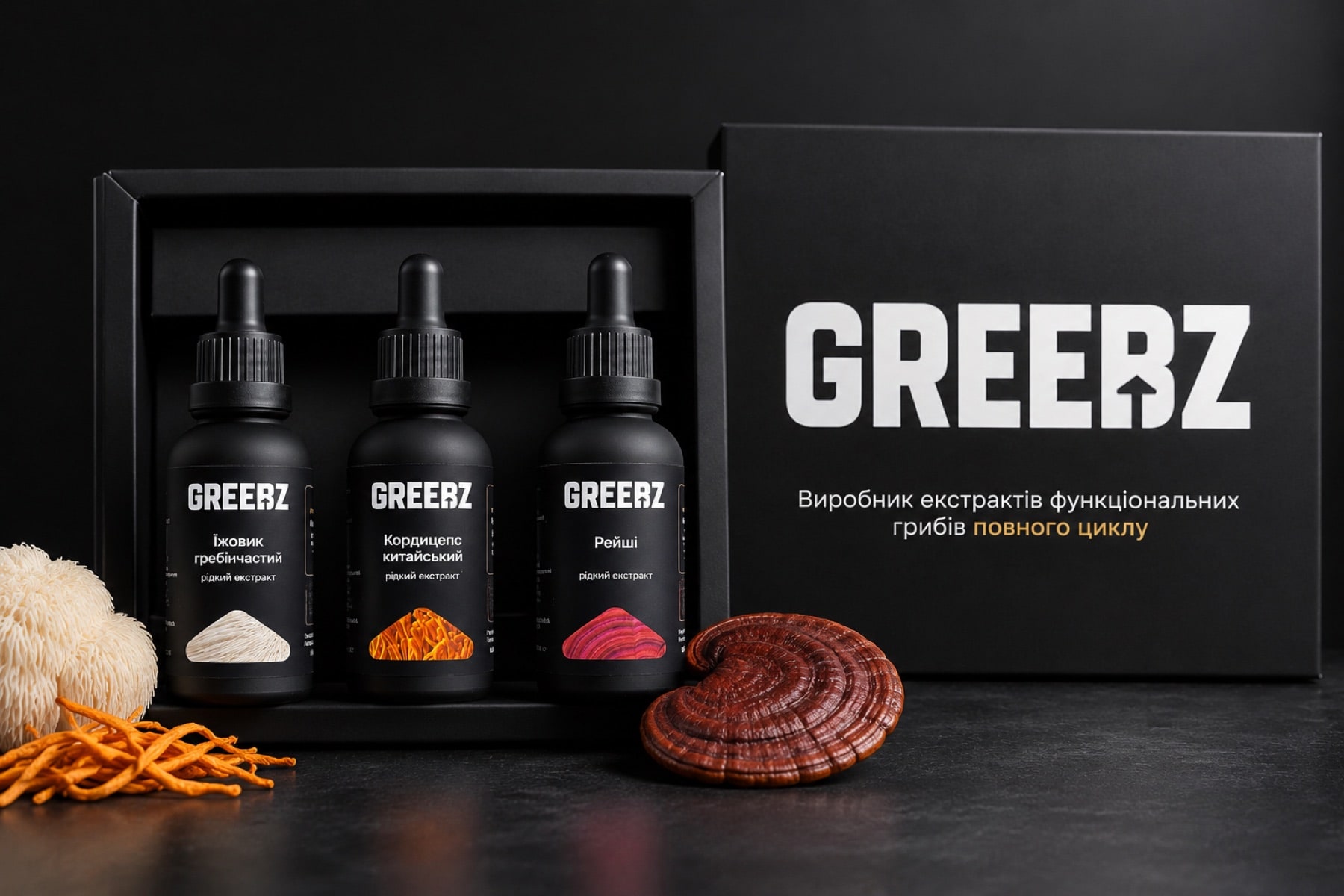
GREEBZ functional mushroom extract set
A gift set of three GREEBZ functional mushroom liquid extracts in a branded box. The set includes extracts of lion's mane, Cordyceps militaris and reishi. What's in the set - Lion's mane — liquid extract - Cordyceps militaris — liquid extract - Reishi — liquid extract
Made by us
On request
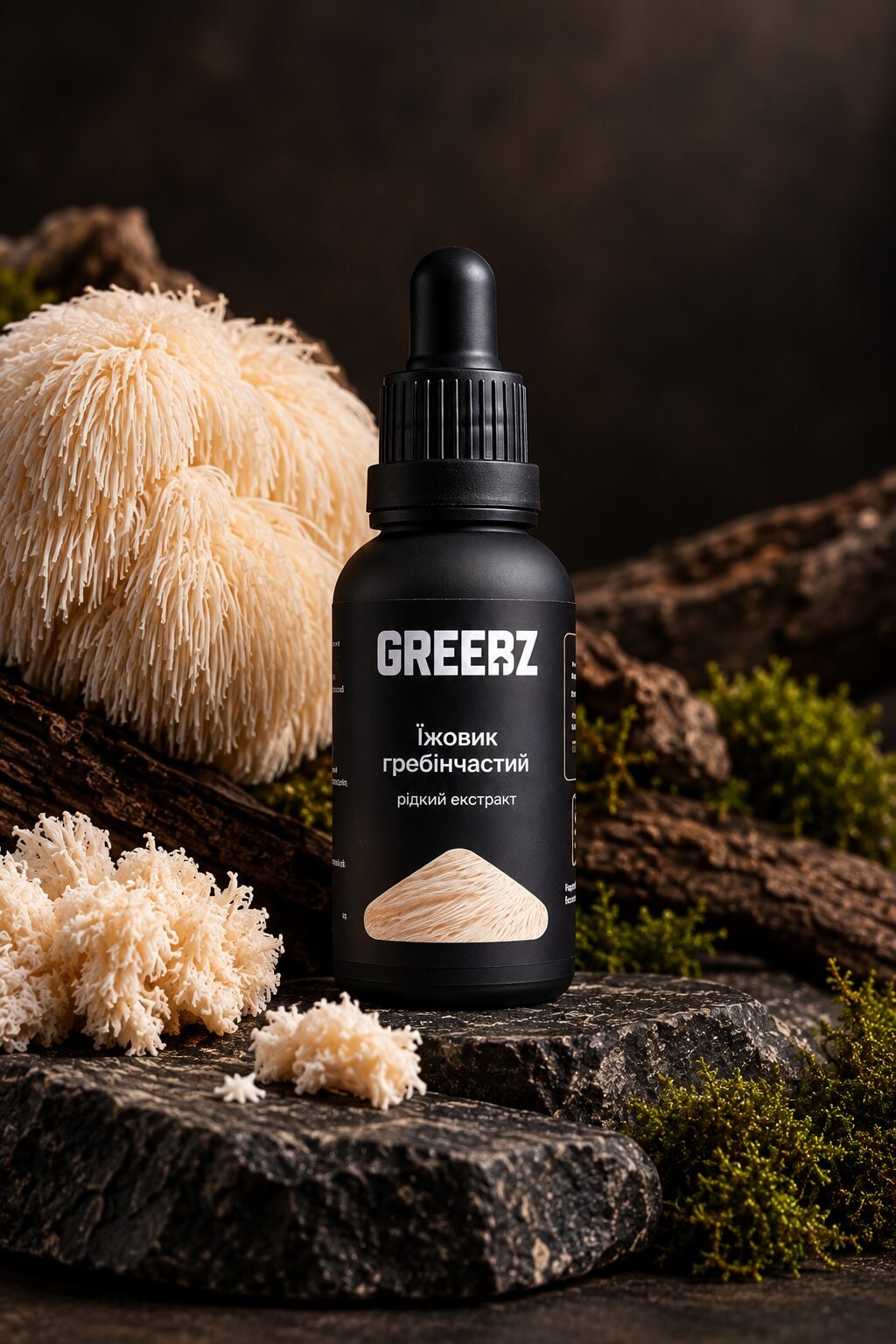
Lion's mane — GREEBZ liquid extract
A 30% liquid extract of lion's mane (Hericium erinaceus) from GREEBZ's own production. We use controlled mushroom raw material from our own production. Extraction is carried out in a Soxhlet apparatus, followed by vacuum concentration. Hericium erinaceus is studied as a source of various groups of fungal compounds. Whether specific compounds are present in the finished product, and in what amounts, requires separate laboratory analysis. Specifications - Species: Hericium erinaceus - Concentration: 30% - Method: Soxhlet extraction followed by vacuum concentration - Format: liquid extract in a dropper bottle - Volume: 30 ml - Producer: GREEBZ
Made by us
On request
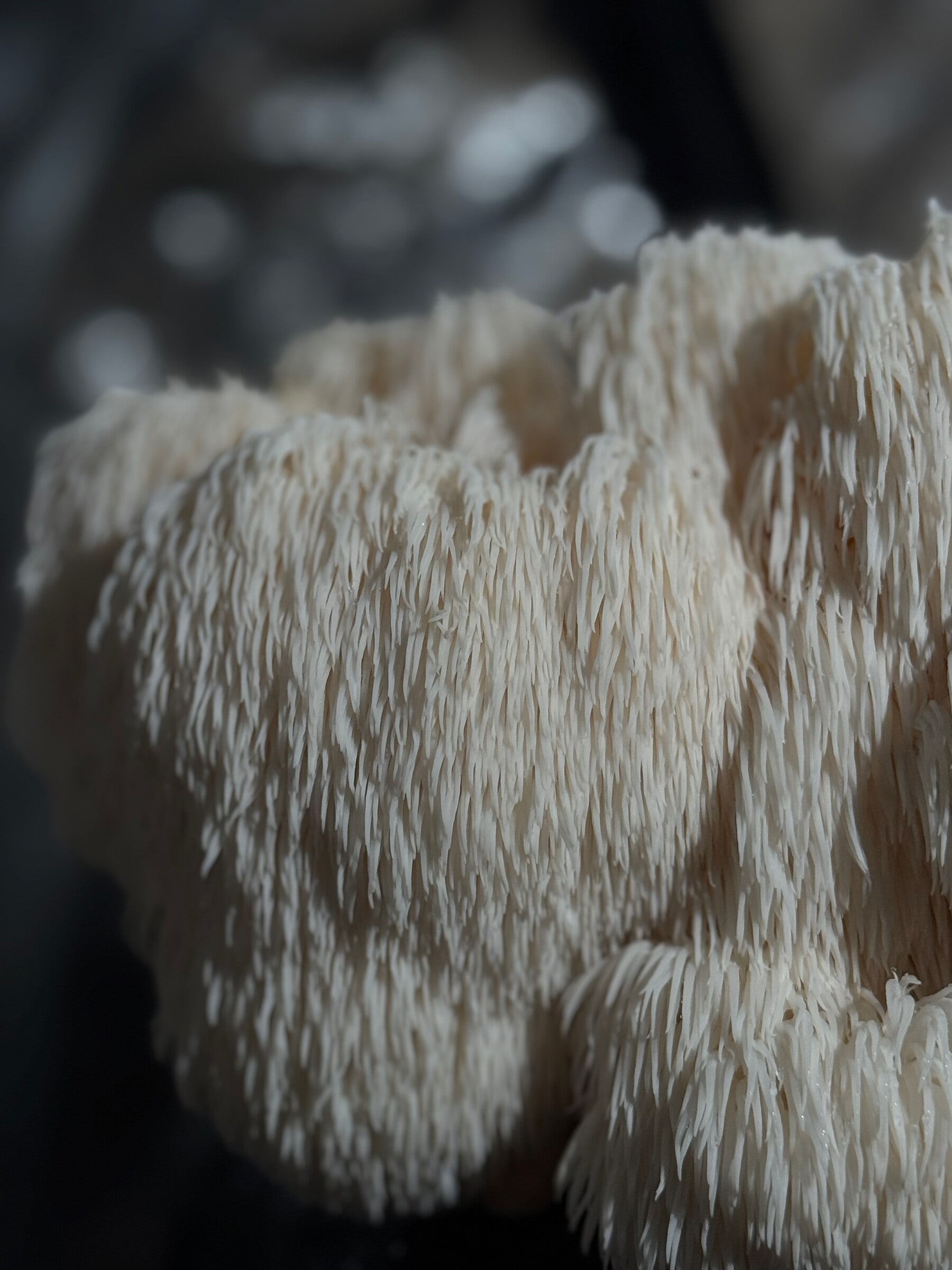
Fresh lion's mane
Fresh lion's mane (Hericium erinaceus) fruiting bodies grown by GREEBZ. Fresh lion's mane grown under controlled conditions in GREEBZ's own production. The product is supplied fresh after harvest. Specifications - Format: fresh fruiting bodies - Unit of sale: 1 kg - Producer: GREEBZ
Made by us
On request
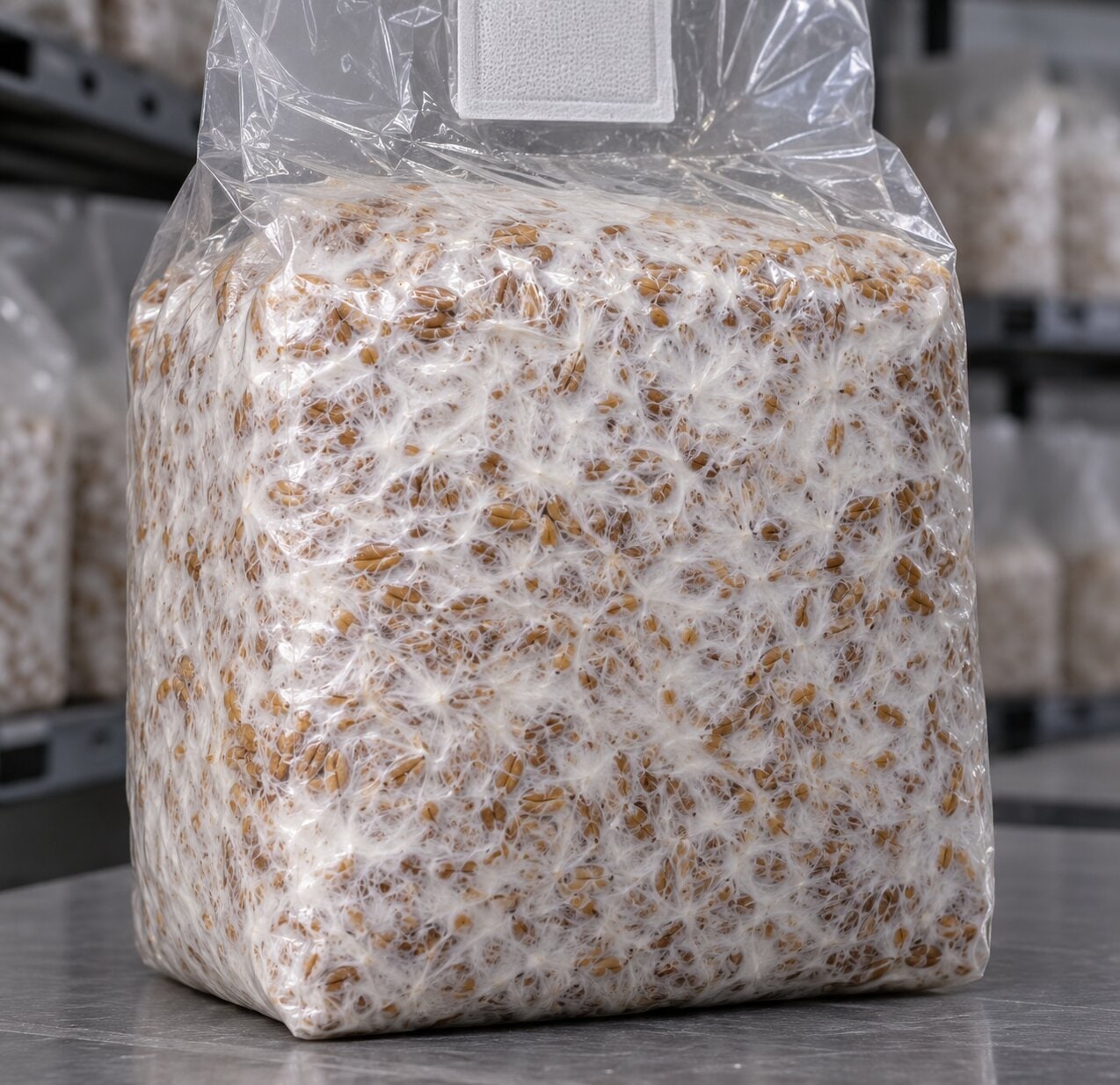
Master grain spawn — 5 kg bag
GREEBZ master grain spawn of the chosen culture. A pure culture on sterile grain substrate. Available in a choice of cultures — list the ones you need in your request. Master spawn is intended for further propagation and the production of production spawn. Grown from a pure culture under sterile laboratory conditions. Specifications - Format: grain spawn in a filter bag (grow bag), 5 kg - Substrate: sterile grain - Producer: GREEBZ
Made by us
On request
Other entries
Need help with your process?
Describe what's happening, even if you don't know the cause. We'll work it out together.