Substrate inoculation: spawn, spawn rate, cleanliness
What to inoculate sawdust blocks with, what spawn rate to use, how to add spawn, set up a clean zone, seal the bag, manage incubation and trace contamination.
Author: Volodymyr Sobol
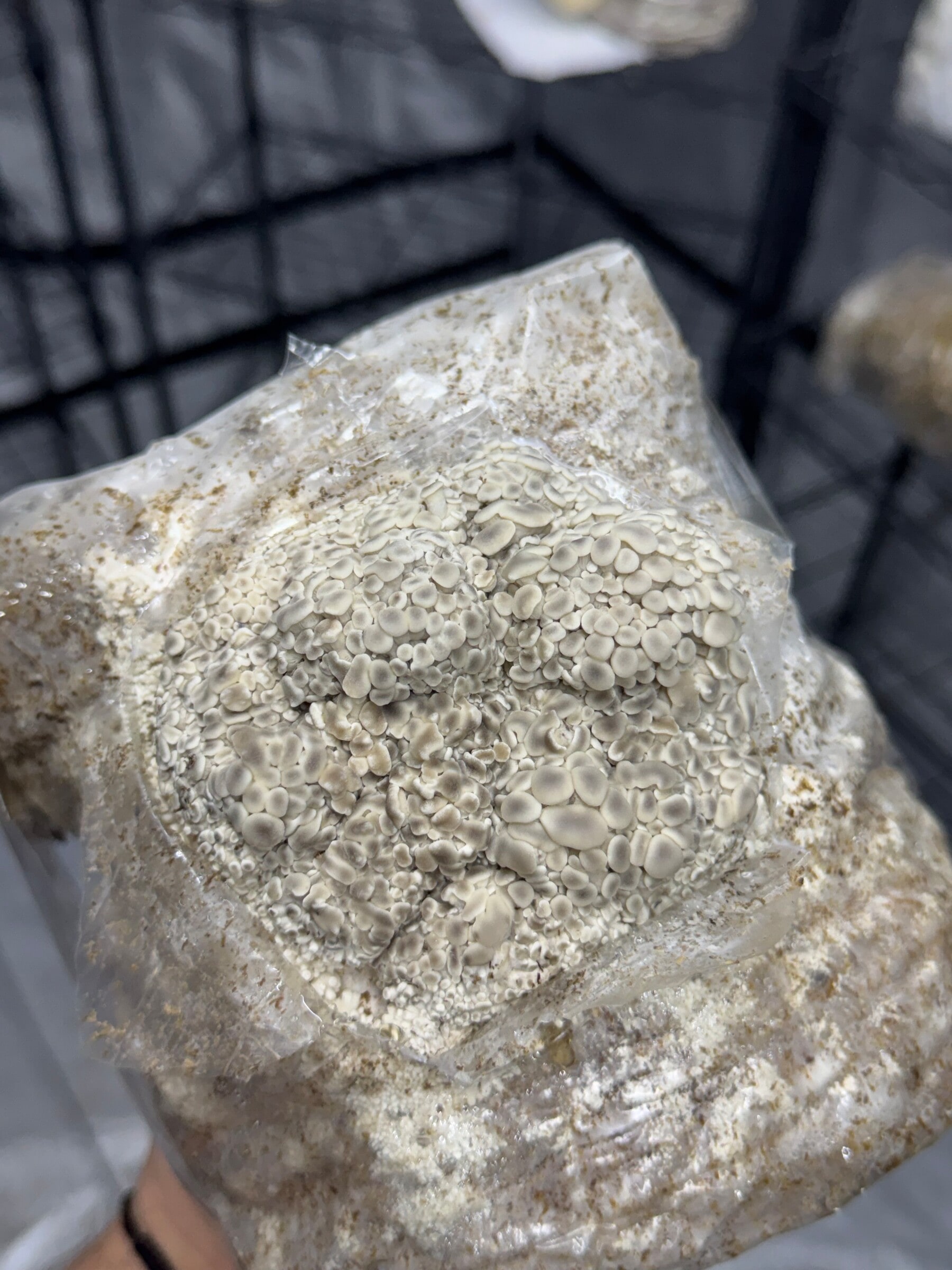
Substrate inoculation is adding spawn to a sterile, cooled block. In the whole cycle this is the only moment the block is opened: before it, the substrate was sealed in a bag; after it, the bag is sealed until fruiting. Whatever gets inside during those seconds will stay there along with the mushroom.
Three things depend on inoculation. How many growth points the block gets and how quickly it is colonised. Whether the mushroom manages to take over the substrate before competitors that survived the heat treatment. And whether new microflora is carried into the block with the air, on hands or in the spawn itself. This article covers what substrate for wood-loving mushrooms is inoculated with, above all for lion's mane (Hericium erinaceus), what spawn rate to use, how to add the spawn, how to set up a clean zone and how to manage blocks during incubation. Substrate preparation and sterilisation are covered in the previous article, and grain inoculation in a separate article.
What substrate is inoculated with
A sterile sawdust block is inoculated with one of three types of spawn.
| Spawn | Advantages | Disadvantages | Where it is used |
|---|---|---|---|
| Grain spawn | fast colonisation thanks to the nutritious grain | higher contamination risk; keeps 2–3 months in the refrigerator | small and medium farms, most studies |
| Sawdust spawn | keeps 4–6 months or longer, lower contamination risk | slower colonisation | Japan, Korea, China; bottle cultivation |
| Liquid spawn | fast production, even distribution, automation | contamination is hard to spot before inoculation; adds water to the substrate | industrial lines in Asia |
The advantages and disadvantages of grain and sawdust spawn are taken from Zombie Myco; the liquid spawn row and the "Where it is used" column are a summary of the sources cited below.
Grain spawn
In all the studies we found on lion's mane on sawdust substrates, the blocks were inoculated with grain spawn. Growers use rye, millet, sorghum or wheat; American producers sell lion's mane spawn on millet (Field & Forest). Small grain gives more kernels per gram, that is, more growth points at the same spawn rate; this is our explanation, and we found no direct comparison in the sources.
Sawdust spawn
For lion's mane, sawdust spawn has a particular advantage. On grain, lion's mane forms fruiting body primordia early, and growers on mushroom forums write that transferring such grain "can go badly if there are large primordia"; so for lion's mane they recommend sawdust for the second and later transfers. The Japanese spawn producer Kinokkusu specifies 15–20 cm³ of spawn per 850 ml bottle for lion's mane: one 850 cm³ bottle of spawn is enough for about 60 bottles of substrate (instructions). The instructions do not say what the spawn itself is made of.
Liquid spawn
There are data for other species; we could not find studies with liquid spawn for lion's mane in blocks or bottles.
| Mushroom | Result | Source |
|---|---|---|
| Shiitake, sawdust bags | incubation shortened from 120 to 90 days if the liquid culture was less than 50 days old | Kawai et al., 1996 |
| Pleurotus pulmonarius, rubber tree sawdust | 10 ml per bag; colonisation in 30 days versus 40 with grain; biological efficiency 65.48% versus 42.98% | Abdullah et al., 2013 |
| Enoki, bottles | 15–50 ml per bottle; cycle 5–7 days shorter than with sawdust spawn; yield up to +24% | Ryu et al., 1998 |
A review by Dong et al. (2026), covering 40 publications, came to the same conclusion: liquid spawn speeds up mycelial growth, shortens colonisation and increases yield.
Growers are more cautious. On mushroom forums the advice is not to inoculate sawdust with liquid culture directly but to go through grain: lion's mane blocks inoculated with liquid culture "took almost 5 weeks to colonise", and "you can't tell whether the culture is clean before you inoculate". The difference may be explained by scale: an industrial line adds tens of millilitres of tested culture from a fermenter, while a grower adds 5–10 ml from a syringe. This is our assumption.
How to check liquid culture before use is covered in a separate article.
Spawn rate
The spawn rate is expressed as the mass of spawn as a percentage of the mass of substrate. It almost always refers to the mass of wet substrate, and this has to be checked in each source: at 60% substrate moisture, a rate of "5% of dry mass" and one of "5% of wet mass" differ by a factor of two and a half.
What was used in lion's mane studies
| Source | Rate, of wet mass | Block | Colonisation |
|---|---|---|---|
| Atila, 2019 | 3% | 1 kg | 22.4–32.8 days depending on the substrate |
| Kumar, 2022 | 3% | — | 21.2 days on sawdust with 20% bran |
| Mishra, 2020 | 6%, 90 g per bag | 1.5 kg | 24–26 days for the fastest strain |
| Figlas et al., 2007 | 8% | 500 g | 25 days |
Sources: Atila, Kumar, Mishra, Figlas. We could not find an experiment that compared several spawn rates with one another for lion's mane. The table only shows that at 3% the substrate colonised no more slowly than at 8% in another study; different experiments cannot be compared directly.
What comparative experiments on other mushrooms showed
| Source | Mushroom and substrate | Rates | Result |
|---|---|---|---|
| Cornell | shiitake, supplemented sawdust | about 5; 2.5; 2% | 5% and 2.5% colonised in 8 weeks; at 2%, colonisation time and contamination increased |
| Royse, 2002 | Pleurotus cornucopiae, pasteurised substrate | 1.25–5% | 3.75% shortened the time to harvest by an average of 9.2 days compared with 1.25% |
| Pal et al., 2017 | Pleurotus pulmonarius, straw | 0.5–8% | fastest at 8%; little difference in yield between 4 and 8%; cost optimum 2–4% |
| Dong et al., 2026, review | mainly oyster mushrooms | — | 3–5% is used most often; above 10% the gain is insignificant |
Sources: Cornell, Royse, Pal, Dong. The percentages in the Cornell row are our conversion from "one bag of spawn per 20, 40 and 50 blocks".
The overall picture: a higher rate shortens colonisation, but beyond a certain level the gain becomes small. The lower limit matters more: at too low a rate the substrate colonises slowly, and competitors have time to develop.
What spawn producers and growers recommend
| Source | Rate for sterile substrate |
|---|---|
| Mycelia, spawn producer | 0.5–1% for wood-loving mushrooms; 2–8% for pasteurised substrates |
| Royse and Shen, shiitake | 2–3% |
| Zombie Myco | 2–5% |
| North Spore | a 2.7 kg bag per 54–75 kg of sawdust, i.e. 3.6–5% |
| GroCycle, lion's mane | 5% |
| Field & Forest, lion's mane | 5–10%; 20% for non-sterile substrate |
| Mycologic | 5–10%: 125–250 g per 2.5 kg block |
| Red Dirt Mushrooms, lion's mane | 10–20% |
Sources: Mycelia, North Spore, GroCycle, Field & Forest, Mycologic, Red Dirt.
The spread from 0.5 to 20% has an explanation. Industrial production with clean rooms and reliable sterilisation can afford 1%: there are no competitors in the block, and the mushroom is in no hurry. A small farm makes up for imperfect cleanliness with a high rate: Red Dirt Mushrooms states plainly that a higher rate "promotes faster colonisation and better results" with lion's mane. The first part of this explanation is our interpretation.
How much spawn that is
| Rate | Spawn per 2.5 kg block | Blocks per 1 kg of spawn |
|---|---|---|
| 1% | 25 g | 40 |
| 3% | 75 g | 13 |
| 5% | 125 g | 8 |
| 10% | 250 g | 4 |
Our calculation. Between 3 and 10% the difference in spawn consumption is more than threefold, so it is worth finding the rate through your own trial: one batch of substrate, three rates, and a comparison of colonisation time and the share of contaminated blocks. For a start, a sensible range is 3–5% of wet mass: it is the range seen most often both in studies and among growers.
Spawn quality
On mushroom forums there is a judgement worth remembering: substrate gets contaminated "in 9 cases out of 10 because of bad spawn". This is one grower's estimate, not a measured figure, but the logic is simple: the spawn goes into every block, and any contamination in it will be repeated across the whole batch.
Storage and age
| Source | Conditions | Shelf life |
|---|---|---|
| Mycelia | 0–2 °C | 2–4 months |
| Field & Forest | 1–6 °C | grain and sawdust spawn up to 3 months |
| PE Mykhailovskyi, Kharkiv | 0–4 °C | — |
| Oei, Agrodok 40 | above 25 °C | grain spawn "can spoil overnight" |
Sources: Mycelia, Field & Forest, PE Mykhailovskyi, Agrodok 40.
Before use, chilled spawn is warmed up. A Ukrainian producer advises keeping it at 22–27 °C "for no less than 20 hours and no more than 36"; the instructions were written for oyster mushroom, but the principle is general: cold spawn starts with a delay.
Generations
With every transfer, spawn becomes weaker. In an experiment with oyster mushroom, the mycelium was transferred for five cycles in a row: from the first to the fifth cycle, the time to colonisation and fruiting increased, and the mass of fruiting bodies fell by about 15–20% (Bankole et al., 2025). Oei's manual limits the chain to eight transfers from the master spawn. For shiitake liquid culture, the limit was an age of 50 days (Kawai et al., 1996).
What to check before starting work
| Sign | Acceptable spawn | Reject |
|---|---|---|
| Appearance | white mycelium on every kernel | coloured spots, slimy patches, uncolonised grain |
| Smell | mushroomy | sour, putrid, mouldy |
| Liquid | none | free liquid at the bottom |
| Structure | breaks up into separate kernels | a dense monolith that will not break up |
| Fruiting body primordia in lion's mane | none, or a few small ones | large primordia throughout |
| Age and generation | known, within the shelf life | unknown |
The table reflects general laboratory practice; the primordia row is based on the growers' remark quoted above. In doubtful cases, a few kernels are plated onto agar: active growth should appear within 3–5 days (Mycelia).
Grain spawn is broken up into separate kernels immediately before inoculation, without opening the bag. Broken-up spawn knits together again within a few days: North Spore writes this about spawn broken up during shipping. So there is no point in breaking it up in advance, and a bag that has knitted together again after shaking shows that the spawn is alive.
Methods of adding spawn
Mixing in or top-spawning
The spawn can be distributed through the whole block or left as a layer on top. The difference in colonisation time is large.
| Source | Mixed with the substrate | Top-spawned |
|---|---|---|
| Cornell, shiitake, 2.3 kg blocks | full colonisation in 14 days | 24 days |
| Royse and Shen, shiitake | 20–25 days | 45–90 days |
Source for the second row: MushWorld, chapter 4. The explanation is geometric: with top-spawning, the mycelium has to travel the full height of the block; with mixing, only the distance between neighbouring kernels.
Four methods were compared on oyster mushroom: at a single point, top and bottom, mixed in, and in layers. The highest biological efficiency, 62.57%, came from spawning at both ends of the bag, and the lowest from spawning at a single point (Idowu et al., 2016).
Top-spawning has an advantage of its own: the layer of spawn on the surface quickly closes it off, and the surface stops being an entry point for contamination. This is exactly how bottle cultivation works. This is our explanation; we could not find a comparison of contamination between the two methods.
Bags
The sequence growers describe:
- Wipe the spawn bag with 70% alcohol and cut the top with disinfected scissors (Liquid Fungi).
- Open the substrate bag and pour the spawn straight from bag to bag. A spoon or scoop is "an extra route for contamination" (mushroom forums).
- Seal the bag with an impulse sealer above the filter.
- Shake the bag so that the kernels spread through the whole substrate; this takes 30–60 seconds (Sporebuddies).
The bag is shaken after sealing, not before: an open bag is not mixed. That is why the bag is filled with substrate only halfway.
Bottles
In bottle cultivation the substrate is not mixed. A hole is made in the centre of the bottle before sterilisation, and the spawn fills it and covers the surface: the mycelium grows from the axis towards the walls and from the top down at the same time.
| Source | Container | Dose |
|---|---|---|
| Kinokkusu, lion's mane | 850 cm³ bottle, 580–600 g of substrate | 15–20 cm³ |
| Tokushima Prefecture, shiitake | 1.2 kg bag | 25 cm³, then shaken to spread it over the surface |
| Oei, Agrodok 40 | 1.2 kg bag | 10 g of sawdust spawn |
Sources: Kinokkusu, Tokushima. In these schemes the spawn rate is low: by our calculation, about 1–2% of the substrate mass.
Automated lines
Industrial machines add the spawn under filtered air without any hand contact. The Chinese manufacturer Joconn claims 6500 bags per hour with a dose accuracy of ±2 ml for its liquid inoculation machine, and 1200–1600 blocks per hour with an H14 filter for its solid spawn inoculation machine for shiitake (liquid inoculation, solid inoculation). These are the equipment manufacturer's figures.
The clean zone
Sterile substrate with bran is defenceless: it has no microflora of its own to hold back newcomers. So the air where inoculation takes place has to be clean.
How dirty ordinary air is
- In the air of Korean farms growing shiitake on sawdust, 248 of 1063 isolated fungi turned out to be Trichoderma; of these, 55.08% were Trichoderma harzianum (Kim et al., 2019).
- At a shiitake factory, the air in the incubation room contained 250–450 CFU/m³, and in the fruiting rooms 7000–8500 (Gong et al., 2024).
- In Japan, an outbreak of contamination at a nameko farm was traced to Trichoderma that had settled in the inoculation room: plates exposed in that room grew an average of 4.1 mould colonies, compared with 0.2 at a healthy farm (Hokkaido Forest Products Research Institute, 2002).
The last example offers a simple tool: an open agar plate in the inoculation zone shows the state of the air better than any assumption.
Air requirements
| Parameter | Value | Source |
|---|---|---|
| Filter | HEPA, at least 99.97% for 0.3 µm particles | Japanese compendium of standard technologies |
| Filter classes | H13 — 99.95%, H14 — 99.995% | Mycology Supply |
| Laminar flow velocity | 0.45 ± 0.1 m/s | Japanese compendium; 0.4–0.5 m/s in Mycology Supply |
| Cleanliness class of cooling and inoculation rooms | class 7 (10,000) | Japanese compendium |
| Air change rate without laminar flow | at least 20 volumes per hour | Japanese compendium |
| Positive pressure | 10–15 Pa | draft Chinese group standard |
Sources: Japanese compendium, Mycology Supply, Chinese draft standard.
Positive pressure means that air flows out of the clean room rather than in, and every gap blows outwards.
Three levels of equipment
| Level | What it is | What it is good for |
|---|---|---|
| Still air box | a closed box with armholes, still air | agar and a few blocks; FreshCap writes that it is quite effective for hobbyists, but inconvenient for inoculating fruiting blocks |
| Laminar flow hood | a stream of filtered air over the work area | small and medium batches; the standard for growers |
| Clean room | filtered air throughout the room, positive pressure | industrial production, automated lines |
On the Ukrainian market, open listings showed only laboratory laminar flow cabinets and biosafety cabinets, from UAH 81,000 upwards (Prom.ua, October 2026); the search did not turn up any hoods designed for mushroom growers.
Working rules
- Switch on the laminar flow hood 15–20 minutes before starting and wipe the surfaces with 70% isopropyl alcohol before and after each session (Mycology Supply).
- Keep your hands downstream of the open substrate and spawn, not upstream of them (FreshCap). Anything between the filter and the open bag blows particles onto it.
- Clothing. Clean clothes, a shower and a hair wash before work (FreshCap); disposable medical gloves, a change of clothes and shoes (PE Mykhailovskyi).
- Disinfect the outside of the spawn packaging before opening it: a Ukrainian producer advises wiping it twice.
- From clean to dirty. Inoculation is done at the start of the day, before work in the fruiting chambers, where the air holds tens of times more spores. This is our conclusion from the measurements cited above.
Surface disinfection
Several agents were tested against the spores of Trichoderma (Trichoderma aggressivum, the cause of green mould in button mushroom) at exposures of 15 and 60 minutes: a 1–2% peroxide product, 2–4% quaternary ammonium compounds, a 2–4% chlorine product and 2–4% formalin gave "no fungal growth"; ozone at 50–100 ppm had no effect (MushTV, 2015). Alcohol was not tested in this study, and we could not find data on the effect of ethanol or isopropanol on Trichoderma spores. Alcohol remains the agent for hands, tools and clean surfaces, while for floors and walls, in view of these data, products with a proven effect on spores are more reliable; this is our advice.
Block temperature and sealing the bag
When the block is ready for inoculation
| Source | Substrate temperature |
|---|---|
| Kinokkusu, lion's mane | no higher than 20 °C |
| Tokushima Prefecture, shiitake | no higher than 20 °C: "the mycelium is weak to heat" |
| PE Mykhailovskyi, oyster mushroom | 20–27 °C |
| Oei, Agrodok 40 | below 30 °C |
| FreshCap | above 38 °C the mycelium may die |
On what overheating does to mycelium, there are data for another mushroom: in Pleurotus tuoliensis, the mycelium still grew normally at 32 °C, but at 36 °C its growth rate fell from 4.77 mm per day in the control to 0.58 mm (Chen et al., 2023). Lion's mane reacts similarly: at 32 °C its mycelium built up 0.68 g, compared with 5.95 g at 24 °C (Khurana et al., 2022).
The temperature is measured in the centre of the block. After sterilisation, blocks cool for 8 to 24 hours: FreshCap gives at least 8 hours, Field & Forest 12–24. The bag may feel cold to the touch while the core is still warm.
Do not delay inoculation after cooling either. In sterilised sawdust substrate that stood at 24 °C, Korean researchers counted 4000 CFU of microorganisms, compared with 130 at 15 °C and zero at 5 °C (Chang et al., 2018).
Sealing
The bag is sealed immediately after the spawn is added, while still in the stream of clean air.
- The seal is made above the filter, so that the filter stays within the volume of the bag and keeps working.
- A double seal is more reliable. A grower who has sealed thousands of bags with a cheap sealer with a 5 mm seal advises waiting 5 seconds after the heating switches off, without lifting the bar, and running the seal a second time without moving the bag (mushroom forums).
- The seal is checked while the bag is still in the clean zone (Liquid Fungi).
- Without a sealer, the top of the bag is twisted, folded over and fastened with a cable tie (Mycologic). The source itself calls this a fallback option.
On the Ukrainian market, a PFS-400 impulse sealer with a 400 × 3 mm seal for film up to 200 µm costs about UAH 2700 (Prom.ua).
The filter and the air in the bag
The mycelium breathes, and gas exchange happens only through the filter. For fruiting blocks, growers use a 0.5 µm filter. For lion's mane there is one more rule: excess air is let out of the bag and the bag is pressed against the substrate. In free space under the film, lion's mane forms fruiting bodies while still in incubation; the advice from mushroom forums is "keep the bag tight to reduce the space inside… keep it in the dark".
Labelling
Each block is labelled with the strain, inoculation date, substrate batch and spawn batch. Without this, contamination cannot be traced back to its source. This is general laboratory practice; we found no description of it in the growers' sources we reviewed.
Incubation after inoculation
Temperature
In studies, the optimum for lion's mane mycelium is about 25 °C.
| Source | Result |
|---|---|
| Imtiaj et al., 2008 | optimum 25 °C, suitable range 20–30 °C; at 15 and 35 °C growth is weakest or absent |
| Khurana et al., 2022 | mycelial mass 5.95 g at 24 °C, 4.23 g at 28 °C, 0.68 g at 32 °C |
| Gonkhom et al., 2022 | maximum at 25 °C, but the difference within 16–35 °C is not statistically significant |
Sources: Imtiaj, Khurana, Gonkhom.
Production instructions set the room temperature below the optimum:
| Source | Temperature | Other conditions | Duration |
|---|---|---|---|
| Kinokkusu, bottles | 20–23 °C | air humidity 65–75%, CO₂ no higher than 2500 ppm, darkness | 30–35 days |
| Nagano Prefecture, 800–850 ml bottles | 18–22 °C | — | about 20 days |
| Lu et al., 2024 | 25 °C | air humidity 60%, darkness | about 30 days |
| Figlas et al., 2007 | 24 ± 1 °C | darkness | 25 days |
| Atila, 2019 | 25 ± 2 °C | — | 22.4–32.8 days |
| Field & Forest | 20–22 °C | — | 20 days |
| GroCycle | 20–24 °C | — | 2–3 weeks |
Sources: Kinokkusu, Nagano, Lu et al., Field & Forest, GroCycle.
The block is warmer than the room
Mycelium gives off heat, and the temperature inside the block is higher than the air temperature. That is exactly why the room is kept cooler than the optimum.
| Source | Excess inside the block | Advice |
|---|---|---|
| Akita Prefecture, shiitake, sensors | +2 °C at the start of incubation, about +1 °C later | at least 3 cm between blocks |
| Cornell, 2.3–4.5 kg blocks | 5–8 °C warmer | a hand's width apart; room no warmer than 27 °C |
| Oei, Agrodok 40 | "by several or even ten degrees" | — |
| La Mycosphère | — | if a block is more than 3 °C warmer than the air, the blocks are spaced further apart |
Sources: Akita, Cornell, La Mycosphère. In the Cornell row, the degrees and kilograms are our conversion from US units.
The calculation is simple: at 23 °C in the room and an excess of 5 °C, the core of a large block is at 28 °C, where lion's mane growth is already slowing down. The temperature is measured in the block, not on the wall of the room.
Light and carbon dioxide
In the studies and in the Japanese instructions, lion's mane is incubated in the dark. Light and fresh air trigger fruiting, and that is not needed at the colonisation stage.
On carbon dioxide, the sources disagree. Kinokkusu limits it in the room to 2500 ppm. The parameters that mushroom forums quote, citing Stamets's book, give 5000–40,000 ppm for colonisation; this figure was not checked against the original book. The contradiction is probably only apparent: the first figure refers to the room air, the second to the gas inside the bag. In shiitake bags, 3.8–6.0% CO₂ was measured, that is, 38,000–60,000 ppm, and the mycelium grew 2.3–2.8 mm per day under these conditions (Lee et al., 2012). We could not find in-bag measurements for lion's mane.
Lion's mane fruits early
Growers' timelines are much shorter than those in studies: 7–14 days versus 20–35. The reason is that lion's mane does not wait for full colonisation.
- Lion's mane "forms primordia long before the block looks colonised"; if the sealed bag is held too long, primordia will appear all over the surface (Mossy Creek).
- Lion's mane mycelium is thin and barely visible, so the block looks uncolonised when the mushroom has already taken over the substrate.
- Advice from mushroom forums: "start fruiting when primordia appear", usually no later than 7–10 days.
- If primordia have appeared under the film, the bag is cut with a cross-shaped slit next to them (Redwood).
Early fruiting has a cost. In a classic experiment with shiitake, biological efficiency after 116 days of incubation was 2–3 times higher than after 58 (Royse, 1985). We could not find such a comparison for lion's mane, and it is not known whether it loses yield when fruiting starts early. This is worth checking with your own trial.
Contamination after inoculation
What contaminates sawdust blocks
The main competitor on sterilised sawdust is Trichoderma, green mould.
| Source | Mushroom | What was found |
|---|---|---|
| Kim et al., 2024 | wood ear, sawdust substrate | of 54 isolated fungi, Trichoderma 92.6%, Penicillium 5.6% |
| Fan et al., MushWorld | shiitake, bags | mainly Trichoderma viride and T. koningii |
| Ajis et al., 2024 | Pleurotus pulmonarius, pasteurised sawdust | T. pleuroti, T. harzianum, T. ghanense; Trichoderma was found in the water, the air and on tools, while the substrate and spawn were clean |
| Bhargav et al., 2023 | grain spawn laboratory | contamination from 8.67% in January to 18.33% in August; the pathogens were isolated from the air of the inoculation and incubation rooms |
Sources: Kim et al., Fan et al., Ajis et al., Bhargav et al..
For shiitake, Oei's manual considers no more than 5% contaminated bags acceptable. We could not find data on the pathogens and contamination rate specifically for lion's mane blocks. The seasonality in Bhargav's work is telling: in summer, the same technique gave twice the losses it did in winter.
What contamination looks like
| Contaminant | Signs |
|---|---|
| Trichoderma | dense white mycelium that turns green within a few days |
| Bacteria | dull grey slime, sour smell, wet patches on the grain or substrate |
| Penicillium | blue-green powdery colonies |
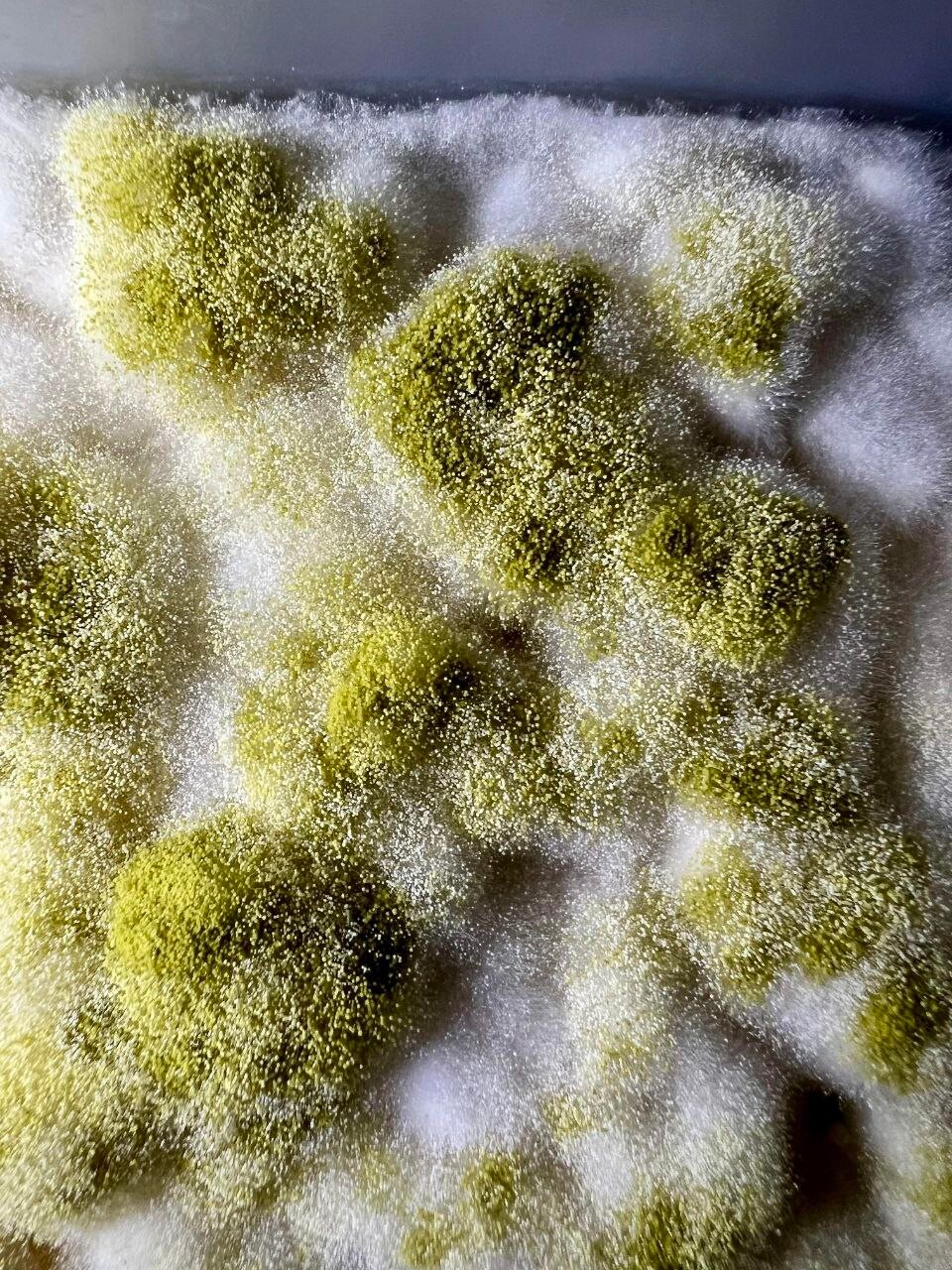
The description of bacterial contamination follows North Spore, which notes that bacterial endospores "survive sterilisation"; the rows on Trichoderma and Penicillium are well-known signs.
Where it appeared tells you where it came from
| Location and pattern of contamination | Likely source | What to check |
|---|---|---|
| Around the kernels throughout the block, in all blocks from one bag of spawn | the spawn | the spawn batch, plating onto agar |
| In the upper part, near the seal or filter, in individual blocks | air during inoculation or cooling, a leaking seal, a wet filter | the clean zone, the sealer, an agar plate in the inoculation zone |
| Deep in the block, far from the kernels, in many blocks of the batch | insufficient sterilisation | the cycle, the temperature in the centre of the block, uninoculated control blocks |
| At a puncture or tear in the bag | damage to the film | transport, shelving, rodents and insects |
There is no such table in the sources we reviewed. It is our summary of how contamination spreads: contamination starts where the pathogen got into the block.
What to do with contaminated blocks
- Do not open them indoors. An opened or disturbed green block releases a cloud of spores into the air, and later batches will be contaminated more often.
- Take them out sealed. The block is put into an additional bag and removed from the room immediately (North Spore).
- Inspect the blocks daily for the first two weeks. Early contamination is easier to spot and remove before it sporulates. This is our advice.
- Count losses by batch. The share of contaminated blocks in each batch and the pattern of contamination show what exactly went wrong: the spawn, the sterilisation or the clean zone.
Procedure
- Check the spawn: appearance, smell, age, generation; warm chilled spawn to room temperature.
- Break up the grain spawn into separate kernels without opening the bag.
- Make sure the blocks have cooled: no higher than 20–25 °C in the centre.
- Prepare the clean zone: switch on the laminar flow hood 15–20 minutes ahead, wipe the surfaces, tools and spawn packaging; clean clothes, gloves.
- Measure out the spawn rate: 3–5% of the wet substrate mass to start with.
- Add the spawn by pouring it from bag to bag; keep your hands downstream of the open block.
- Let out excess air and seal the bag with a double seal above the filter; check the seal.
- Shake the sealed bag so that the spawn spreads through the substrate.
- Label the block: strain, date, substrate batch, spawn batch.
- Put it into incubation at 20–23 °C in the dark, with gaps between blocks; monitor the temperature in the block.
- Inspect the blocks daily, and take contaminated ones out unopened.
- Move to fruiting when the substrate is colonised or the first fruiting body primordia appear.
References
Spawn rate and type of spawn
- Atila F., 2019. The Use of Phenolic-rich Agricultural Wastes for Hericium erinaceus and Lentinula edodes Cultivation. Ege Üniv. Ziraat Fak. Derg. 56(4), 417–425.
- Kumar S., 2022. Evaluation of Hericium erinaceus (Lion's Mane) mushroom strains on different substrates. The Pharma Innovation Journal 11(6), 379–384.
- Mishra S. K., 2020. The Productivity of Genotypes of Hericium erinaceus on Wheat Straw and Poplar Sawdust Based Growing Media. Indian Journal of Pure & Applied Biosciences 8(6), 396–405.
- Figlas D., González Matute R., Curvetto N., 2007. Cultivation of Culinary-Medicinal Lion's Mane Mushroom Hericium erinaceus on Substrate Containing Sunflower Seed Hulls. International Journal of Medicinal Mushrooms 9(1), 67–73.
- Royse D. J., 2002. Influence of spawn rate and commercial delayed release nutrient levels on Pleurotus cornucopiae (oyster mushroom) yield, size, and time to production. Applied Microbiology and Biotechnology 58(4), 527–531.
- Pal J. et al., 2017. Effect of different spawn rates and substrate supplementation on yield of Indian Oyster mushroom, Pleurotus pulmonarius. Journal of Applied and Natural Science 9(3), 1406–1410.
- Dong H. T. et al., 2026. Mushroom Spawn and Its Effects on Mushroom Growth and Development: A Systematic Review. Agronomy 16(3), 391.
- Idowu O. O. et al., 2016. Influence of inoculation method and spawn level on biological efficiency of Pleurotus ostreatus. Journal of Applied Sciences and Environmental Management 20(3).
- Bankole F. A. et al., 2025. Growth and fruiting body production of Pleurotus ostreatus based on spawn substrates and quality. Journal of Environmental Studies 40(1), 45–51.
- Royse D. J., 1985. Effect of Spawn Run Time and Substrate Nutrition on Yield and Size of the Shiitake Mushroom. Mycologia 77(5), 756–762.
- Kawai G. et al., 1996. Effect of liquid mycelial culture used as a spawn on sawdust cultivation of shiitake (Lentinula edodes). Mycoscience 37(2), 201–207.
- Abdullah N. et al., 2013. Production of liquid spawn of an edible grey oyster mushroom, Pleurotus pulmonarius, by submerged fermentation and sporophore yield on rubber wood sawdust. Scientia Horticulturae 161, 65–69.
- Ryu Y. H. et al., 1998. 팽이버섯 재배시 액체종균 사용 효과 (liquid spawn for enoki). Korean Journal of Mycology 26(1), 20–24.
- Royse D. J., Shen Q. Shiitake Bag Cultivation in the U.S. Mushroom Growers' Handbook 2, chapter 4. MushWorld, 2005.
- Cornell Small Farms. Seven stages of cultivation.
- Oei P. Agrodok 40: Small-scale mushroom cultivation. Agromisa.
- Mycelia. FAQ: production.
Clean zone and contamination
- Kim J. Y. et al., 2019. Isolation and Characterization of Airborne Mushroom Damaging Trichoderma spp. from Indoor Air of Cultivation Houses Used for Oak Wood Mushroom Production Using Sawdust Media. The Plant Pathology Journal 35(6), 674–683.
- Kim S. et al., 2024. Isolation and Identification of Competitive Fungi on Medium for Black Wood Ear Mushroom in Korea and In Vitro Selection of Potential Biocontrol Agents. Research in Plant Disease 30(1), 66–77.
- Gong W. et al., 2024. Seasonal discrepancy of airborne fungal diversity and community structure in Lentinula edodes factory. Mycology 16(1), 344–356.
- Hokkaido Forest Products Research Institute, 2002. キノコ栽培での微生物汚染トラブルを解決する (how to find the cause of microbial contamination in mushroom cultivation).
- きのこ栽培用クリーンルーム (clean rooms for mushroom cultivation), Japanese compendium of standard technologies.
- 食用菌工厂化生产 厂房设计规范(征求意见稿) (design of premises for industrial mushroom cultivation), draft group standard T/EJCCCSE.
- O'Neill T. et al., 2015. Use of chemical disinfectants in mushroom production. MushTV, Factsheet 01/15.
- Fan L. et al. Pest and Disease Management in Shiitake Bag Cultivation. Mushroom Growers' Handbook 2, chapter 5. MushWorld, 2005.
- Ajis A. H., Tan Y. S., Chai L. C., 2024. Green mould contamination of Pleurotus pulmonarius cultivation in Malaysia: Unravelling causal agents and water source as critical factors. Fungal Biology 128(7), 2197–2206.
- Bhargav P. et al., 2023. Fungal and Bacterial Contaminants Associated with the Spoilage of Mushroom Spawn. International Journal of Plant & Soil Science 35(6).
- Mycology Supply: laminar flow hoods and filters.
Temperature and incubation
- Imtiaj A. et al., 2008. Vegetative Growth of Four Strains of Hericium erinaceus Collected from Different Habitats. Mycobiology 36(1).
- Khurana S. et al., 2022. Standardization of Parameters for the Mycelium Growth of Hericium erinaceus: An Edible Medicinal Mushroom. Annals of Agri-Bio Research 27(2), 149–152.
- Gonkhom D. et al., 2022. Optimal conditions for mycelial growth of medicinal mushrooms belonging to the genus Hericium. Mycological Progress 21(9).
- Chen L. et al., 2023. Comparative analysis of genome-wide transcriptional responses to continuous heat stress in Pleurotus tuoliensis. AMB Express 13, 121.
- Lee H. Y. et al., 2012. Effects of Aeration of Sawdust Cultivation Bags on Hyphal Growth of Lentinula edodes.
- Lu Z. et al., 2024. Optimization of substrate formulation for Hericium erinaceus by replacing wood by straw and their effect on enzyme activities. Frontiers in Plant Science.
- Chang H. Y. et al., 2018. Characteristics of sawdust cultivation of Lentinula edodes with different methods of spawn inoculation. Journal of Mushrooms 16(2), 61–64.
- Japanese instructions: Kinokkusu, lion's mane, Nagano Prefecture, Tokushima Prefecture, Akita Prefecture.
Growers' practice and equipment
- FreshCap: laminar flow hood, preventing contamination.
- Field & Forest: lion's mane spawn, lion's mane blocks, spawn storage.
- GroCycle, Mycologic, Red Dirt Mushrooms, Mossy Creek, Redwood, La Mycosphère.
- North Spore: grain spawn, contamination.
- Zombie Myco: grain and sawdust spawn, inoculation.
- Liquid Fungi, Sporebuddies: inoculation sequence.
- Joconn: liquid inoculation machine, solid inoculation machine.
- Ukrainian market: PE Mykhailovskyi instructions, laminar flow hoods, PFS-400 sealer.
Related mushrooms
Materials for growing
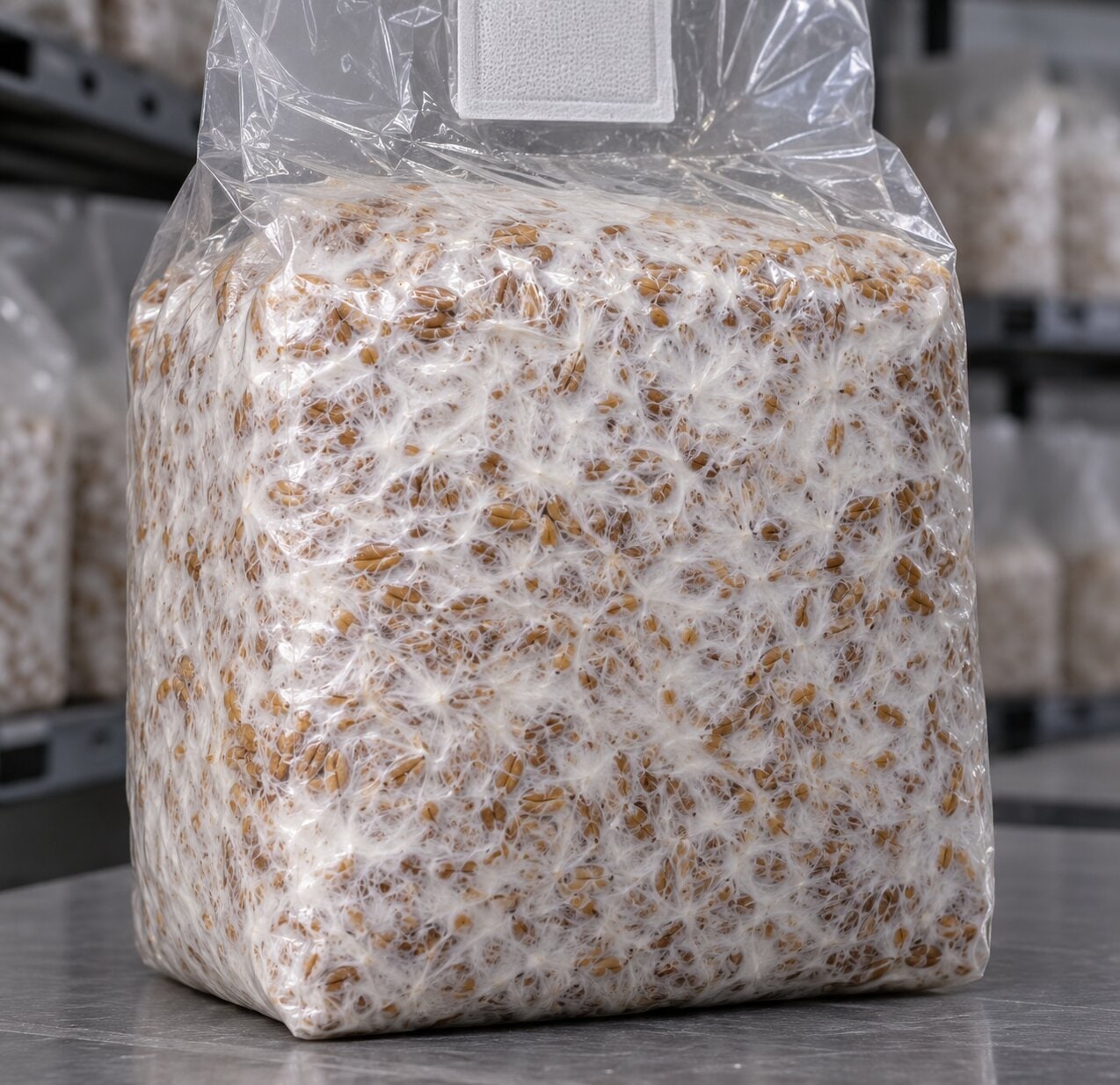
Master grain spawn — 5 kg bag
GREEBZ master grain spawn of the chosen culture. A pure culture on sterile grain substrate. Available in a choice of cultures — list the ones you need in your request. Master spawn is intended for further propagation and the production of production spawn. Grown from a pure culture under sterile laboratory conditions. Specifications - Format: grain spawn in a filter bag (grow bag), 5 kg - Substrate: sterile grain - Producer: GREEBZ
Made by us
On request
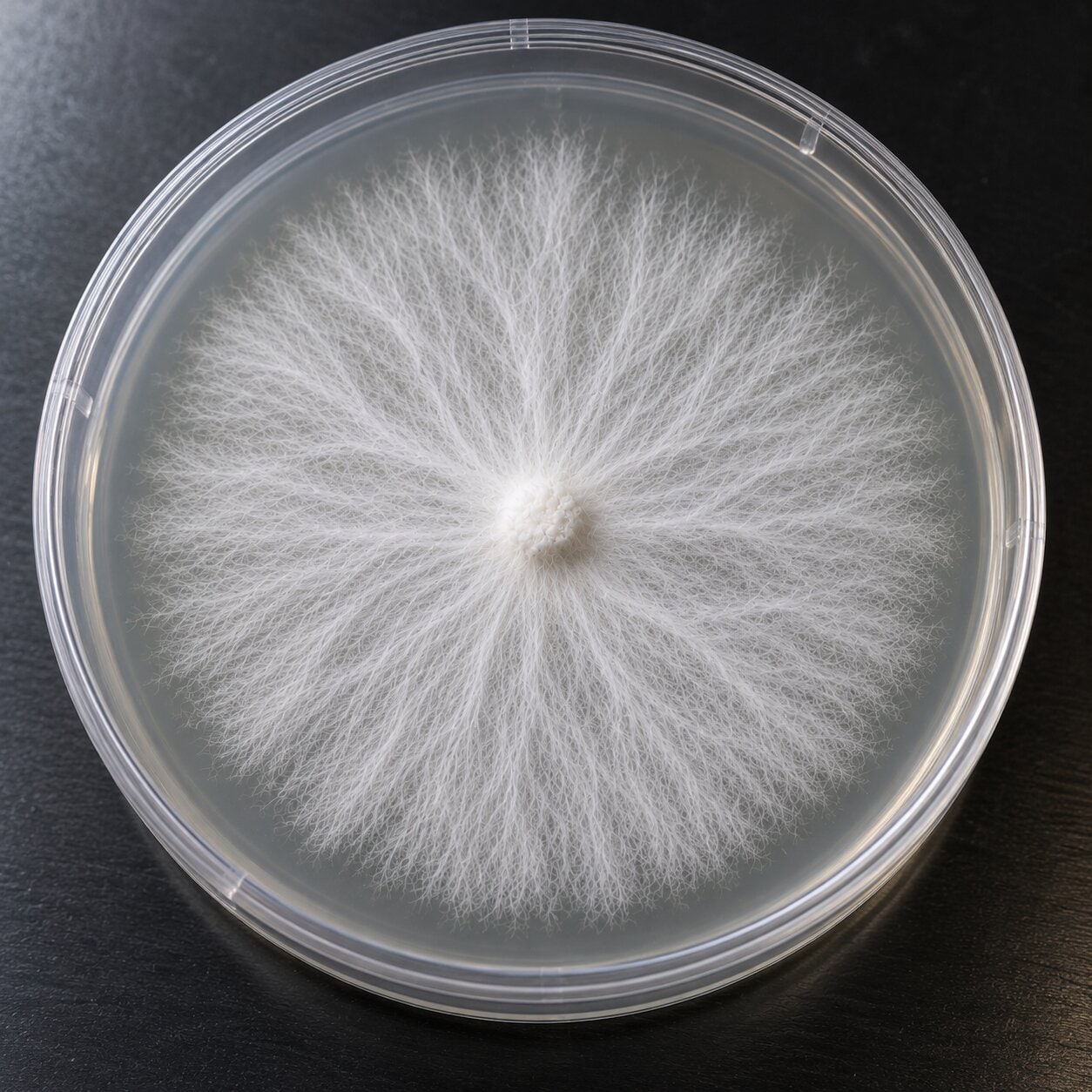
Pure mushroom culture — Petri dish
Pure GREEBZ mushroom cultures on a sterile agar nutrient medium. Available in a choice of cultures — list the ones you need in your request. Pure mushroom cultures grown under laboratory conditions on a sterile agar nutrient medium in Petri dishes. They are intended for further propagation of the culture, transfer to fresh nutrient medium and the production of grain spawn. One chosen culture = one Petri dish. Specifications - Format: pure culture on a sterile agar nutrient medium in a Petri dish - Producer: GREEBZ
Made by us
On request
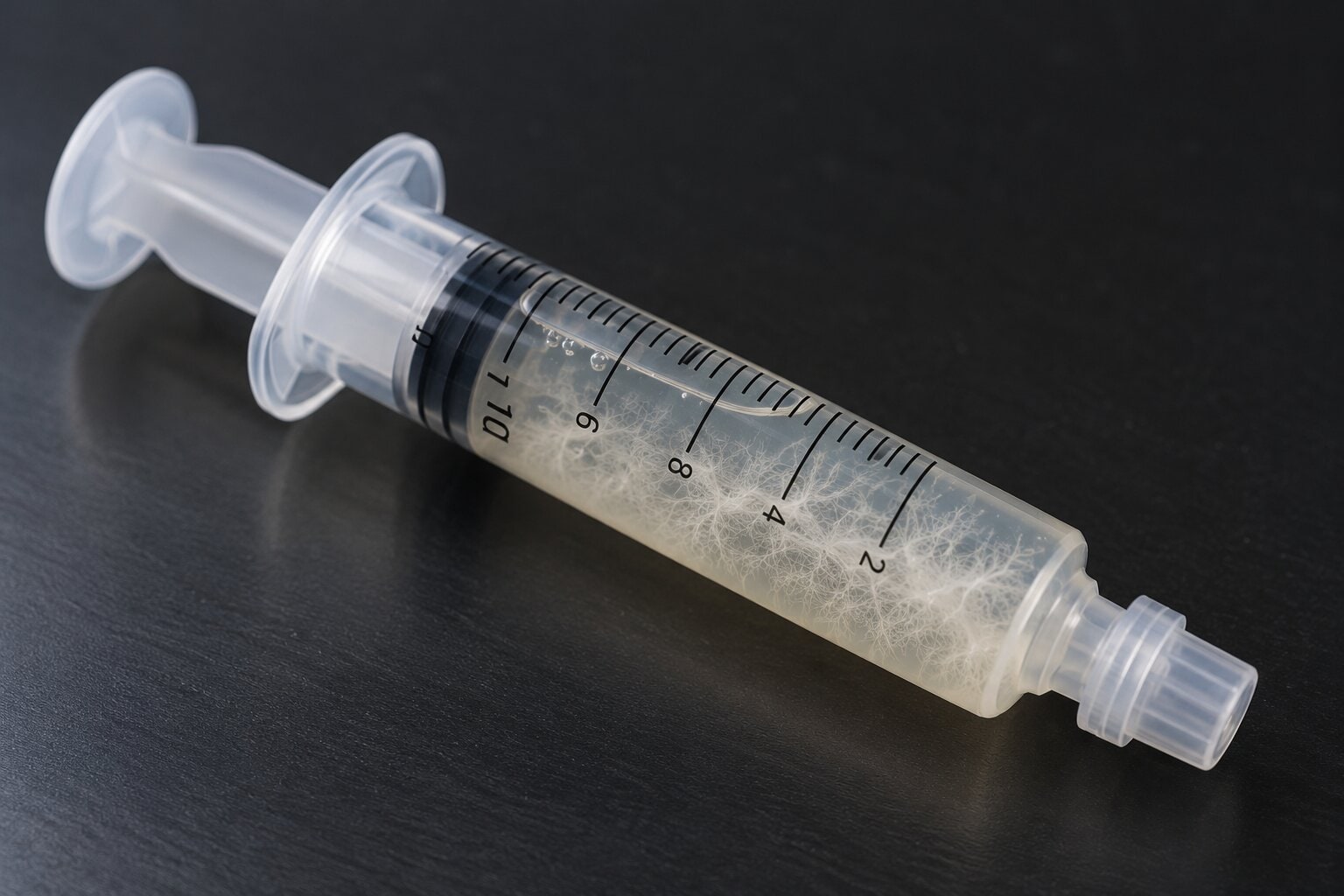
Liquid culture — 10 ml Luer Lock syringe
Pure GREEBZ mushroom liquid cultures. Available in a choice of cultures — list the ones you need in your request. The liquid culture is grown from a pure culture under sterile laboratory conditions. It is intended for inoculating grain substrate and producing grain spawn. Specifications - Format: liquid culture in a sterile Luer Lock syringe, 10 ml - Producer: GREEBZ
Made by us
On request
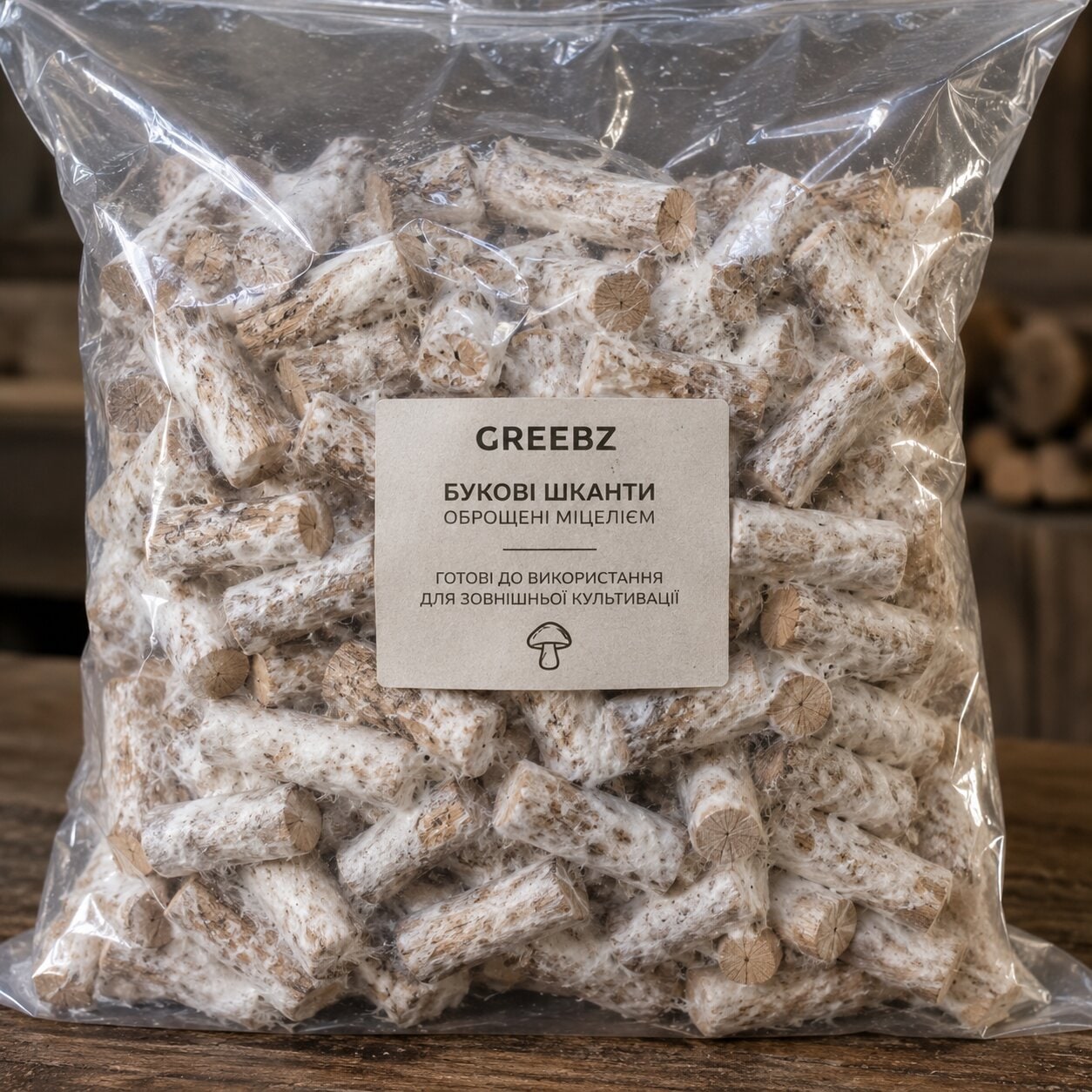
Beech plug spawn colonised with mycelium
Beech dowels colonised with the mycelium of the chosen culture. Ready to use for growing mushrooms outdoors on wood. Pack of 250–300 g. Available in a choice of cultures — list the ones you need in your request. One chosen culture = one pack of dowels. What's included - Beech dowels colonised with the mycelium of the chosen culture Important: wax and cotton wadding are not included. What you'll need for inoculation For working with the dowels we also recommend preparing: - Wax — to seal the holes after inserting the dowels. It closes the inoculation site and protects it from drying out and from the outside environment. - Cotton wadding — can be used for extra treatment and closing of the prepared holes. You will also need: - a drill; - a drill bit of the right diameter for the dowel; - a tool for inserting the dowels; - wood suitable for cultivation. Wax, cotton wadding and tools are bought separately. Specifications - Format: beech dowels colonised with the mycelium of the chosen culture - Pack weight: 250–300 g - Producer: GREEBZ
Made by us
On request
Other entries
Need help with your process?
Describe what's happening, even if you don't know the cause. We'll work it out together.