Grain inoculation: methods, sterility, incubation
How to inoculate sterile grain with agar, liquid culture or grain, under what conditions, how many generations are acceptable, and how to incubate and store grain spawn.
Author: Volodymyr Sobol
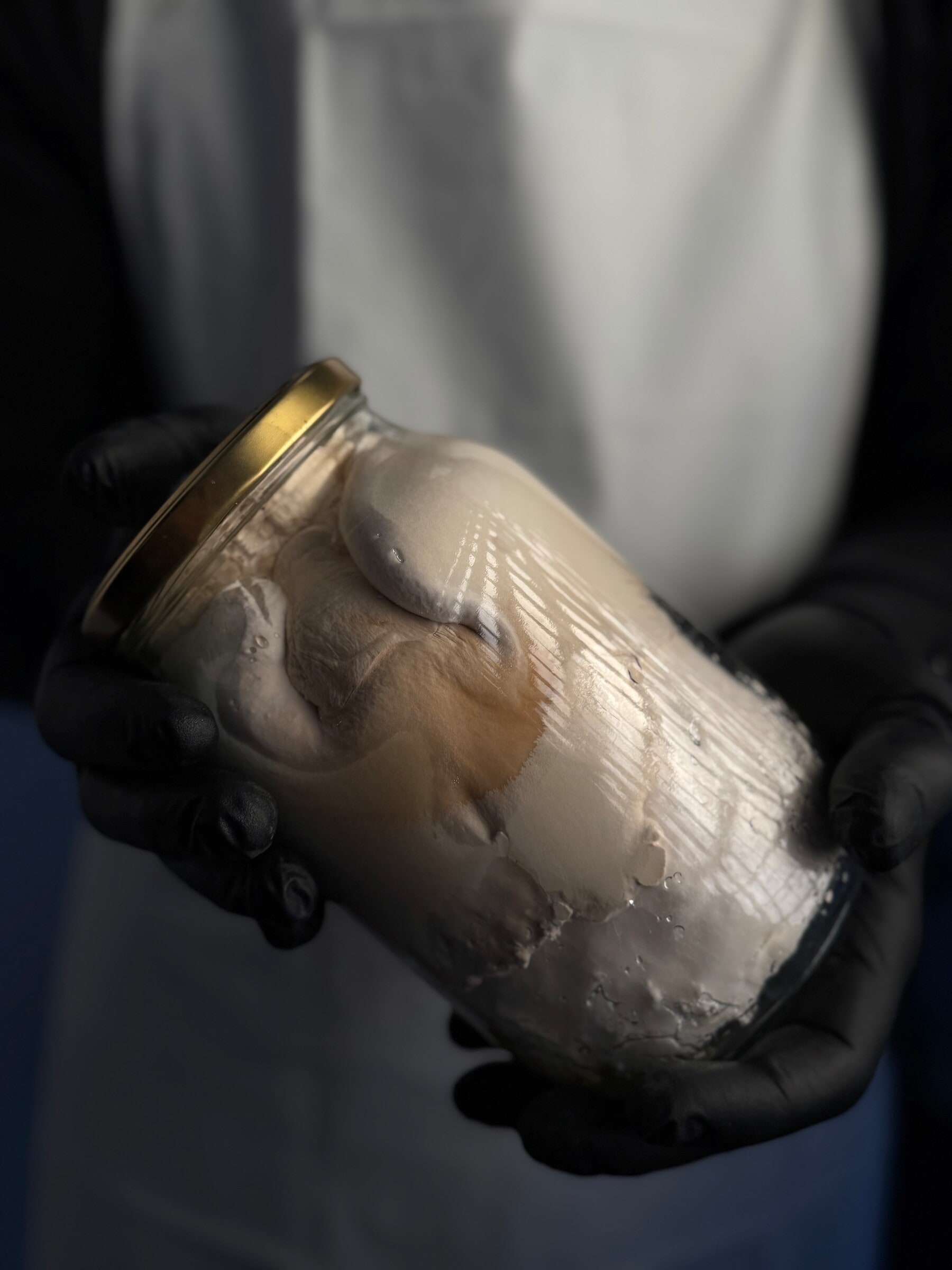
Inoculation is the transfer of a pure culture onto sterile grain. It is the only moment when the sterile container is open, so this is where foreign microflora most often gets into the grain. The result is determined by three things: the purity of the inoculum, the cleanliness of the air in the work area and the speed with which the mycelium takes over the grain.
We covered how to prepare and sterilise grain in a separate article; this one is about what happens after the autoclave.
What grain is inoculated with
Grain is inoculated with three kinds of inoculum: agar with mycelium, liquid culture or grain that is already colonised. Spores are not suitable for production: each spore carries its own set of genes, and the spores have to germinate and fuse, so the grain is colonised more slowly (Fungus Head).
| Inoculum | Rate | Advantages | Risks |
|---|---|---|---|
| Agar with mycelium | Laboratories: a 5 × 5 mm square of agar per bottle (FAO). Growers: at least three pieces of about 1 × 1 cm per jar (FreshCap) | The purity of the culture can be seen on the plate before inoculation | Few growth points, the slowest colonisation; the jar has to be opened |
| Liquid culture | 1–2 ml per jar of about 1 litre (FreshCap); 2.5–5 ml per 1.4 kg bag with a port (North Spore) | Inoculated with a needle through the port, so the container is not opened; many growth points | Contamination is not visible in the liquid, so the culture is first checked on agar. Excess liquid over-hydrates the grain, and growth stops (North Spore) |
| Grain to grain | From 1:10 to 1:20 (FreshCap). One 250 ml flask inoculates five or six 1-litre flasks (Royse, Wilkinson); one 300 g bottle of master spawn inoculates 25–30 bags of 500 g (Indian Horticulture) | The fastest colonisation: 7–14 days, roughly twice as fast as after liquid culture (Naturelion) | The container is opened and the grain is poured across; contamination from one jar spreads to the whole batch |
We could not find controlled studies linking the amount of inoculum to the speed at which grain is colonised; the rates in the table reflect the practice of laboratories and growers.
Sterile conditions
Grain is inoculated in a flow of air cleaned by a HEPA filter. Such a filter retains at least 99.97% of particles 0.3 µm in size (BMBL, Appendix A). For an ISO Class 5 zone the limit is no more than 3520 particles of 0.5 µm and larger per cubic metre, at an airflow velocity of 0.45 m/s ± 20% (FDA).
| Equipment | How it works | What growers say |
|---|---|---|
| Laminar flow cabinet | A horizontal flow of sterile air from a HEPA filter over the work area | Contamination of about 1–2% (Naturelion); producers recommend exactly this for inoculating grain (Fungi Ally) |
| Still air box | A closed transparent chamber with arm holes; after cleaning, the air is left to settle | Contamination of 5–10% (Naturelion); for grain-to-grain transfers, according to growers on forums, up to 20% |
| Inoculation through a port without a box | Liquid culture is injected with a needle through a self-healing port | Growers on forums report over 90% success even on a kitchen table |
Four working rules:
- The grain must cool down. Grain is inoculated once it is cooler than 27 °C (Foxfire); it is usually left in the autoclave for 8 hours or overnight (GroCycle).
- Surfaces are treated with 70% alcohol. The optimum concentration is 60–90%: in the presence of water, proteins denature faster. Alcohol does not destroy bacterial spores (CDC).
- Tools are flamed until red-hot and cooled for about 15 seconds (LibreTexts); a new sterile needle is used for each bag (Midwest Grow Kits).
- The port is wiped with alcohol for 15–20 seconds before the needle goes in (Midwest Grow Kits).
The contamination percentages in the table are estimates from blogs and forums, not figures measured in experiments.
Inoculation technique
All three methods share one condition: the container is open for a matter of seconds or not opened at all.
Agar to grain
- Take a plate with a verified pure culture.
- Flame the scalpel, let it cool and cut pieces of agar from the edge of the colony.
- Open the lid just enough to drop the pieces in, and close it immediately (FreshCap).
- Tilt the jar so that the grain covers the agar; a piece should not stick to the glass high above the grain (growers' forums).
Liquid culture to grain
- Check the culture by plating it on agar before you start.
- Wipe the port with alcohol and take a new sterile needle.
- Insert the needle to a depth of about 2.5 cm and inject the required amount of culture (Midwest Grow Kits).
- Do not mix right away: the grain is shaken later, once the mycelium has covered 20–30% (Midwest Grow Kits).
Grain to grain
- Break up the colonised grain in the closed donor jar into separate kernels.
- In the airflow of the laminar flow cabinet, pour a portion into a sterile jar or bag; the container is open for 5–10 seconds (Naturelion).
- Close it and mix straight away, so that the colonised kernels spread through the whole volume.
Bags
After the autoclave, bags collapse. In the laminar flow cabinet the walls are pulled apart, the inoculum is added, and the bag is sealed with an impulse sealer or closed with a cable tie (growers' forums). Bags with a port are inoculated with liquid culture without being opened.
Mycelium generations
Grain spawn is multiplied in steps, and the number of steps is limited: the production spawn should be no further than the third or fourth transfer from the culture.
| Step | What it is | What it is inoculated with |
|---|---|---|
| Master culture | A verified pure culture on agar | Subcultured from the storage tube |
| Master spawn | The first grain, inoculated from agar or liquid culture | Agar or liquid culture |
| Production spawn | The grain used to inoculate the substrate | Master spawn at a ratio of 1:10–1:20 |
The limits are stated differently, but they all point the same way:
- Makers of kits for growers: mostly 3–5 generations from the original culture; beyond that the mycelium weakens, colonises more slowly and fruits less well (Naturelion).
- The spawn producer Fungi Ally: most growers do not transfer beyond the fourth generation, because the strain loses its fruiting vigour (Fungi Ally).
- The supplier Field & Forest guarantees only the first generation, inoculated directly from the master plate (Field & Forest).
The scientific basis is strain degeneration during successive subculturing. In the oyster mushroom, the proportion of cells with DNA breaks rose from 1.56% in the first generation to 9.44% in the fifteenth, and the yield fell (Zhu et al., 2020). On forums people note that the first sign of degeneration is weak fruiting, not slow colonisation of the grain, so the problem is easy to miss.
Incubation
Lion's mane grain spawn is incubated in the dark at 22–25 °C. The optimum for mycelial growth is 25 °C (Imtiaj et al., 2008; Gonkhom et al., 2022).
| Parameter | Guideline | Source |
|---|---|---|
| Temperature | 22–24 °C in a spawn laboratory; the optimum for lion's mane mycelium is 25 °C | Penn State; Gonkhom et al., 2022 |
| Colonisation time | 12–18 days at 23 °C in flasks; bags — 3–4 weeks | Royse, Wilkinson; Midwest Grow Kits |
| Shaking | Every 4–7 days in the laboratory; growers shake once, when the mycelium has covered 20–30% of the grain | Royse, Wilkinson; Midwest Grow Kits |
| Self-heating | Inside a bag it is about 2 °C warmer than the surrounding air (Midwest Grow Kits); in the middle of a dense batch, according to growers' experience, up to 5–6 °C; gaps are left between bags | Midwest Grow Kits; growers' forums |
Shaking spreads the colonised kernels through the whole volume and holds back sectoring. It also matters for protection: grain that is not fully colonised is easily taken over by contaminants (Royse, Wilkinson).
Lion's mane has two peculiarities:
- The mycelium is almost invisible. It is thin and barely visible on the grain, so a colonised jar looks uncolonised (FreshCap).
- Primordia appear early. Lion's mane starts fruiting in the jar even before it is fully colonised (FreshCap). Growers advise using the spawn, or moving it to the cold, as soon as the thin mycelium has covered all the grain.
Control and storage
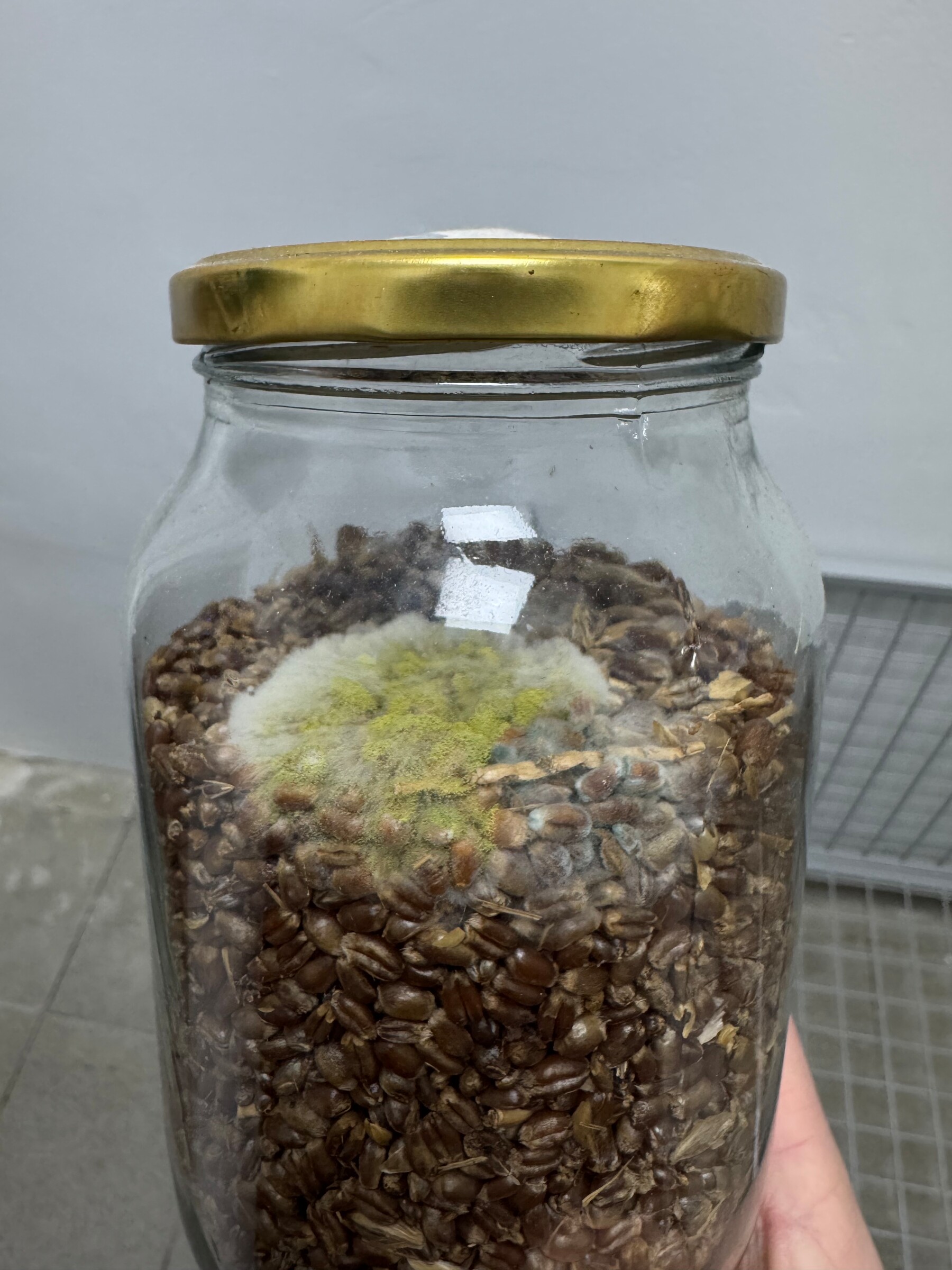
In spawn laboratories, 12.66–20.66% of containers turned out to be contaminated, depending on the grain; the contaminants included Aspergillus, Penicillium, Trichoderma and Bacillus bacteria (Gupta et al., 2020). In another study contamination was lowest in January, at 8.67%, and highest in August, at 18.33% (Bhargav et al., 2023). The FAO manual allows for losses of about 3% (FAO).
| Sign | Likely contaminant |
|---|---|
| A white coating that turns emerald green | Trichoderma |
| Grey slime, a sour smell, uncolonised wet patches at the bottom | Bacteria of the genus Bacillus |
| Grey, fluffy cobweb-like growth | Cobweb mould |
| Black or dark green colonies | Aspergillus |
| Blue-green colonies with a musty smell | Penicillium |
The descriptions of the signs are taken from North Spore and Mycologyst. Contaminated containers are not opened in production rooms; before disposal they are autoclaved or carried outdoors still closed (growers' forums).
Readiness and storage
Finished spawn is completely white, with no uncolonised patches (Redwood Mushroom Supply). Fresh spawn works best: every extra week of storage reduces its vigour (Spore Supplies).
| Source | Conditions and storage time |
|---|---|
| Royse, Wilkinson, button mushroom spawn | About 4 °C for up to 6 months, preferably no longer than 4 |
| Indian manual | Button mushroom and oyster mushroom spawn is stored at 4 °C; Volvariella, Ganoderma and Calocybe spawn is not kept below 15 °C |
| Field & Forest | 1–5.5 °C for up to 3 months; pink oyster spawn is not stored in the refrigerator |
Cold does not stop growth, it only slows it down: one day of growth at 23 °C roughly equals a week at 4 °C (Royse, Wilkinson). Signs of old spawn are an off or sour smell, wet spots, liquid at the bottom and a change in colour (Spore Supplies). We could not find studies on the storage of grain spawn of lion's mane specifically.
Step by step
- Check the inoculum: a plate free of contamination, or liquid culture that gave a clean test plate on agar.
- Let the sterile grain cool below 27 °C.
- Treat the surfaces with 70% alcohol, switch on the laminar flow cabinet, flame the tools.
- Inoculate the master spawn from agar or liquid culture: 1–2 ml of liquid culture or a few pieces of agar per 1-litre jar.
- Incubate in the dark at 22–25 °C; shake the grain when the mycelium has covered 20–30%.
- After full colonisation, multiply the master spawn grain to grain at a ratio of 1:10–1:20.
- Make no more than 3–4 transfers from the culture; label every container with the strain, the date and the generation number.
- Discard contaminated containers without opening them indoors, and keep a record of the reject rate.
- Use finished lion's mane spawn straight away or move it to the cold at a temperature of about 4 °C.
Sources
Scientific publications, manuals and standards:
- Royse D. J., Wilkinson V. Care and handling of cultures of the cultivated mushroom. The Pennsylvania State University.
- Penn State. Spawn preparation.
- FAO. Spawn production manual.
- Mushroom and spawn production. Indian Horticulture.
- Spawn Production Technology — an Indian manual.
- Imtiaj A. et al. (2008). Vegetative Growth of Four Strains of Hericium erinaceus Collected from Different Habitats. Mycobiology, 36(2), 88–92.
- Gonkhom D. et al. (2022). Optimal conditions for mycelial growth of medicinal mushrooms belonging to the genus Hericium. Mycological Progress, 21, 82.
- Zhu W. et al. (2020). Label-Free Proteomics Reveals the Molecular Mechanism of Subculture Induced Strain Degeneration and Discovery of Indicative Index for Degeneration in Pleurotus ostreatus. Molecules, 25(21), 4920.
- Gupta S. et al. (2020). Management of contaminants in mushroom spawn. Indian Journal of Agricultural Sciences, 90(5), 1000–1003.
- Bhargav P. et al. (2023). Fungal and Bacterial Contaminants Associated with the Spoilage of Mushroom Spawn. International Journal of Plant & Soil Science, 35(6), 87–95.
- BMBL, Appendix A — HEPA filters and laminar flow cabinets.
- FDA. Sterile Drug Products Produced by Aseptic Processing.
- CDC. Chemical disinfectants.
- LibreTexts. Aseptic transfer.
Websites of growers and spawn producers:
- FreshCap. How to inoculate grain; Lion's mane.
- Fungi Ally. Mushroom grain spawn.
- Naturelion. Grain to grain transfer guide; Laminar flow hood vs still air box.
- Midwest Grow Kits. Spawn bag and grain jar guide.
- North Spore. Sterilized grain bags; Common contamination.
- Foxfire. How to inoculate grain spawn; GroCycle. How to make grain spawn.
- Field & Forest. G1 grain cultures; Spawn storage.
- Redwood Mushroom Supply. Guide to making grain spawn; Spore Supplies. Storing colonised grain spawn; Mycologyst. Spawn stage; Fungus Head. Agar vs LC vs spores.
- Amateur mushroom growers' forums: discussions of inoculation with agar and liquid culture, sterile conditions, the number of transfers, the temperature inside bags, lion's mane on grain and the disposal of contaminated containers, marked in the text as "growers' forums".
Related mushrooms
Materials for growing
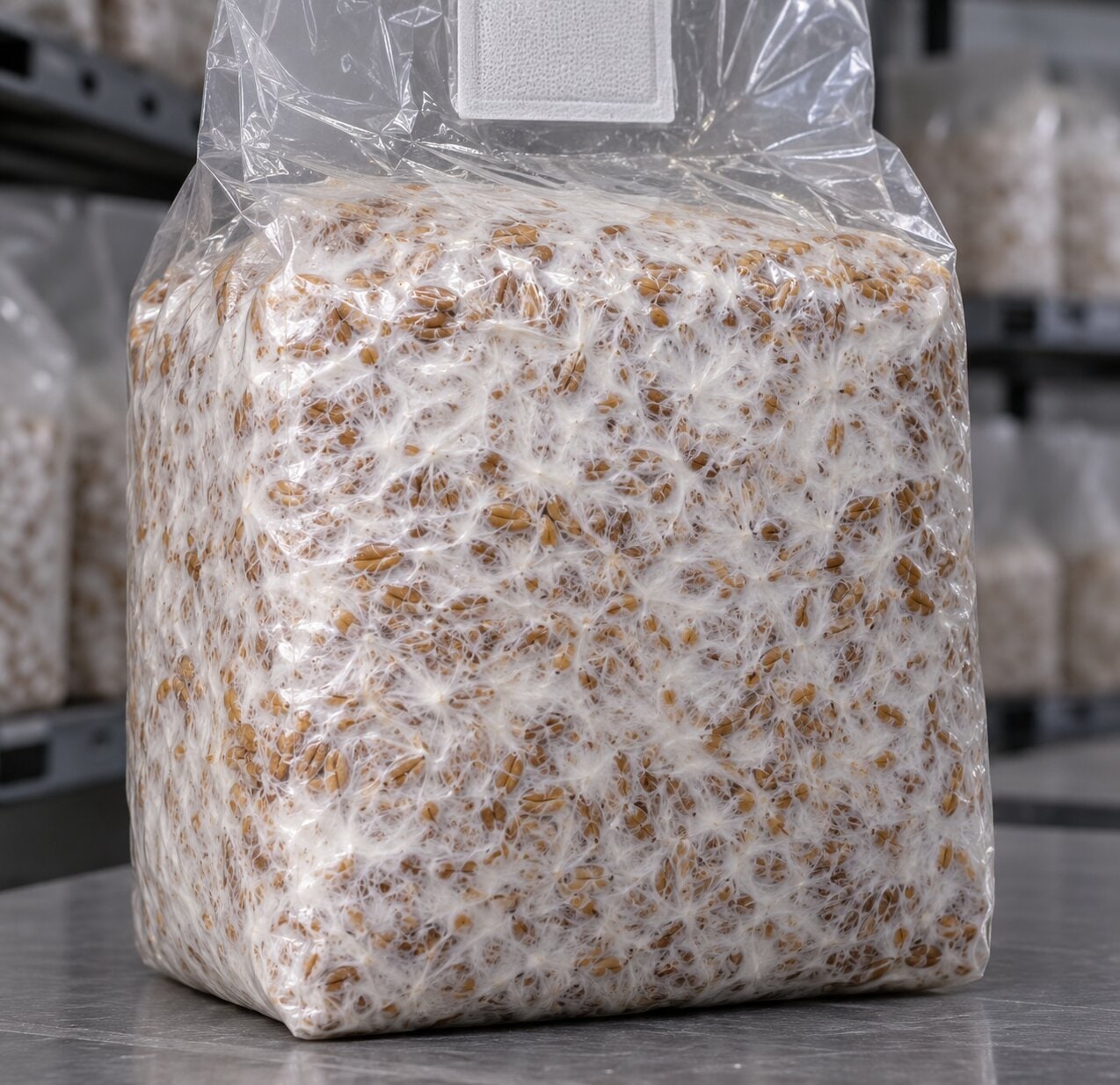
Master grain spawn — 5 kg bag
GREEBZ master grain spawn of the chosen culture. A pure culture on sterile grain substrate. Available in a choice of cultures — list the ones you need in your request. Master spawn is intended for further propagation and the production of production spawn. Grown from a pure culture under sterile laboratory conditions. Specifications - Format: grain spawn in a filter bag (grow bag), 5 kg - Substrate: sterile grain - Producer: GREEBZ
Made by us
On request
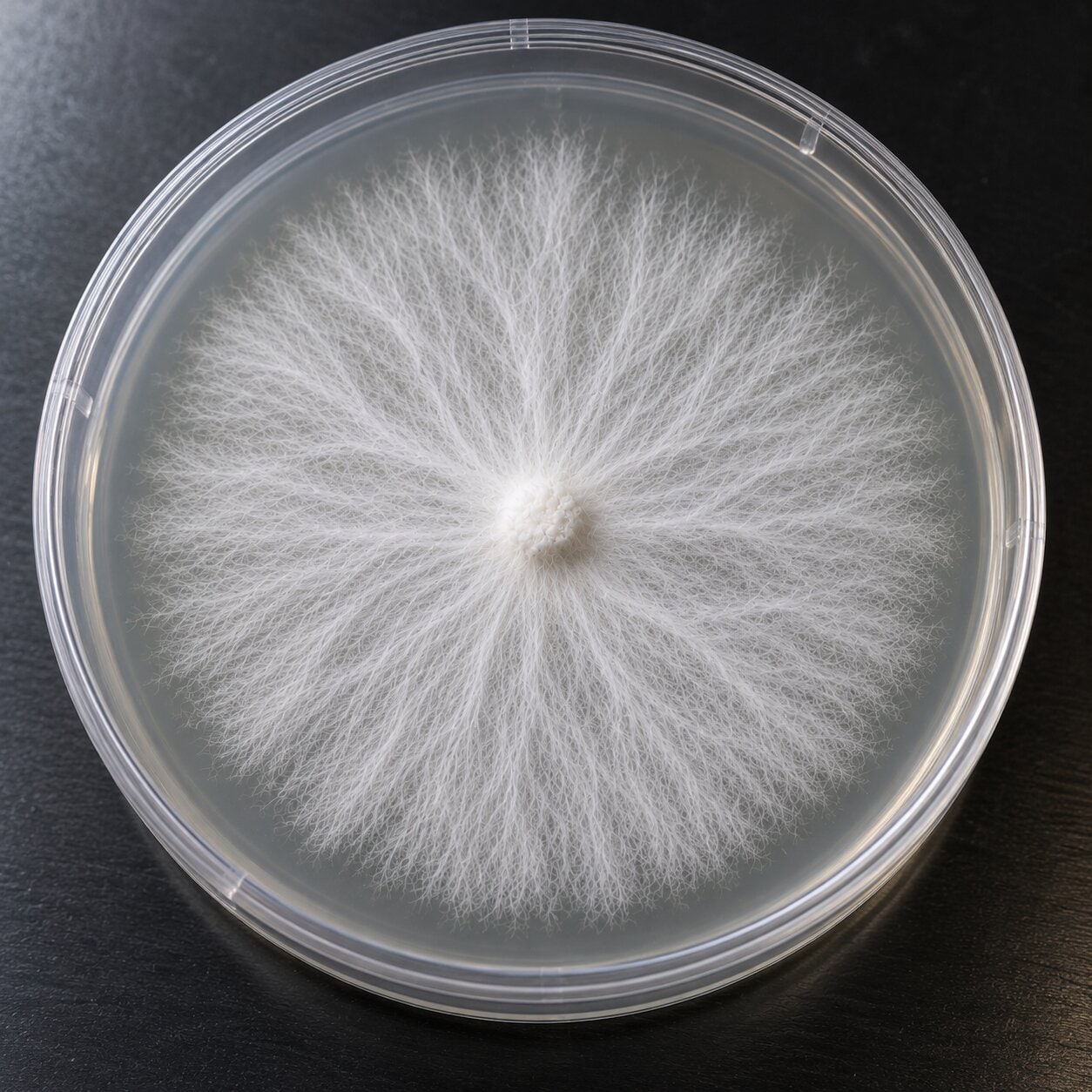
Pure mushroom culture — Petri dish
Pure GREEBZ mushroom cultures on a sterile agar nutrient medium. Available in a choice of cultures — list the ones you need in your request. Pure mushroom cultures grown under laboratory conditions on a sterile agar nutrient medium in Petri dishes. They are intended for further propagation of the culture, transfer to fresh nutrient medium and the production of grain spawn. One chosen culture = one Petri dish. Specifications - Format: pure culture on a sterile agar nutrient medium in a Petri dish - Producer: GREEBZ
Made by us
On request
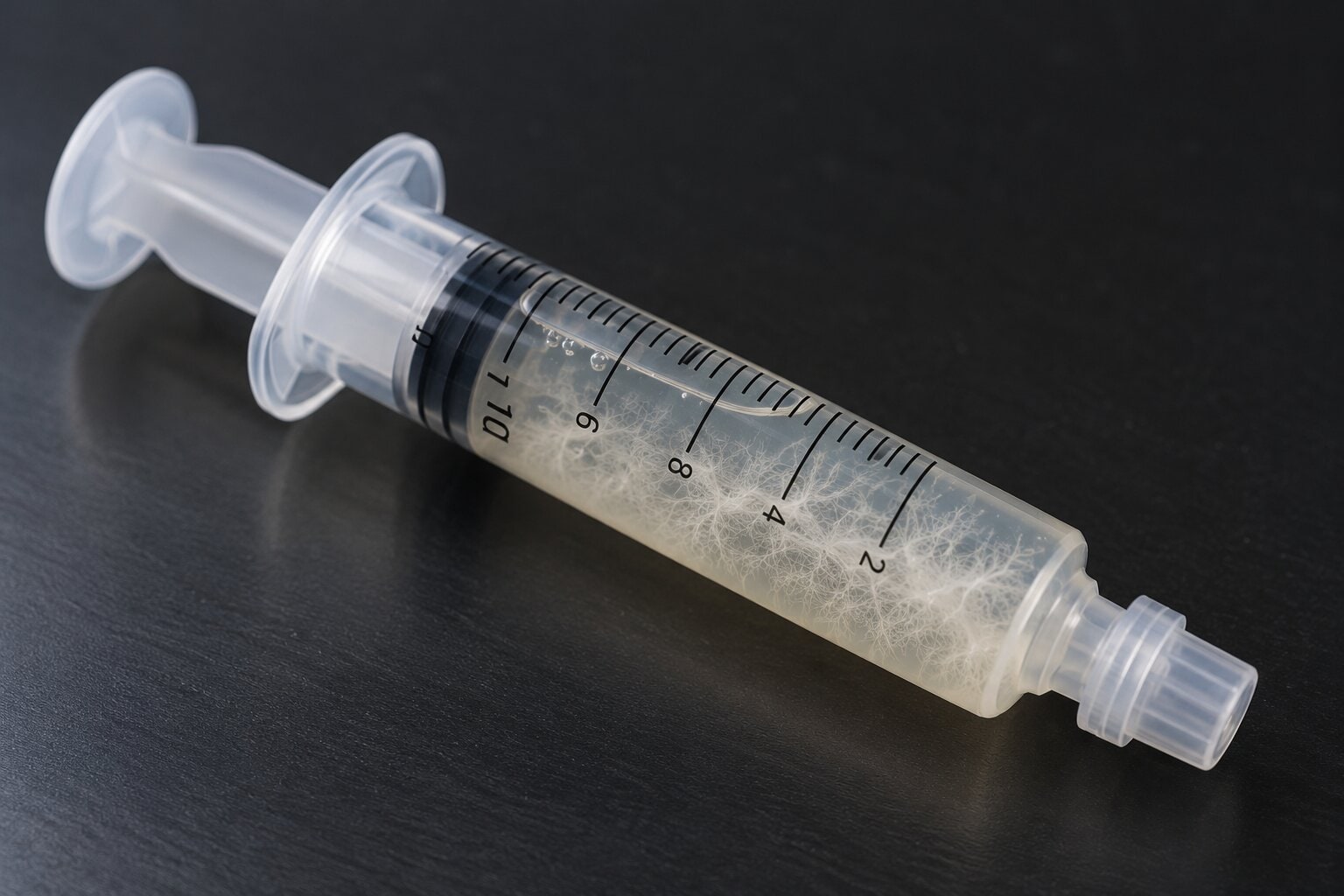
Liquid culture — 10 ml Luer Lock syringe
Pure GREEBZ mushroom liquid cultures. Available in a choice of cultures — list the ones you need in your request. The liquid culture is grown from a pure culture under sterile laboratory conditions. It is intended for inoculating grain substrate and producing grain spawn. Specifications - Format: liquid culture in a sterile Luer Lock syringe, 10 ml - Producer: GREEBZ
Made by us
On request
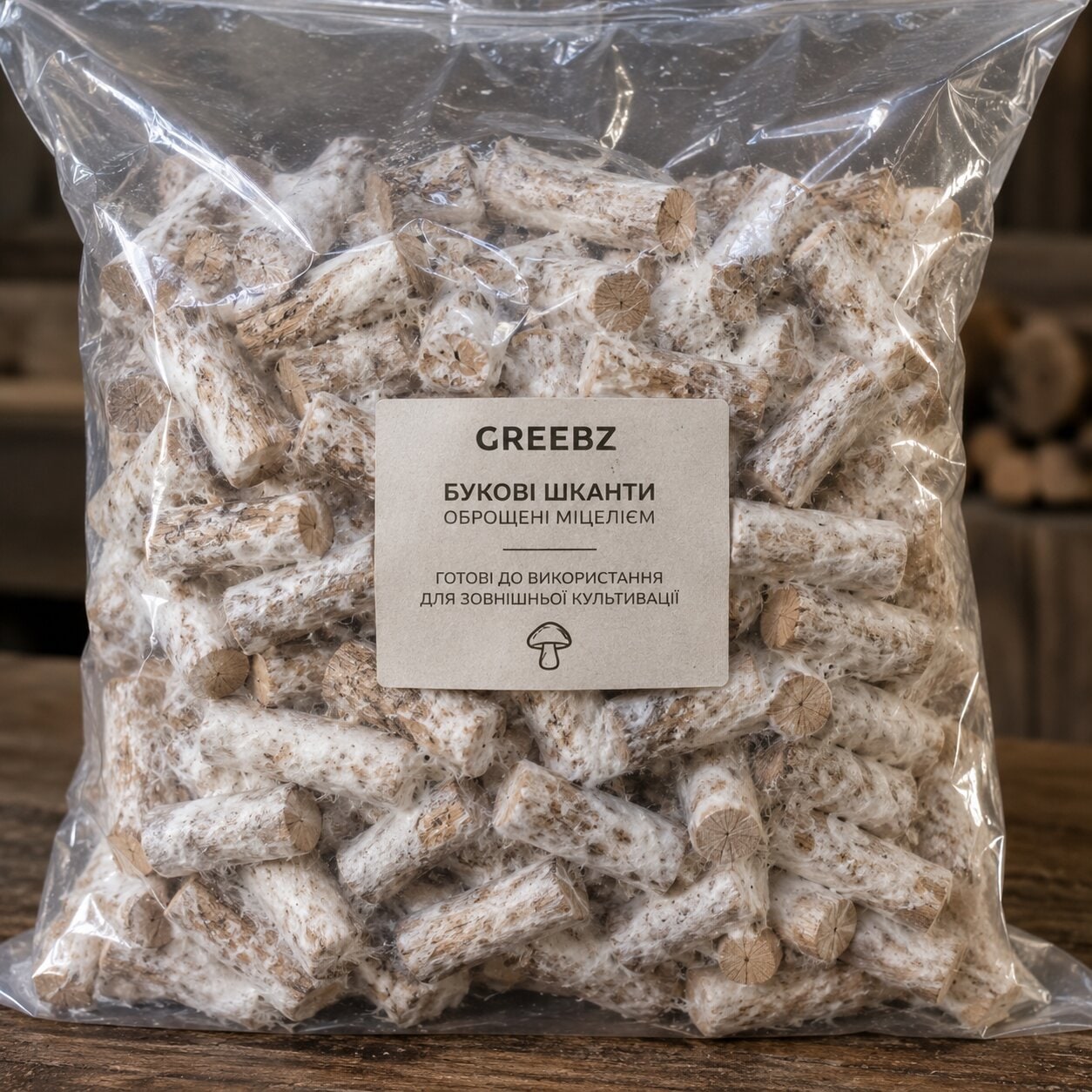
Beech plug spawn colonised with mycelium
Beech dowels colonised with the mycelium of the chosen culture. Ready to use for growing mushrooms outdoors on wood. Pack of 250–300 g. Available in a choice of cultures — list the ones you need in your request. One chosen culture = one pack of dowels. What's included - Beech dowels colonised with the mycelium of the chosen culture Important: wax and cotton wadding are not included. What you'll need for inoculation For working with the dowels we also recommend preparing: - Wax — to seal the holes after inserting the dowels. It closes the inoculation site and protects it from drying out and from the outside environment. - Cotton wadding — can be used for extra treatment and closing of the prepared holes. You will also need: - a drill; - a drill bit of the right diameter for the dowel; - a tool for inserting the dowels; - wood suitable for cultivation. Wax, cotton wadding and tools are bought separately. Specifications - Format: beech dowels colonised with the mycelium of the chosen culture - Pack weight: 250–300 g - Producer: GREEBZ
Made by us
On request
Other entries
Need help with your process?
Describe what's happening, even if you don't know the cause. We'll work it out together.