Substrate preparation: moistening, packing, sterilisation
How to calculate water for sawdust substrate, mix and bag blocks, sterilise blocks of different weights, what can replace an autoclave, and how to cool substrate without contamination.
Author: Volodymyr Sobol
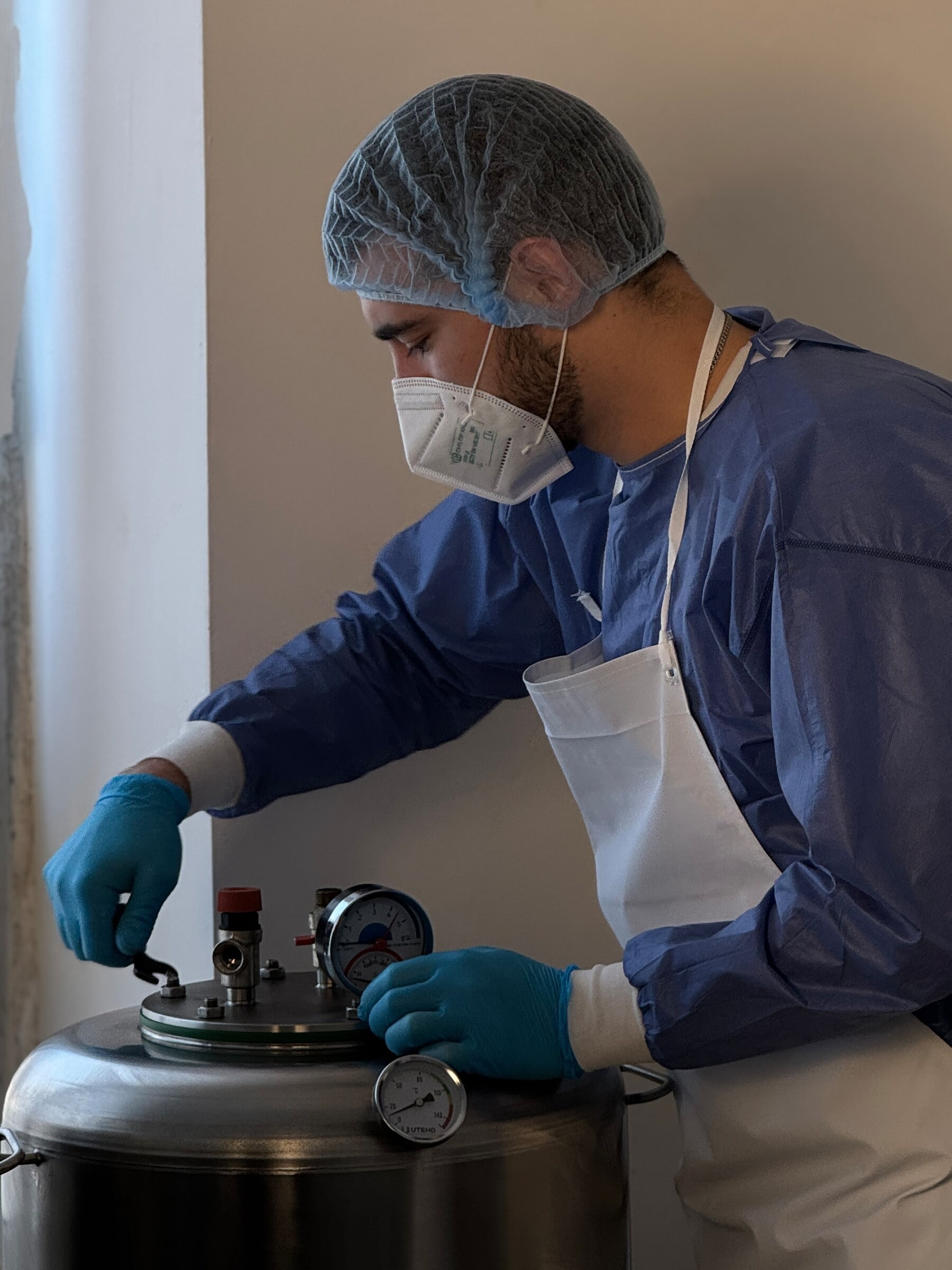
Substrate preparation is the path from dry raw material to a cooled block ready for inoculation. Three things are decided at this stage: how much water the block holds, what structure it has, and who lives in it besides the mushroom. A mistake in any of these shows up a week or two later, when it can no longer be fixed: an overwetted block colonises slowly and turns sour at the bottom, an underheated one goes green with mould.
This article covers the preparation of supplemented sawdust substrate for wood-decaying fungi, above all lion's mane (Hericium erinaceus): how to calculate the water, how to moisten and mix, what to pack it in, which sterilisation regime to use for blocks of different weights, and how to cool them without introducing contamination. Choosing raw materials and a supplier is covered in the previous article.
Stages of preparation
| Stage | What is decided | Guideline |
|---|---|---|
| 1. Calculation | how much raw material and water | moisture content of the finished mix 60–65% |
| 2. Moistening | even distribution of water in the particles | pellets break down in 20–30 minutes |
| 3. Mixing | even distribution of supplements, structure | no bran lumps |
| 4. Packing | block weight and density, gas exchange | blocks of 0.5–3 kg, bag with a filter |
| 5. Heat treatment | who remains in the substrate | 121 °C, 1.5–3 hours or 95–100 °C, 8–12 hours or longer |
| 6. Cooling | whether the block stays clean until inoculation | to 25–28 °C at the centre, in clean air |
Each guideline is discussed in its own section, with sources. The sequence must not be interrupted: a mixed, moistened substrate with bran is a ready-made medium for bacteria, and it is sterilised the same day. How much microflora the raw material itself carries is shown by a Korean study: sawdust that had lain outdoors for half a year contained on average 1.6 × 10⁸ colony-forming units of microorganisms (Chang et al., 2018).
Calculating the recipe and the water
What moisture content is needed
| Mushroom | Substrate moisture content | Source |
|---|---|---|
| Lion's mane | 60% | Figlas et al., 2007 |
| Lion's mane | 62% | Lu et al., 2024 |
| Lion's mane | 65% | Chutimanukul et al., 2023; Lu et al., 2025 |
| Lion's mane, equipment manufacturer's advice | 55–60% | Satrise |
| Shiitake | about 55% | Shen et al., 2008 |
| Oyster mushroom | 65–75% | Wiesnerová et al., 2023 |
| General recommendation | 60–65% after mixing | Oei, Agrodok 40 |
We could not find an experiment comparing lion's mane yield at different moisture levels. There is a study that compared several moisture levels: the activity of hydrolytic enzymes was higher at 70 and 75% (Hřebečková et al., 2024).
For shiitake such an experiment exists, and it shows that more water does not mean better (Shen et al., 2008):
| Moisture content | Yield 1, g per block | Efficiency 1 | Yield 2, g per block | Efficiency 2 |
|---|---|---|---|---|
| 50% | 885.0 | 60.6% | 684.3 | 46.3% |
| 55% | 880.8 | 66.3% | 726.5 | 55.1% |
| 60% | 758.6 | 65.2% | 599.8 | 51.3% |
The authors explain: a wetter block contains less dry matter and less air between the particles, and water in the pores slows down gas exchange. This is the main reason why overwetting does harm.
For lion's mane it is sensible to start at 60–65% and fine-tune for your own raw material: fine sawdust holds less air than a mix with wood chips and is less forgiving of extra water.
Formula
The raw material already contains water, and this has to be taken into account.
- Dry mass = the sum over all components of: mass × (1 − moisture content).
- Mass of the finished mix = dry mass ÷ (1 − target moisture content).
- Water to add = mass of the finished mix − mass of the raw material.
Example. 8 kg of oak pellets at 8% moisture and 2 kg of bran at 14% moisture, target moisture content 62%.
- Dry mass: 8 × 0.92 + 2 × 0.86 = 9.08 kg.
- Mass of the finished mix: 9.08 ÷ 0.38 = 23.9 kg.
- Water to add: 23.9 − 10 = 13.9 L, that is, 1.39 L per kilogram of raw material.
For raw material with a moisture content of about 9%, this gives the following cheat sheet:
| Target moisture content | Water per 1 kg of raw material |
|---|---|
| 55% | 1.02 L |
| 60% | 1.28 L |
| 62% | 1.39 L |
| 65% | 1.60 L |
| 70% | 2.03 L |
The calculation and the table are our own. They explain the discrepancy in growers' advice, which ranges from 1.2 to 1.8 L per kilogram: these are different target moisture levels, roughly from 58 to 67%.
Fresh sawdust from a sawmill can be much wetter than pellets, and its moisture content varies from batch to batch. It has to be measured before every mix: weigh a sample, dry it to constant mass, and weigh it again.
If the blocks are inoculated with liquid culture, its volume also adds water, and this has to be taken into account in the calculation.
Moistening and mixing
Pellets and sawdust
Pellets are covered with a measured amount of water and left until they break down. Hot water speeds this up but is not essential: according to FreshCap, "cold water works great"; NatureLion advises hot but not boiling water and a 20–30 minute soak (NatureLion). Dry sawdust is moistened in the same way, giving it time to absorb the water.
In industrial production the mix is stirred for a long time so that the water spreads through the particles. A Korean experiment with shiitake compared mixing for 0.5, 1, 2 and 3 hours: the best mycelial growth, 117 mm in 15 days, came with 2 hours, and the best moisture content was 55% (Chang et al., 2017).
Order of adding supplements
Growers have two approaches.
| Approach | How it is done | Argument |
|---|---|---|
| Water first, then the supplement | soak the pellets, then mix in the bran | simple, suitable for small volumes (FreshCap) |
| Dry mixing first | mix all the dry components, then add water | the water is distributed more evenly (Oei); bran clumps into lumps in wet sawdust (mushroom growers' forums) |
Bran lumps are dangerous on two counts: inside them there is a lot of nutrition and little air, and steam probably heats them through less well; the second point is our assumption.
Gypsum and chalk
| Source | Mineral supplement |
|---|---|
| Figlas et al., 2007, lion's mane | 0.5% chalk and 2% gypsum |
| Lu et al., 2025, lion's mane | 1% gypsum |
| mysh-room.com | up to 1% gypsum and chalk |
| NatureLion | about 2% gypsum by dry mass, optional |
The role of gypsum is not only structural. In an experiment with shiitake, gypsum at more than 25 mmol/kg reduced soluble oxalate to below 1 mmol/kg, and mycelial growth increased by 32%: gypsum converts oxalate into insoluble calcium oxalate and at the same time acidifies the substrate (Li et al., 2022). Chalk, on the contrary, raises the pH.
Acidity
For lion's mane mycelium the best growth was observed at pH 6; within the tested range of pH 5–9 the mycelium grew (Imtiaj et al., 2008). In an experiment with bottle cultivation of lion's mane, the pH was adjusted to 6 ± 1 with slaked lime (Chutimanukul et al., 2023). Sterilisation changes the acidity: during heating, acetic acid is released from the wood; more on this below. So the pH is worth measuring not only in the mix but also in the sterilised block; we could not find numerical data on how much it drops in hardwood sawdust.
Checking moisture by hand
A handful of the mix is squeezed hard. The wording in different sources is almost identical: "if more than one or two drops come out, it is too wet" (GroCycle), "1–2 drops, no more" (mysh-room.com). The hand test does not replace the calculation; it checks it.
The signs of a mistake show up later. An overwetted block: water at the bottom of the bag, a sour or vinegary smell, slow growth, yellow patches. An overdried one: dry, uncolonised areas.
Packing
Bags and bottles
The substrate is packed into polypropylene bags with a filter or into polypropylene bottles. Polypropylene withstands autoclaving at 121 °C; one manufacturer guarantees resistance up to 124 °C (SacO2).
| Container | Weight of moist substrate | Source |
|---|---|---|
| Bag, lion's mane | 500 g, density about 0.5 g/cm³ | Figlas et al., 2007 |
| Bag 25 × 45 cm, lion's mane | 1 kg | Atila and Tüzel, 2016 |
| Bag, lion's mane | 1.5 kg | Sholyavei, Mishra, 2020 |
| Bottle, lion's mane | 750 g | Chutimanukul et al., 2023 |
| Bottle 850 ml, lion's mane | — | Ko et al., 2004 |
| Bag, shiitake, USA | 2.7–3.2 kg | Shen et al., 2008 |
| Bag 15–16 × 55–60 cm, shiitake, China | — | Fan et al., MushWorld |
| Bag, shiitake, Ukraine | 1–3 kg, no more than 5–6 kg | Bisko, "Horodnyk" |
| Bag, small US farms | 2.3 kg (5 pounds) | FreshCap |
In lion's mane studies the blocks are small, 0.5–1.5 kg. A small block heats through faster during sterilisation and colonises faster; a large one saves bags and labour.
Filter
| Unicorn filter | Pore size | Note |
|---|---|---|
| 3T | 0.2 µm | the densest |
| 14 and 14A | 0.5 µm | — |
| 3B | 5 µm | the highest gas exchange; the bag can be sealed before autoclaving |
Source: Unicorn Bags. In the shiitake experiment the best yield came from 3.2 kg blocks at about 55% moisture with a low- or medium-porosity filter; the high-porosity filter, with pores of 1–5 µm, performed worse (Shen et al., 2008). We could not find a comparison of filters for lion's mane.
On the Ukrainian market, polypropylene bags are sold "with a gas-permeable filter (suitable for autoclaving)", but the listing we looked at gives neither the dimensions nor the pore size (Prom.ua). This information is worth requesting from the seller.
How to fill
- Fill halfway to two-thirds and compact lightly by tapping the bag on the table (Mycologic; Bisko advises filling to 2/3).
- Do not seal the bag before sterilisation. Asked whether bags should be sealed before sterilisation, the manufacturer answers: no, they will most likely burst during the cycle (SacO2). The top is folded over several times, pushing out the excess air.
- The filter must stay dry and must not touch the wet substrate: otherwise, according to SacO2, the bag may collapse while pressure is building up or burst when it is released. The fold is made so that the filter ends up inside the bend (Mycologic). If the bag has no filter, FreshCap advises tucking a piece of Tyvek into the fold.
- Do not pack it down hard. We could not find a comparative study on packing density; the only figure for lion's mane is about 0.5 g/cm³ in Figlas et al.
- In bottles the substrate is compacted and a hole is made in the centre for the spawn (FreshCap).
Pressure sterilisation
Supplemented substrate is sterilised, not pasteurised. The autoclave manufacturer Priorclave writes that supplemented substrate "quickly becomes contaminated with mould" unless it is sterilised first (description).
Regimes from research and practice
| Source | Block | Regime |
|---|---|---|
| Atila and Tüzel, 2016, lion's mane | 1 kg bag | 121 °C, 90 minutes |
| Lu et al., 2025, lion's mane | — | 121 °C, 2.5 hours |
| Patent RU 2601589, lion's mane | jars | 1.3–1.5 atm, 2 hours |
| Shen et al., 2008, shiitake | 2.7–3.2 kg | 121 °C, 2 hours |
| Bisko, shiitake | 1–3 kg | 1.2 atm, 121–125 °C, 1 hour or more |
| Oei, Agrodok 40 | 2 kg bags | 121 °C, at least 2 hours |
| FreshCap | 2.3 kg | 2.5 hours |
| GroCycle | 2.3 kg | 15 pounds per square inch, 3 hours |
| Mycobio | load of 18–20 kg | at least 3 hours |
A pressure of 15 pounds per square inch is about 1 atm of gauge pressure, which corresponds to 121 °C. Sources: Bisko, patent, FreshCap, GroCycle, Mycobio.
The overall picture: from 1–1.5 hours for small blocks to 2.5–3 hours for 2–3 kg blocks and a dense load. The time increases with the weight of the block and with the number of blocks in the chamber.
Why the time depends on weight
What sterilises is not the pressure or the time on the timer, but the temperature at the centre of the block. Moist sawdust conducts heat poorly, and the centre lags behind the chamber.
- We could not find peer-reviewed measurements of the temperature at the centre of a sawdust block. An equipment seller cites a lag of 30–45 minutes after the chamber has reached 121 °C (Zombie Myco).
- Air remaining in the chamber lowers the temperature at the same pressure. That is why the air is displaced with steam before the pressure is built up.
- The full cycle is longer than the hold time. An autoclave manufacturer gives: 2 hours of hold time plus an hour of heating and an hour and a half of cooling, about 4.5 hours in total (SH Scientific).
The practical conclusion: the regime for your own autoclave and your own block is worked out with a thermometer at the centre of the block, not copied from someone else's recipe.
Loading
- Bags must not touch the walls or the bottom: the walls are hotter and melt polypropylene. Growers stand the bags on a rack and wrap them in cloth.
- Gaps are needed between the blocks for the steam; a tightly packed chamber heats unevenly.
- After the cycle the pressure is not vented: a sudden release tears the bags. In the patent on growing lion's mane, the autoclave is switched off without letting out the steam, and the jars are left in it until the next morning.
Medical autoclaves
The VK-75 medical steriliser has a 75 L chamber and factory programmes of 132 °C for 20 minutes and 120 °C for 45 minutes (description). These programmes are designed for instruments and linen; for substrate blocks a 45-minute hold, judging by the table above, is not enough, and the time will have to be increased. This is our conclusion.
Can it be overheated
Longer does not mean more reliable without limit.
- During sterilisation, acetic acid is released from the wood; it inhibits the growth of shiitake mycelium, and the more strongly, the lower the pH. Most of it was released in acidic and alkaline substrate, least in neutral substrate (Hu et al., 2022).
- In a Korean experiment, shiitake grew better on substrate treated with steam at 100 °C than after high-pressure sterilisation: 96 mm in 15 days (Chang et al., 2017).
We could not find quantitative data on caramelisation or the Maillard reaction in sawdust substrate. The goal is the minimum regime that consistently gives clean blocks, not the longest possible one.
Atmospheric steam and pasteurisation
Prolonged steaming without pressure
The autoclave can be replaced with time. The blocks are kept in steam at 95–100 °C for many hours. This is how a large share of Chinese shiitake production and many small farms work.
| Source | Regime | Note |
|---|---|---|
| Fan et al., MushWorld, China | 100 °C, 8–10 hours | bags under plastic sheeting; the temperature under the sheeting is monitored |
| MushWorld, low-pressure boilers | 98–100 °C | a boiler with a volume of 8–9 m³ usually takes 150 minutes to heat up |
| Bisko, "Horodnyk" | 95–100 °C, 8–12 hours | better for substrates without supplements or with 5–10% supplements |
| Oei, Agrodok 40, drum | at least 6 hours | — |
| GroCycle | 90–100 °C, up to 18 hours | — |
| Bubba's Barrels, 55-gallon drum (about 200 L) | 14–24 hour cycle | up to 90 kg of substrate; not for grain |
| mysh-room.com | 16–20 hours | — |
Sources: Fan et al., MushWorld on equipment, GroCycle, Bubba's Barrels, mysh-room.com.
The spread from 6 to 24 hours is explained by the point from which the time is counted. In a drum, the centre of the block heats up hours later than the steam, and growers name cold zones as the main cause of contamination. The rule is the same as for the autoclave: the time is counted by the thermometer at the centre of the coldest block.
What is known about reliability
Steam at 100 °C does not kill bacterial spores, so this is not sterilisation in the strict sense. The mushroom wins through the speed of colonisation.
- For "soft sterilisation", Bisko recommends substrates without nutrient supplements or with only a minimal share of them, 5–10%.
- A manufacturer of steam drums states plainly that its equipment is not intended for grain spawn (Bubba's Barrels).
- We could not find numerical data on the share of contaminated blocks with a high share of supplements after atmospheric steaming.
The conclusion: the more supplement in the substrate, the smaller the safety margin of atmospheric steam. This is compensated for by a longer hold time, a higher spawn rate and cleaner work.
Pasteurisation at 60–80 °C
Pasteurisation is a method for straw and other low-nutrient substrates for oyster mushrooms.
| Source | Regime |
|---|---|
| Penn State, oyster mushroom | pasteurisation with live steam, then cooling with air through a HEPA filter, about 1.5 hours |
| Oei, Agrodok 40 | in water at 70 °C for at least 15 minutes, more reliably 30–60; with steam at 60–70 °C for at least 8 hours |
For supplemented sawdust this is not enough. The heat-resistant moulds Monascus ruber and Byssochlamys nivea were isolated from lignocellulosic material after steaming at 80 °C for 15 minutes (Sasaki and Yamanaka, 2020).
Fractional sterilisation, in which the substrate is heated twice with a one-day break in between, is mentioned by growers as a way to make do with a pressure cooker. We could not find a documented regime for mushroom substrates in the literature.
Methods without heating
Lime, cold fermentation and hydrogen peroxide are attractive because they need no equipment. Almost all the data on them were obtained with oyster mushrooms and straw.
| Method | Regime | Biological efficiency | Source |
|---|---|---|---|
| Lime | about 5 g/L, pH 9.5, 8 hours | 52% | Grimm et al., 2024 |
| Hot water 63 °C | 1.5 hours | 75.7% | Grimm et al., 2024 |
| Autoclave | — | 66.8% | Grimm et al., 2024 |
| Lime | pH about 13, 16 hours; on-farm trial | 41% | SARE FNE15-825 |
| Cold fermentation | on-farm trial | 18% | SARE FNE15-825 |
| Hydrogen peroxide 0.1% | bran with sawdust, 65% moisture, preliminary boiling for 5–10 minutes | the best mycelial growth among the 0.1–1% variants | Rupak et al., 2025 |
Sources: Grimm et al., SARE, Rupak et al..
Where this works and where it does not
None of these methods sterilises; they only shift the balance in the mushroom's favour. On a low-nutrient substrate, the fast-growing oyster mushroom manages to occupy it before its competitors. On a supplemented substrate with a slow-growing mushroom, the odds are different.
- Priorclave: "cold sterilisation" is in fact a form of pasteurisation, and with most substrates other than straw it works poorly or not at all.
- NatureLion grows oyster mushrooms on pellets without supplements with no sterilisation at all (NatureLion); for lion's mane and for substrates with bran, it does not.
For lion's mane on supplemented sawdust, methods without heating are not suitable. Their place is oyster mushrooms on straw and on pellets without supplements.
Cooling and preparing for inoculation
A sterile block is easiest to contaminate precisely during cooling. As the block cools, the air in the bag contracts, and the bag draws in air from outside. If that air is dirty, spores get inside even before inoculation.
To what temperature
| Source | Substrate temperature before inoculation |
|---|---|
| Fan et al., China | below 25 °C; taken out of the autoclave when the temperature there is 60 °C |
| Bisko | 25–28 °C |
| FreshCap | above 38 °C the mycelium may die |
The temperature is measured at the centre of the block: the surface cools much faster.
How long and where
- In the closed steriliser. The simplest way for a small volume: the blocks are left in the closed autoclave for at least 8 hours (FreshCap, GroCycle). In the patent on growing lion's mane, the jars are left in the closed autoclave until the next morning.
- In a clean room. In production, the substrate is cooled with air passed through a HEPA filter (Penn State); in China, the bags are cooled in a disinfected inoculation room (Fan et al.). This is faster and frees the autoclave for the next batch.
- Not in an ordinary room. Growers link contamination in the upper part of the bag specifically to the air that got in during cooling.
Cold holds back microflora
Korean researchers measured the number of microorganisms in sterilised sawdust substrate before inoculation depending on the cooling temperature (Chang et al., 2018):
| Cooling temperature | Microorganisms, CFU |
|---|---|
| 5 °C | 0 |
| 10 °C | 45 |
| 15 °C | 130 |
| 24 °C | 4000 |
Shiitake mycelium grew best after cooling to 10 °C: 122 mm in 15 days. So even after sterilisation the substrate is not absolutely clean, and the longer it stands in the warm before inoculation, the more has time to grow in it. Blocks are inoculated as soon as they have cooled.
Condensation
During cooling, water settles on the walls of the bag. A wet filter lets air through less well and becomes a place for microflora to grow, so the bags are folded in such a way that the filter stays dry (Mycologic, SacO2).
Monitoring and common mistakes
How to check that the regime works
| Method | What it shows | Source |
|---|---|---|
| Probe thermometer at the centre of the block | the actual temperature and heating time | growers' practice |
| Biological indicator with Geobacillus stearothermophilus spores in the block | whether the most resistant spores were killed | Priorclave, Zombie Myco |
| Indicator tape at the geometric centre of the block | whether the temperature reached the centre | Zombie Myco |
| Uninoculated control blocks in incubation | what grows in the substrate without the mushroom | general laboratory practice |
We could not find recommendations on biological indicators from scientific or extension services in mushroom growing; this is advice from equipment manufacturers. They are useful when setting up a new regime and when looking for the cause of contamination.
How to recognise the cause
| Sign | Probable cause | What to change |
|---|---|---|
| Water at the bottom of the bag, sour smell, slow growth | overwetting | recalculate the water, measure the moisture content of the raw material |
| Dry uncolonised areas | lack of water or uneven mixing | mix for longer, let the water soak in |
| Mould deep inside the block, in many blocks of a batch | the centre did not heat through: too little time, dense loading, air in the chamber | increase the hold time, load less densely, purge with steam |
| Contamination in the upper part of the bag, near the filter | dirty air during cooling or a wet filter | cool in the closed steriliser or in a clean zone |
| Contamination at the inoculation site | dirty spawn or inoculation | check the mycelium and the clean zone, not the sterilisation |
| Melted or torn bags | contact with the wall, sudden pressure release, sealed bag | a rack and padding, slow cooling, do not seal before sterilisation |
| Mycelium does not grow, no contamination | inoculation into a hot block; substrate too acidic | measure the centre temperature before inoculation; measure the pH after sterilisation |
The first four rows are compiled from growers' descriptions (Red Dirt Mushrooms, Zombie Myco, mushroom growers' forums). The last three are our own generalisation of the data from the previous sections.
To tell a preparation mistake from an inoculation mistake, a few blocks from each batch are left uninoculated and incubated alongside. If they are clean after two weeks while the inoculated blocks are contaminated, the cause is not the sterilisation.
Sequence of steps
- Measure the moisture content of the raw material and calculate the water for a target moisture content of 60–65%.
- Moisten the base and let the water soak in; pellets should break down completely.
- Mix in the supplements and minerals until uniform, with no bran lumps.
- Check the mix: the squeeze test and, if possible, pH.
- Pack into filter bags or bottles without packing it down hard; fold the top of the bag, do not seal it, keep the filter dry.
- Sterilise the same day. In an autoclave: purge with steam, hold at 121 °C for 1.5 to 2.5–3 hours depending on the block weight and the load. With atmospheric steam: 8–12 hours or longer from the moment the centre of the block has heated through.
- Monitor the temperature at the centre of the block, not just the pressure gauge and the timer.
- Cool without venting the pressure, in the closed steriliser or in a clean zone, to 25 °C at the centre of the block.
- Inoculate immediately after cooling.
- Leave a few uninoculated control blocks and record the batch: raw material, moisture content, regime, time for the centre to heat through.
Sources
Moisture, pH, mixing
- Shen Q., Liu P., Wang X., Royse D. J. (2008). Effects of substrate moisture content, log weight and filter porosity on shiitake (Lentinula edodes) yield. Bioresource Technology, 99(17).
- Hřebečková T. et al. (2024). Effect of substrate moisture content during cultivation of Hericium erinaceus and subsequent vermicomposting of spent mushroom substrate in a continuous feeding system. Scientia Horticulturae, 334.
- Wiesnerová L. et al. (2023). Effect of different water contents in the substrate on cultivation of Pleurotus ostreatus. Folia Horticulturae.
- Chang H. et al. (2017). Mycelial growth of Lentinula edodes in response to different mixing time, pressure intensity, and substrate porosity. Journal of Mushrooms (Korea).
- Chang H. Y. et al. (2018). Characteristics of sawdust cultivation of Lentinula edodes with different methods of spawn inoculation. Journal of Mushrooms, 16(2), 61.
- Li et al. (2022). Physiological mechanisms by which gypsum increases the growth and yield of Lentinula edodes. Applied Microbiology and Biotechnology, 106.
- Imtiaj A. et al. (2008). Mycelial growth conditions of Hericium erinaceus. Mycobiology.
- Oei P. Agrodok 40: Small-scale mushroom cultivation. Agromisa.
Substrates and containers in lion's mane studies
- Atila F., Tüzel Y. (2016). Effect of Growing Media on Yield and Fruitbody Properties of Hericium Isolates. Turkish Journal of Agriculture – Food Science and Technology, 4(3), 120–127.
- Figlas D., González Matute R., Curvetto N. (2007). Cultivation of Culinary-Medicinal Lion's Mane Mushroom Hericium erinaceus on Substrate Containing Sunflower Seed Hulls. International Journal of Medicinal Mushrooms, 9, 67–73.
- Lu Z. et al. (2025). The Agronomic Traits Differences in Hericium erinaceus Cultivated with Different Straw Formulations by Replacing Wood with Straw. Horticulturae, 11(10), 1220.
- Lu Z. et al. (2024). Optimization of substrate formulation for Hericium erinaceus by replacing wood by straw and their effect on enzyme activities. Frontiers in Plant Science.
- Chutimanukul P. et al. (2023). Commercial scale production of Yamabushitake mushroom (Hericium erinaceus) using rubber and bamboo sawdust substrates in tropical regions. Scientific Reports, 13, 13316.
- Ko H. et al. (2004). Hericium cultivation in 850 ml bottles. Korean Journal of Mycology.
- Sholyavei Sh., Mishra S. K. (2020). The Productivity of Genotypes of Hericium erinaceus on Wheat Straw and Poplar Sawdust Based Growing Media. Indian Journal of Pure & Applied Biosciences, 8(6), 396–405.
Heat treatment
- MushWorld. Facilities and Equipment for Substrate Preparation.
- Fan L. et al. Mushroom Growers' Handbook 2, chapter 4. MushWorld.
- Penn State. Specialty mushrooms: production technology.
- Hu Z. et al. (2022). Liberation of acetic acid from lignocellulose during sterilization and its inhibitory effect on Lentinula edodes. Scientia Horticulturae, 306.
- Sasaki, Yamanaka (2020). Novel sterilization method combining food preservative use and low temperature steaming for treatment of lignocellulosic biomass with white rot fungi. Industrial Crops and Products.
- Patent RU 2601589: a method of growing lion's mane.
- Bisko N. Еліксир життя: інтенсивна технологія вирощування грибів шіїтаке [Elixir of life: an intensive technology for growing shiitake mushrooms]. "Horodnyk" magazine (archived copy).
- Equipment manufacturers: SH Scientific, Priorclave (autoclaves, pasteurisation), Zombie Myco, VK-75, Bubba's Barrels.
Methods without heating
- Grimm D., Sonntag E., Rahmann G. (2024). Evaluation of different pasteurization and sterilization methods for oyster mushroom substrates. Journal of Microbiology, Biotechnology and Food Sciences, 13(5), e10428.
- SARE, project FNE15-825. An on-farm comparison of low-tech methods.
- Rupak et al. (2025). Hydrogen peroxide in oyster mushroom substrate. Asian Journal of Plant Pathology.
Growers' practice
- FreshCap: sawdust block, bottles.
- GroCycle: sawdust blocks, sterilisation.
- NatureLion, Mycologic, Mycobio, mysh-room.com, Satrise.
- Bags: Unicorn Bags, SacO2, Prom.ua.
- Red Dirt Mushrooms, Zombie Myco: troubleshooting the causes of contamination.
Related mushrooms
Materials for growing
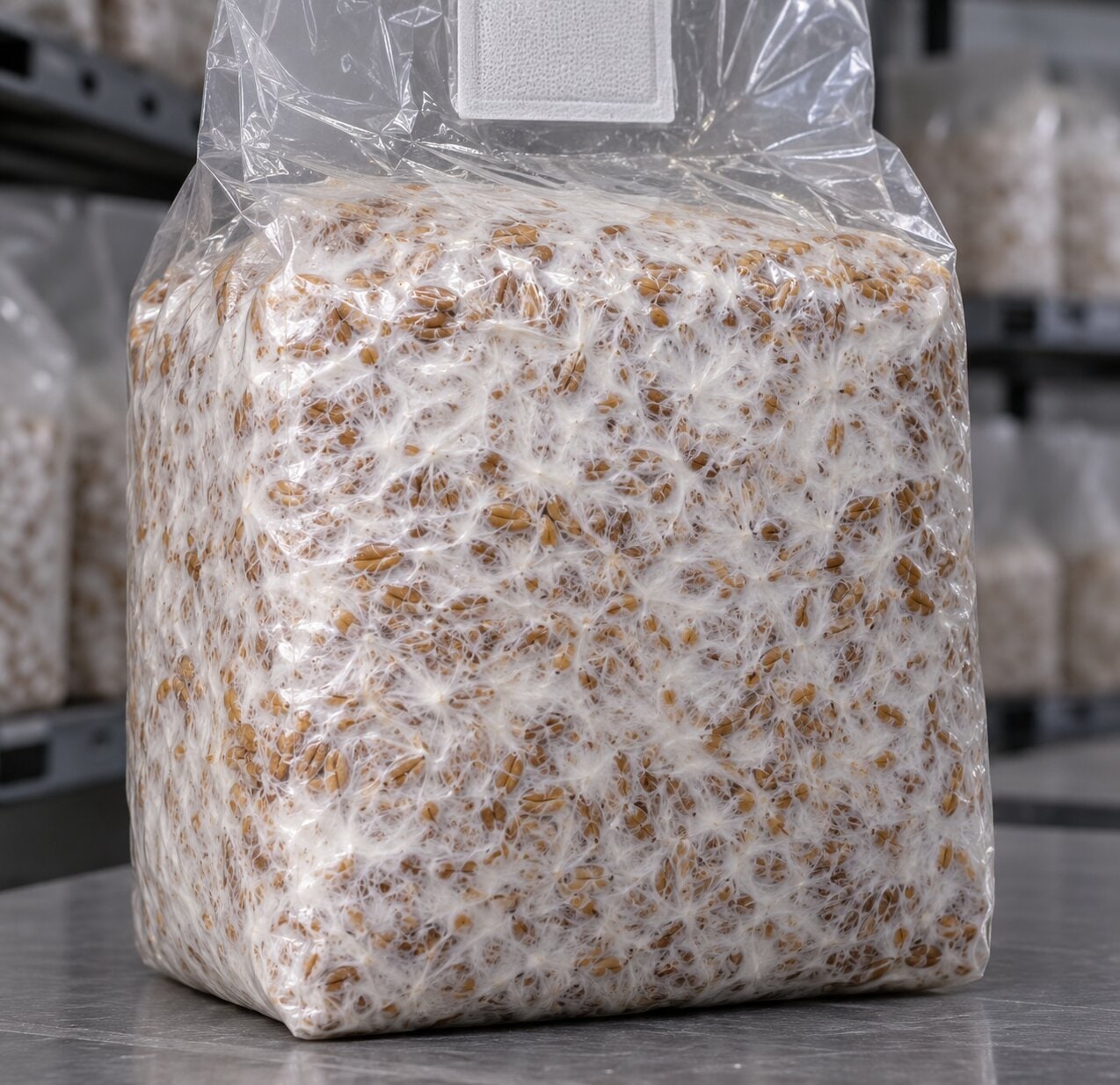
Master grain spawn — 5 kg bag
GREEBZ master grain spawn of the chosen culture. A pure culture on sterile grain substrate. Available in a choice of cultures — list the ones you need in your request. Master spawn is intended for further propagation and the production of production spawn. Grown from a pure culture under sterile laboratory conditions. Specifications - Format: grain spawn in a filter bag (grow bag), 5 kg - Substrate: sterile grain - Producer: GREEBZ
Made by us
On request
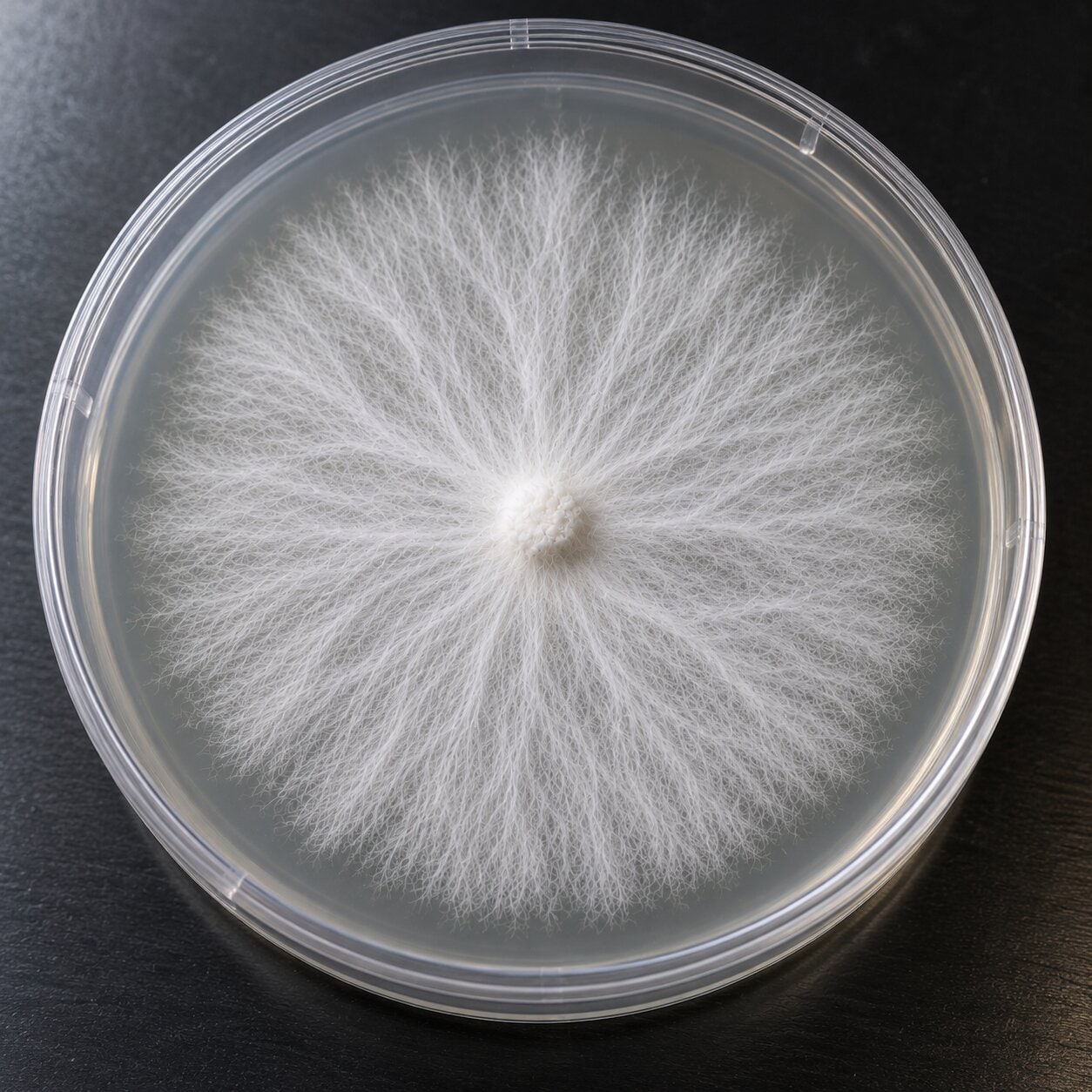
Pure mushroom culture — Petri dish
Pure GREEBZ mushroom cultures on a sterile agar nutrient medium. Available in a choice of cultures — list the ones you need in your request. Pure mushroom cultures grown under laboratory conditions on a sterile agar nutrient medium in Petri dishes. They are intended for further propagation of the culture, transfer to fresh nutrient medium and the production of grain spawn. One chosen culture = one Petri dish. Specifications - Format: pure culture on a sterile agar nutrient medium in a Petri dish - Producer: GREEBZ
Made by us
On request
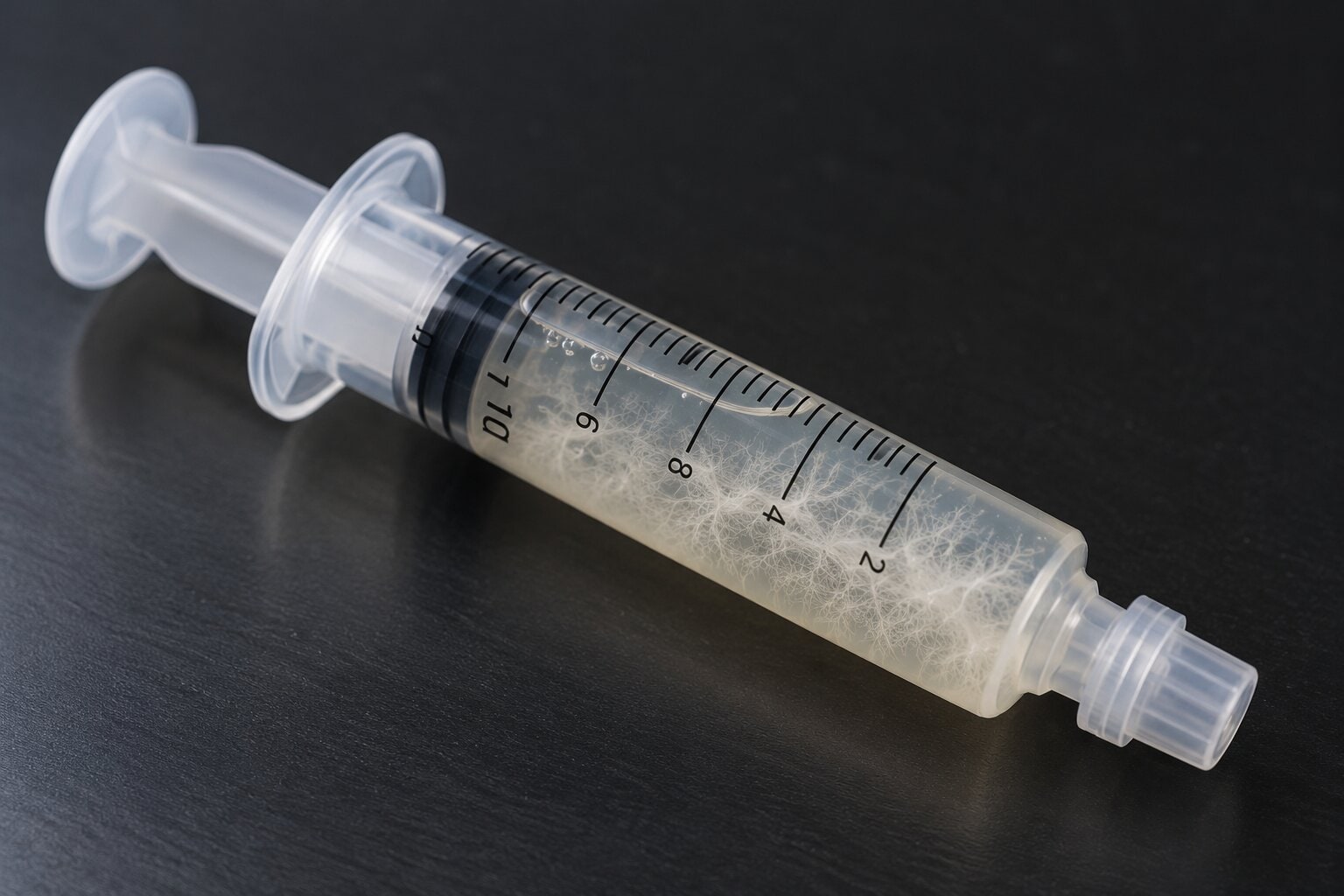
Liquid culture — 10 ml Luer Lock syringe
Pure GREEBZ mushroom liquid cultures. Available in a choice of cultures — list the ones you need in your request. The liquid culture is grown from a pure culture under sterile laboratory conditions. It is intended for inoculating grain substrate and producing grain spawn. Specifications - Format: liquid culture in a sterile Luer Lock syringe, 10 ml - Producer: GREEBZ
Made by us
On request
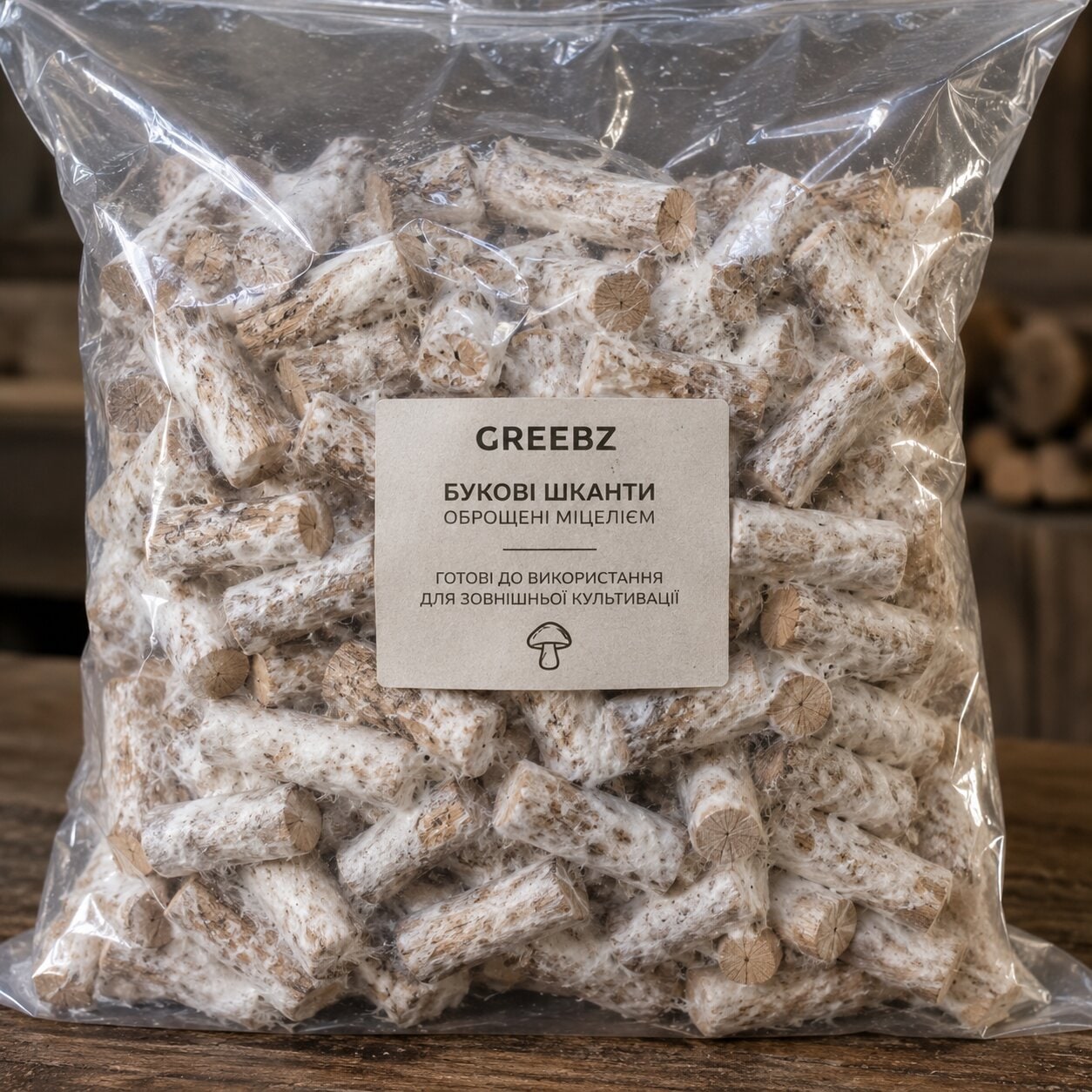
Beech plug spawn colonised with mycelium
Beech dowels colonised with the mycelium of the chosen culture. Ready to use for growing mushrooms outdoors on wood. Pack of 250–300 g. Available in a choice of cultures — list the ones you need in your request. One chosen culture = one pack of dowels. What's included - Beech dowels colonised with the mycelium of the chosen culture Important: wax and cotton wadding are not included. What you'll need for inoculation For working with the dowels we also recommend preparing: - Wax — to seal the holes after inserting the dowels. It closes the inoculation site and protects it from drying out and from the outside environment. - Cotton wadding — can be used for extra treatment and closing of the prepared holes. You will also need: - a drill; - a drill bit of the right diameter for the dowel; - a tool for inserting the dowels; - wood suitable for cultivation. Wax, cotton wadding and tools are bought separately. Specifications - Format: beech dowels colonised with the mycelium of the chosen culture - Pack weight: 250–300 g - Producer: GREEBZ
Made by us
On request
Other entries
Need help with your process?
Describe what's happening, even if you don't know the cause. We'll work it out together.