Pure culture on agar: nutrient media, Petri dishes and agar slants
Which medium to choose for lion's mane, how to prepare agar, plate a culture and ready it for storage on agar slants — with recipes and research data. Appendix: growers' home recipes.
Author: Volodymyr Sobol
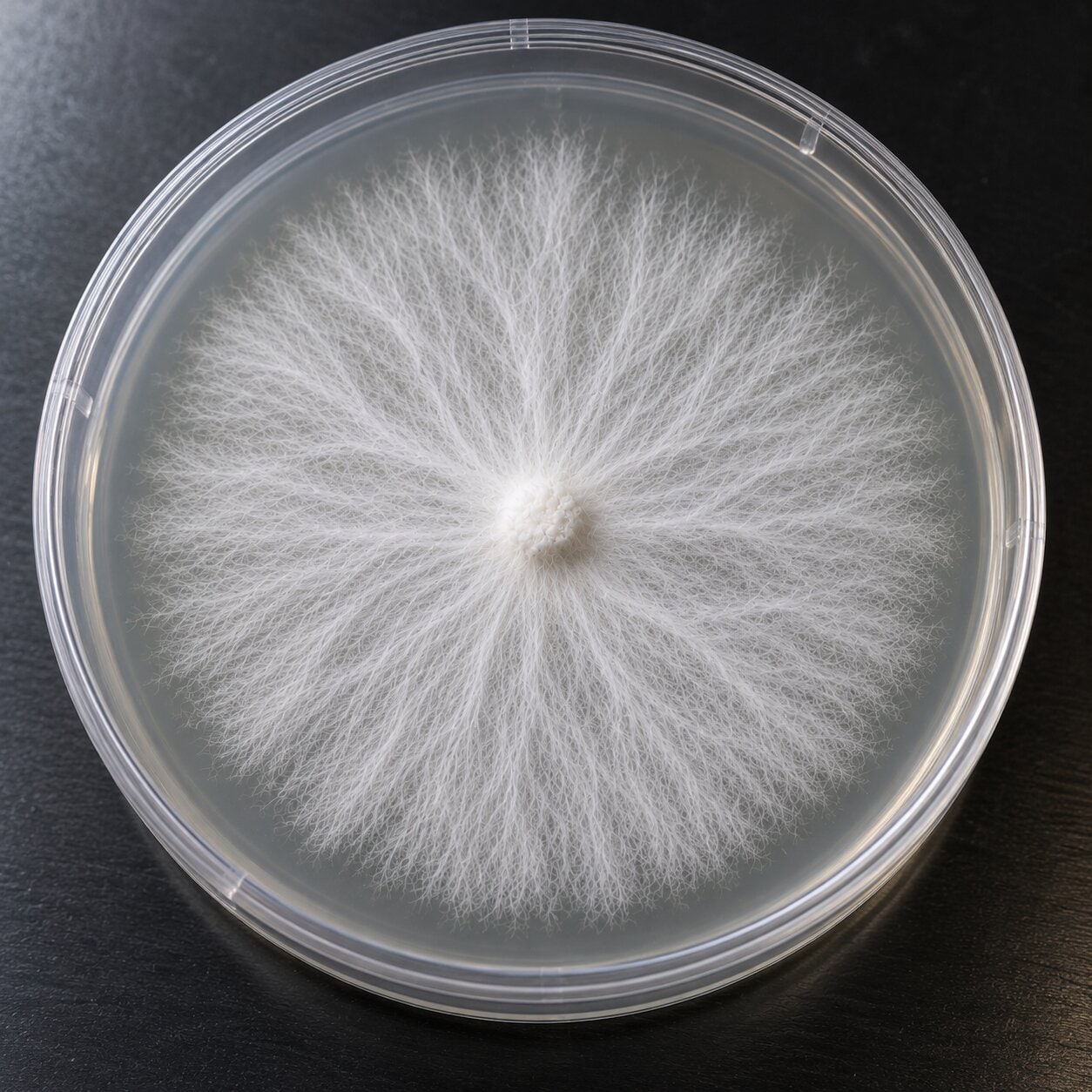
A newly obtained culture is first transferred to an agar nutrient medium in Petri dishes. Agar shows everything that matters at the start: whether the culture is pure, how fast the colony grows and what the mycelium looks like. Only after this check is the culture multiplied and put into storage — on agar slants in test tubes.
This article continues the piece on finding a strain and covers four things: choosing a nutrient medium, preparing agar, transferring the culture to plates and preparing it for storage. At the end there is an appendix with growers' home recipes: agar made from malt extract, potato flakes, honey or dry pet food.
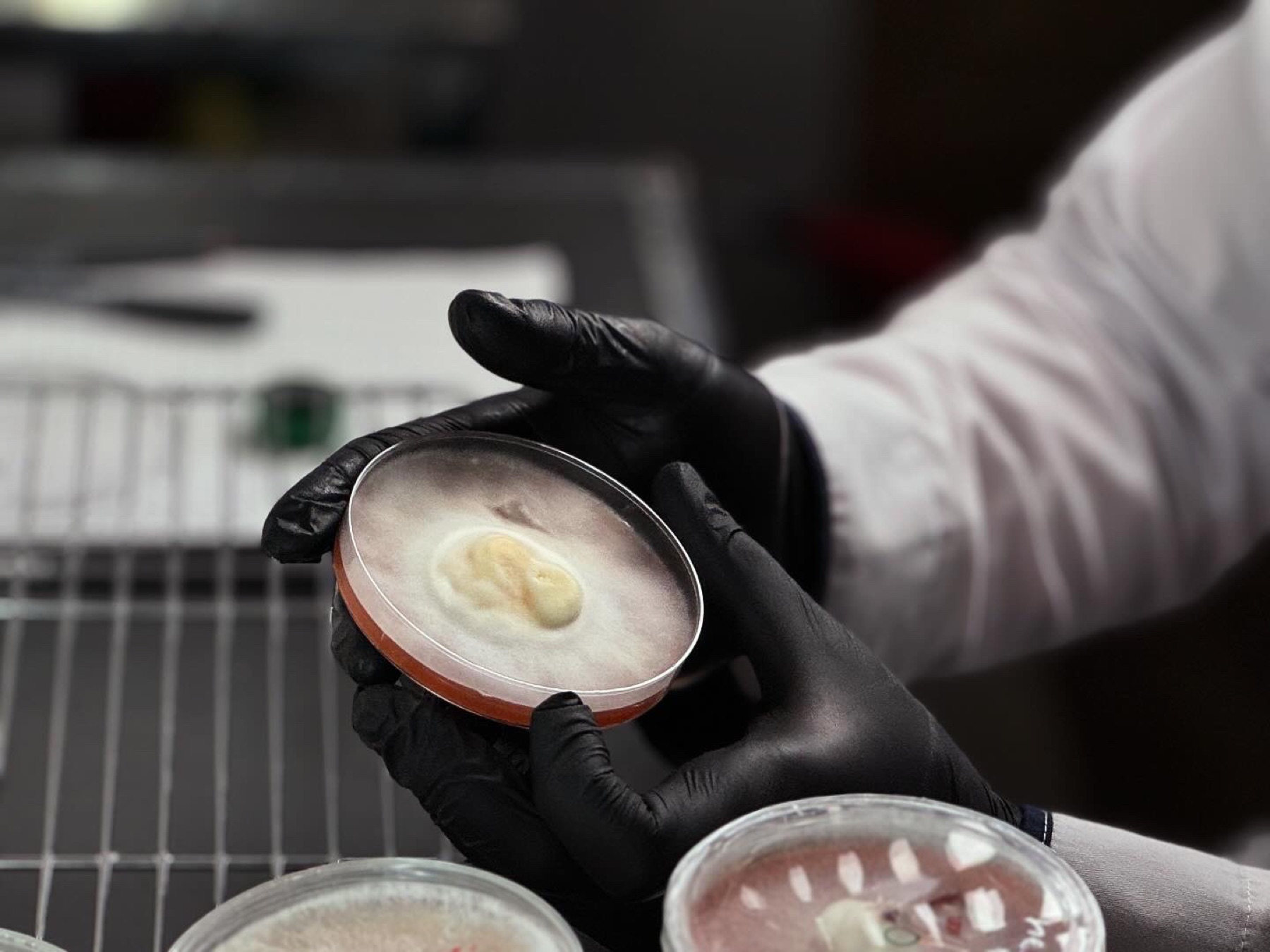
Nutrient media
Two media are enough to start: potato dextrose agar (PDA) and malt extract agar (MEA). In most comparative trials lion's mane (Hericium erinaceus) grows best on these, but the optimum depends on the strain.
| Medium | Result for H. erinaceus | Source |
|---|---|---|
| Potato dextrose agar (PDA) | Fastest growth of the five media: colony 90 mm in 15 days; mycelium dense, white | Singh et al., 2021 |
| Malt extract agar (MEA) | 73.7 mm in 15 days, plate fully colonised in 18 days; mycelium dense, white | Singh et al., 2021 |
| Wort agar with 3% oak sawdust and 5% fir needles | Up to 6 mm per day depending on the strain; the densest colonies | Suleimenova et al., 2025 |
| Agar on sawdust or compost extract | 4.83–5.13 mm per day versus 1.73 mm on bagasse extract | Jahedi et al., 2023 |
| Oatmeal yeast agar (OMYA) | Best growth for three of four strains at 25 °C and pH 4–4.5 | Gonkhom et al., 2022 |
| Czapek–Dox agar (CDA) | Sparse, less white mycelium; plate fully colonised in 20 days | Singh et al., 2021 |
| Corn meal agar (CMA) | Very slow growth: growth coefficient 2.36 versus 27 on PDA and MEA | Ahmad et al., 2025 |
The data on acidity are contradictory. The optimal pH for different strains was 4–4.5 (Gonkhom et al., 2022), 6 (Imtiaj et al., 2008) and 7 (Diskit et al., 2024). So a new strain is best plated on two or three media at once to compare growth rate and colony appearance.
Recipes per 1 L
After preparation, all media are sterilised for 15 minutes at 121 °C. Quantities are given per 1 L of distilled water; wort agar is made with wort instead of water.
| Medium | Composition per 1 L | Source |
|---|---|---|
| Potato dextrose agar (PDA) | Infusion from 200 g potatoes, glucose 20 g, agar 15 g. Washed, sliced potatoes are boiled in 1 L of water for 1 hour and strained; new potatoes are not suitable | DSMZ, medium 129 |
| PDA from a ready-made dry mix | 39 g of mix; pH 5.4–5.8 | Merck, PDA |
| Malt peptone agar | Malt extract 30 g, soy peptone 3 g, agar 15 g; pH 5.6 | DSMZ, medium 90 |
| Malt extract agar (MEA), commercial formulation | Maltose 12.75 g, dextrin 2.75 g, glycerol 2.35 g, peptone 0.78 g, agar 15 g | Gonkhom et al., 2022 |
| Wort agar | Brewer's wort at 8° Balling — 1 L instead of water, agar 10 g | BMC Biotechnology, 2024 |
| Wort agar from a ready-made dry mix | 48.28 g of mix and 2.35 g of glycerol; pH 4.8 ± 0.2 | HiMedia, M129 |
| Oatmeal yeast agar (OMYA) | Oat flour 60 g, yeast extract 20 g, agar 12.5 g | Gonkhom et al., 2022 |
| Czapek–Dox agar (CDA) | Sucrose 30 g, NaNO₃ 3 g, K₂HPO₄ 1 g, MgSO₄·7H₂O 0.5 g, KCl 0.5 g, FeSO₄·7H₂O 0.01 g, agar 13 g; pH 7.2 | DSMZ, medium 130 |
| Corn meal agar (CMA) | Corn meal 50 g, agar 10 g. The meal is steeped overnight in 800 mL of water in the fridge, heated for 1 hour at 60 °C, filtered and made up to 1 L | DSMZ, medium 191 |
For lion's mane, 3% oak sawdust and 5% fir needles were added to wort agar (Suleimenova et al., 2025).
Preparing agar
Agar is prepared in six steps; the key parameters are sterilisation for 15 minutes at 121 °C and pouring at 45–50 °C.
- Weigh the components and stir them into the water according to the recipe.
- Adjust the pH to the required value before sterilisation (DSMZ, medium 90).
- Sterilise the medium in an autoclave for 15 minutes at 121 °C (Merck, PDA).
- Cool the molten agar to 45–50 °C: this way less condensation forms on the lids.
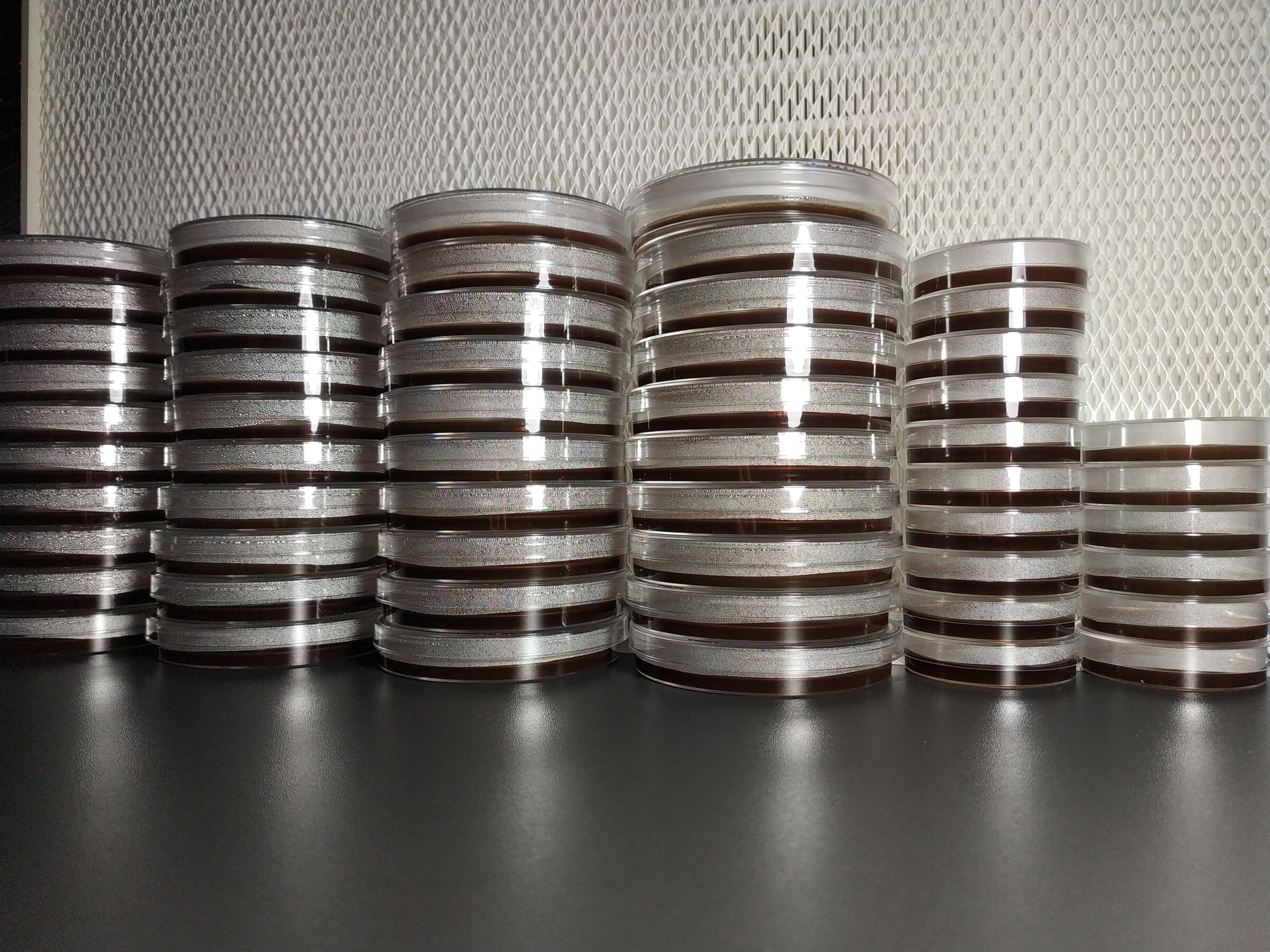
- Pour 15–20 mL per 100 × 15 mm plate — this gives a layer about 0.3 cm thick. Pour under sterile conditions.
- Dry the set plates for about 24 hours at room temperature. After that they are stored in the fridge in closed bags and warmed to room temperature before use.
The parameters for steps 4–6 come from the American Society for Microbiology protocol (Wise, 2006). It was written for bacteriological plates, but the agar-pouring technique is the same.
Transferring the culture to Petri dishes
A newly obtained culture is transferred to fresh medium as soon as possible, usually within 1–2 weeks. The technique below is described in the Pennsylvania State University guidelines for button mushroom cultures (Royse & Wilkinson); the temperature and timings are given for lion's mane.
- Work under sterile conditions. Flame the instrument and let it cool before each transfer.
- Cut out a piece of agar with mycelium no larger than 3 × 3 mm.
- Take material from several areas of the colony, but not from the centre, where the original piece of inoculum lies.
- Place the piece in the centre of the plate and label it: strain, medium, date, transfer number.
- Do not seal the culture airtight. The mycelium needs free gas exchange, so plates and tubes are not kept in a closed system.
- Incubate at 25 °C. This is the optimum for H. erinaceus mycelium; growth was observed within 20–30 °C (Imtiaj et al., 2008).
- Inspect the plates weekly: uniformity of growth, sectors, contamination. Do not propagate mycelium from sectors: this may affect the productivity of the culture.
As a guide to timing: on PDA, growth began 4 days after plating, and the plate was fully colonised by day 15 (Singh et al., 2021).
Agar slants
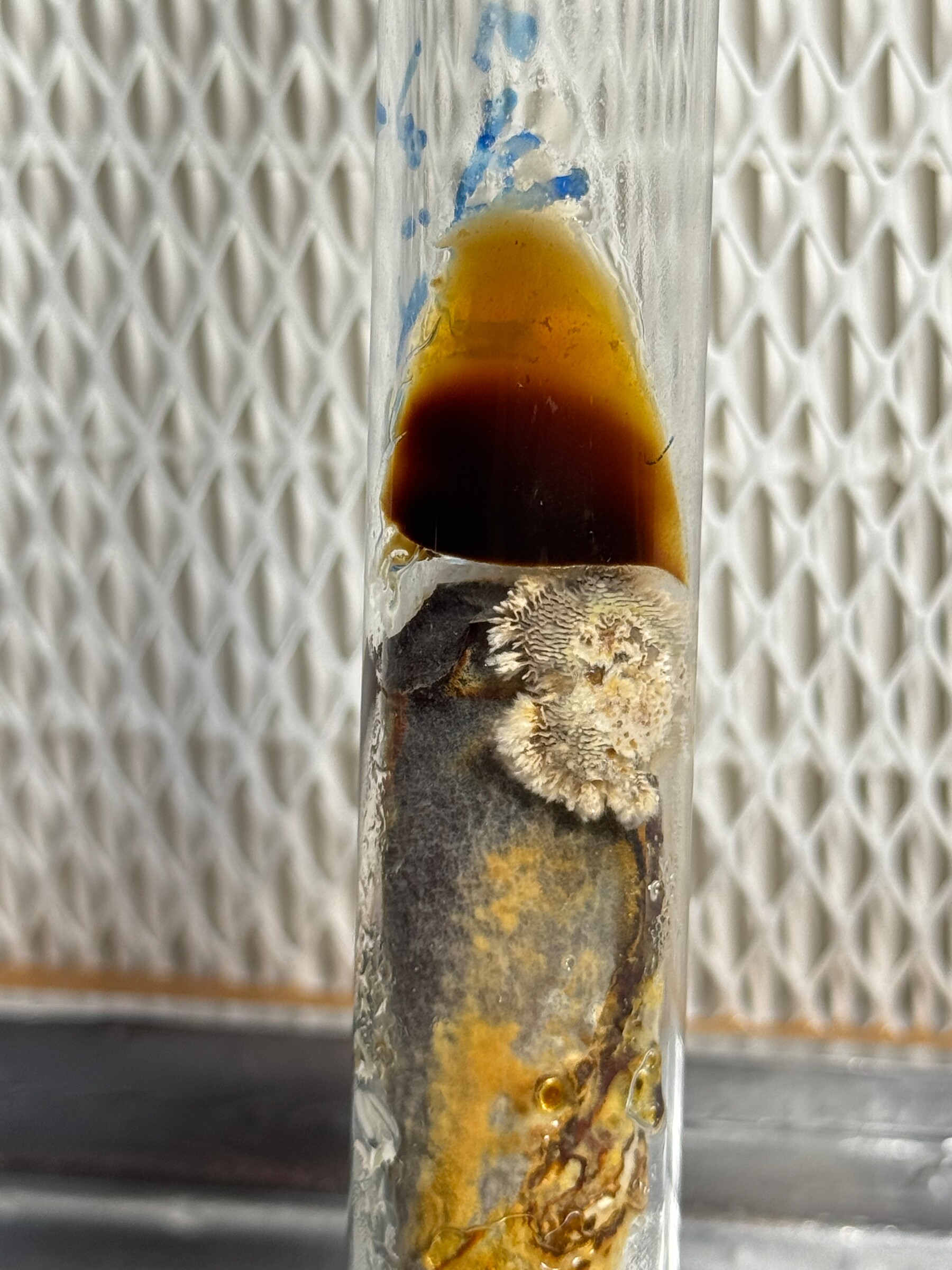
An agar slant is a test tube with a nutrient medium that has set at an angle. In a tube the medium dries out more slowly than in a plate, and the narrow neck reduces the risk of contamination, so this is how cultures are kept between transfers.
- Pour the medium into tubes before sterilisation. For a standard 20 × 150 mm tube, use 14 mL instead of 10 mL: a larger volume dries out less (Royse & Wilkinson).
- Close the tubes with breathable stoppers and sterilise for 15 minutes at 121 °C.
- Lay the hot tubes at an angle and leave them until they set. The agar must not touch the stopper.
- Transfer the culture with a piece no larger than 3 × 3 mm from a checked, pure plate.
- Incubate at 25 °C until the mycelium covers the slant, and only then move the tubes to the cold.
The medium for slants is the same as for plates. Basidiomycete collections have used 1.5% malt extract agar (Burdsall et al., 1994) and PDA (Ryu et al., 2011) for this.
Preparing for storage
The working stock of a culture is kept on agar slants at about 4 °C and transferred periodically. This is also how the IBK collection of the M. G. Kholodny Institute of Botany works: 4 ± 1 °C, regular transfers and microscopic checks (collection description on GBIF).
Four rules of preparation:
- Set up several tubes at once. Some remain an untouched original stock; the rest are working tubes from which material is taken for transfers.
- Label every tube: species, strain number, medium, date and transfer number.
- Do not freeze a culture on agar. Without a cryoprotectant, freezing can damage or kill the mycelium (Royse & Wilkinson).
- Do not seal the tubes airtight: the culture needs gas exchange during storage as well.
The intervals between transfers depend on the species and conditions. For button mushroom cultures, the guidelines advise storing them at 4 °C for up to 4 months, and without a fridge transferring them at least every 60 days (Royse & Wilkinson). In a collection of wood-decay fungi, all cultures on slants were transferred once a year (Burdsall et al., 1994). On PDA slants at low temperature, 94–96% of basidiomycete strains remained viable after 2–5 years and 82% after 7 years (Ryu et al., 2011).
Viability, however, does not mean the culture is unchanged. The longer a culture grows continuously and the more often it is transferred, the higher the probability of genetic and physiological changes (Homolka, 2014). That is why collections use methods for long-term storage in which the mycelium hardly grows.
| Method | Conditions | What was found | Source |
|---|---|---|---|
| Sterile distilled water | Agar blocks with mycelium in tubes, 5 °C | After 20 years, 30 of 34 isolates of saprotrophic basidiomycetes revived | Richter, 2008 |
| Sterile distilled water | Cryovials, up to 7 years, 151 species of wood-decay fungi | Viability and growth rate did not change significantly; genetic stability higher than on slants | Burdsall et al., 1994 |
| Perlite in cryovials | 4 years | 33 of 35 basidiomycete strains viable, characteristics unchanged | Homolka et al., 2008 |
| Agar slant under mineral oil | A layer of sterile oil over the culture | One of the oldest and cheapest methods, but proved unsuitable for most of the basidiomycetes tested | Humber, 1997; Homolka et al., 2008 |
| Cryopreservation in liquid nitrogen | Protocol for button mushroom: 10% glycerol, cooling at about −1 °C per minute | After 10 years on perlite in liquid nitrogen, 30 basidiomycete strains retained viability and morphology | Royse & Wilkinson; Homolka et al., 2010 |
A comparison of the two approaches on 14 isolates of wood-decay fungi over 18 years found no difference in 12 cases: annual transfers on slants and storage in water gave the same ability to decay wood (Richter et al., 2010). After any storage, the culture is checked in the same way as a newly obtained one: purity, growth rate, colony appearance.
These data were obtained on other basidiomycete species. Among these sources there are no separate studies of long-term storage of H. erinaceus, so the intervals for your own strain need to be checked in practice.
Sequence of steps
- Prepare PDA or malt extract agar and sterilise for 15 minutes at 121 °C.
- Pour the agar, cooled to 45–50 °C, at 15–20 mL per plate and dry the plates.
- Transfer the obtained culture in pieces up to 3 × 3 mm onto several plates.
- Incubate at 25 °C and check purity, growth rate and colony uniformity weekly.
- From the best pure plate, transfer the culture to several agar slant tubes.
- Once colonised, label the tubes and move them to a fridge at about 4 °C.
- Leave some of the tubes untouched as the original stock and work with the rest.
How to prepare liquid culture from a pure plate and check it before use is covered in the article on liquid culture.
Appendix: growers' home recipes
Amateur growers make agar from what can be bought in a homebrew or grocery shop: light malt extract, potato flakes, honey, nutritional yeast and even dry dog food. They have one standard: 20 g of agar and about 20 g of nutrient base per 1 L of water, sterilised in a pressure cooker.
The recipes were collected from growers' forums and growers' websites; all quantities have been recalculated per 1 L of water. This is amateur practice, not research-tested protocols: the composition of pet food or honey is not standardised, so results may vary from batch to batch.
Basic recipes
The most common medium is light malt extract (LME) agar: 20 g of extract and 20 g of agar per 1 L. All quantities in the table are per 1 L of water.
| Medium | Composition per 1 L of water | Growers' notes | Source |
|---|---|---|---|
| Malt extract agar (MEA, LME) | Light malt extract 20 g, agar 20 g | An all-purpose medium for most species; the reference against which the others are compared | Simply Horticulture; Mycology Men |
| MEA, richer version | Malt extract 30 g, agar 20 g | Makes about 40 plates | EZMushroom |
| Malt yeast agar (MYA) | Malt extract 20 g, yeast 2 g, agar 20 g | Yeast noticeably boosts growth | Growers' forums |
| Malt peptone agar (MEP) | Malt extract 20 g, peptone 2 g, agar 20 g | MYAP variant: add another 2 g of yeast | Growers' forums |
| Malt honey agar (MEH) | Malt extract 20 g, honey 32 g, agar 20 g | — | Growers' forums |
| Potato dextrose agar (PDA) from potatoes | Peeled potatoes 200 g, glucose 20 g, agar 20 g | The potatoes are boiled for 20 minutes, the broth is strained and topped up to 1 L; recommended for wood-loving species — oyster mushrooms, shiitake | Simply Horticulture |
| PDA from potato flakes | Flakes 10 g, honey 20 g, agar 20 g | Honey replaces glucose; makes about 40 plates | Mycology Men |
| PDA from potato starch | Starch 20 g, glucose 14 g, agar 20 g | — | Growers' forums |
| Potato dextrose yeast agar (PDYA) | Potatoes 200 g, glucose 20 g, nutritional yeast 2 g, agar 20 g | Recommended for slow-growing species, including lion's mane | Simply Horticulture |
| PDYA with starch | Starch 20 g, glucose 14 g, yeast 2 g, agar 20 g | A favourite recipe of one of the forum posters | Growers' forums |
| Sabouraud agar with yeast (SDAY) | Glucose 40 g, peptone 10 g, nutritional yeast 2 g, agar 20 g | A special recipe for cordyceps | Simply Horticulture |
Media from everyday products
In these recipes, malt extract is replaced with pet food, flour or a grain decoction. A separate group is the poor media on which cultures are stored.
| Medium | Composition per 1 L of water | Growers' notes | Source |
|---|---|---|---|
| Dog food agar (DFA) | Ground dry food 20 g, agar 20 g | Dense mycelium and fast growth; sectoring may appear after a few transfers | Growers' forums |
| DFA, poorer version | Ground dry food 10 g, agar 20 g | A budget substitute; use a grain-based food without artificial additives | Simply Horticulture |
| Pollock's agar | Dry dog food 20 g, glucose or malt extract 4 g, agar 20 g | — | Growers' forums |
| Cat food agar (CFA) | Ground dry food 20 g, agar 20 g | — | Growers' forums |
| Fish flake agar (FDA) | Fish food 6 g, glucose 20 g, agar 20 g | — | Growers' forums |
| Oat flour malt agar (OFMA) | Oat flour 80 g, malt extract 4 g, agar 20 g; optionally yeast 2 g | Made the same way with brown rice, wheat or barley flour | Growers' forums |
| Corn meal dextrose agar | Corn meal 50 g, glucose 6 g, agar 20 g | — | Growers' forums |
| Brown rice agar (BRA) | Brown rice 20 g, agar 20 g | A poor medium for storage; the rice is boiled for 60 minutes, strained and topped up with water to the original volume | Growers' forums |
| Wheat agar (WA) | Wheat grain 30 g, agar 20 g | A poor medium for storage; the grain is boiled for 60 minutes and strained | Growers' forums |
| Potato carrot agar (PCA) | Potatoes 200 g, carrots 250 g, agar 20 g | A poor medium for storage; the vegetables are simmered for 30 minutes and strained | Growers' forums |
Additives
Additives can be added to any basic recipe; quantities are per 1 L of medium.
| Additive | Amount per 1 L | Why and when it is added | Source |
|---|---|---|---|
| Yeast or yeast extract | 2 g | Speeds up growth; before sterilisation | Growers' forums |
| Peptone | 2 g | Nitrogen source; before sterilisation | Growers' forums |
| Activated charcoal ("black agar") | 2–4 g | White mycelium is easier to see against a black background; according to growers' observations, it has almost no effect on growth | Mycologyst |
| Food colouring | A few drops | Contrast, to see mycelium and contamination | EZMushroom |
| Gentamicin or streptomycin | 20 mg | Against bacteria; after sterilisation, into medium cooled to about 50 °C: antibiotics are destroyed by heat | Growers' forums; QIAGEN |
| Hydrogen peroxide 3% | 6–10 mL | For cleaning up contaminated cultures; after sterilisation, once the medium has cooled below 60 °C; not recommended for germinating spores | Growers' forums |
According to forum advice, carbon sources in the medium should be no more than 4%, nitrogen sources no more than 0.5%, and the pH for most fungi 5–6. Growers on the forums add two observations: on a poorer medium the mycelium spreads faster, and alternating media between transfers, for example MEA and PDA, revives growth.
How it is done without an autoclave
The autoclave is replaced with a pressure cooker at 15 psi (about 1 bar of gauge pressure, corresponding to roughly 121 °C); sterilisation times in different sources range from 15 to 45 minutes.
- Mix the components with water in a bottle twice the volume of the medium (Mycology Men).
- Sterilise in a pressure cooker at 15 psi: at least 15 minutes (EZMushroom), 30 minutes (Mycology Men) or 45 minutes (Simply Horticulture).
- Cool to 46–55 °C and pour: agar stays liquid down to about 42 °C (Mycologyst; Mycology Men).
- Pour 20–25 mL per plate: 1 L makes about 40 plates.
- Let it set for about 30 minutes at room temperature.
- Store the plates in the fridge upside down — this reduces condensation; they keep for several months (Mycology Men).
There is also a method without pouring after sterilisation: the medium is brought to the boil, poured into plates, wrapped in foil and only then sterilised for 30 minutes at 15 psi. A forum recipe for this method, per 120 mL of water: 3 g of potato flakes, 1 g of honey or sugar, 2 g of agar — enough for 8–10 plates. Only glass or heat-resistant plates are suitable for this method: ordinary polystyrene plates deform in a pressure cooker.
Sources
- Singh J. et al. (2021). Efficacy of different culture media on growth and characteristics of mycelium of monkey head mushroom (Hericium erinaceus). Plant Disease Research, 36(1).
- Suleimenova Z., Lomberg M., Bisko N. et al. (2025). Hericium erinaceus: Combining traditional uses with modern biotechnology to develop nutraceuticals. Biosystems Diversity, 33(3), e2535.
- Jahedi A. et al. (2023). Revival of wild edible-medicinal mushroom (Hericium erinaceus) based on organic agro-industrial waste. Scientia Horticulturae, 323, 112510.
- Gonkhom D. et al. (2022). Optimal conditions for mycelial growth of medicinal mushrooms belonging to the genus Hericium. Mycological Progress, 21, 82. The composition of the media is given in Table 2 of the full text.
- Ahmad L. et al. (2025). Effect of Different Nutrient Media on Mycelial Growth of Different Species of Medicinal Mushroom. Arab American University Journal, 11(1).
- Imtiaj A. et al. (2008). Vegetative Growth of Four Strains of Hericium erinaceus Collected from Different Habitats. Mycobiology, 36(2), 88–92.
- Diskit S. et al. (2024). Optimization of Mycelial Growth Parameters in Lion's Mane Edible Medicinal Mushroom Hericium erinaceus by Supplementation of Growth Hormones. International Journal of Medicinal Mushrooms, 26(11), 41–49.
- DSMZ. Medium 129: Potato Dextrose Agar.
- DSMZ. Medium 90: Malt Extract Peptone Agar.
- Merck. Potato Dextrose Agar: Technical Data Sheet.
- Wise K. (2006). Preparing Spread Plates Protocols. American Society for Microbiology.
- Royse D. J., Wilkinson V. Care and handling of cultures of the cultivated mushroom (Agaricus bisporus). The Pennsylvania State University.
- Burdsall H. H., Dorworth E. B. (1994). Preserving cultures of wood-decaying Basidiomycotina using sterile distilled water in cryovials. Mycologia, 86(2), 275–280.
- Ryu S.-R. et al. (2011). Comparison of Viability in Basidiomycetes After Low Temperature Storage According to Storage Period. The Korean Journal of Mycology, 39(2), 141–144.
- IBK Mushroom Culture Collection. Description of the collection of the M. G. Kholodny Institute of Botany, National Academy of Sciences of Ukraine, on GBIF.
- Homolka L. (2014). Preservation of live cultures of basidiomycetes — recent methods. Fungal Biology, 118, 107–125.
- Richter D. L. (2008). Revival of saprotrophic and mycorrhizal basidiomycete cultures after 20 years in cold storage in sterile water. Canadian Journal of Microbiology.
- Homolka L., Lisá L. (2008). Long-term maintenance of fungal cultures on perlite in cryovials — an alternative for agar slants. Folia Microbiologica, 53, 534–536.
- Humber R. A. (1997). Fungi: Preservation of cultures. In: Manual of Techniques in Insect Pathology. Academic Press, 269–279.
- Homolka L. et al. (2010). Effect of long-term preservation of basidiomycetes on perlite in liquid nitrogen on their growth, morphological, enzymatic and genetic characteristics. Fungal Biology, 114, 929–935.
- Richter D. L. et al. (2010). Comparison of effectiveness of wood decay fungi maintained by annual subculture on agar and stored in sterile water for 18 years. Canadian Journal of Microbiology.
- DSMZ. Medium 130: Czapek-Dox Agar.
- DSMZ. Medium 191: Corn Meal Agar.
- HiMedia. Wort Agar M129.
- Strain-specific features of Pleurotus ostreatus growth in vitro and some of its biological activities (2024). BMC Biotechnology.
- Simply Horticulture. Agar guide.
- Mycology Men. The Complete Guide: How to Make Agar at Home.
- EZMushroom. Light Malt Extract (LME) Agar Recipe.
- Mycologyst. Recipe: Black Agar — Activated Charcoal.
- QIAGEN. Bacterial cultivation media and antibiotics.
- Amateur growers' forums: discussions of media recipes, marked in the appendix tables as "Growers' forums".
Related mushrooms
Materials for growing

GREEBZ functional mushroom extract set
A gift set of three GREEBZ functional mushroom liquid extracts in a branded box. The set includes extracts of lion's mane, Cordyceps militaris and reishi. What's in the set - Lion's mane — liquid extract - Cordyceps militaris — liquid extract - Reishi — liquid extract
Made by us
On request
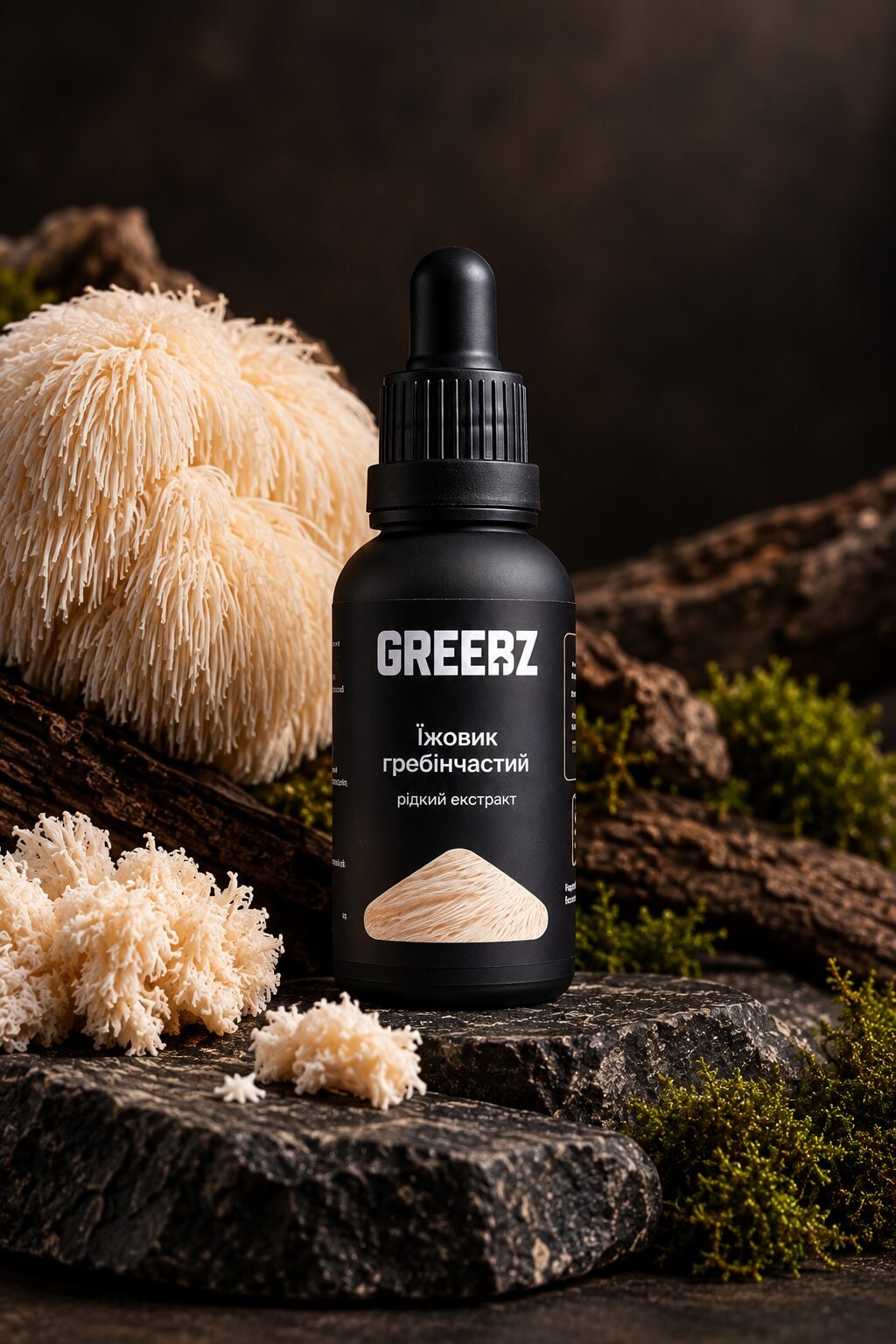
Lion's mane — GREEBZ liquid extract
A 30% liquid extract of lion's mane (Hericium erinaceus) from GREEBZ's own production. We use controlled mushroom raw material from our own production. Extraction is carried out in a Soxhlet apparatus, followed by vacuum concentration. Hericium erinaceus is studied as a source of various groups of fungal compounds. Whether specific compounds are present in the finished product, and in what amounts, requires separate laboratory analysis. Specifications - Species: Hericium erinaceus - Concentration: 30% - Method: Soxhlet extraction followed by vacuum concentration - Format: liquid extract in a dropper bottle - Volume: 30 ml - Producer: GREEBZ
Made by us
On request
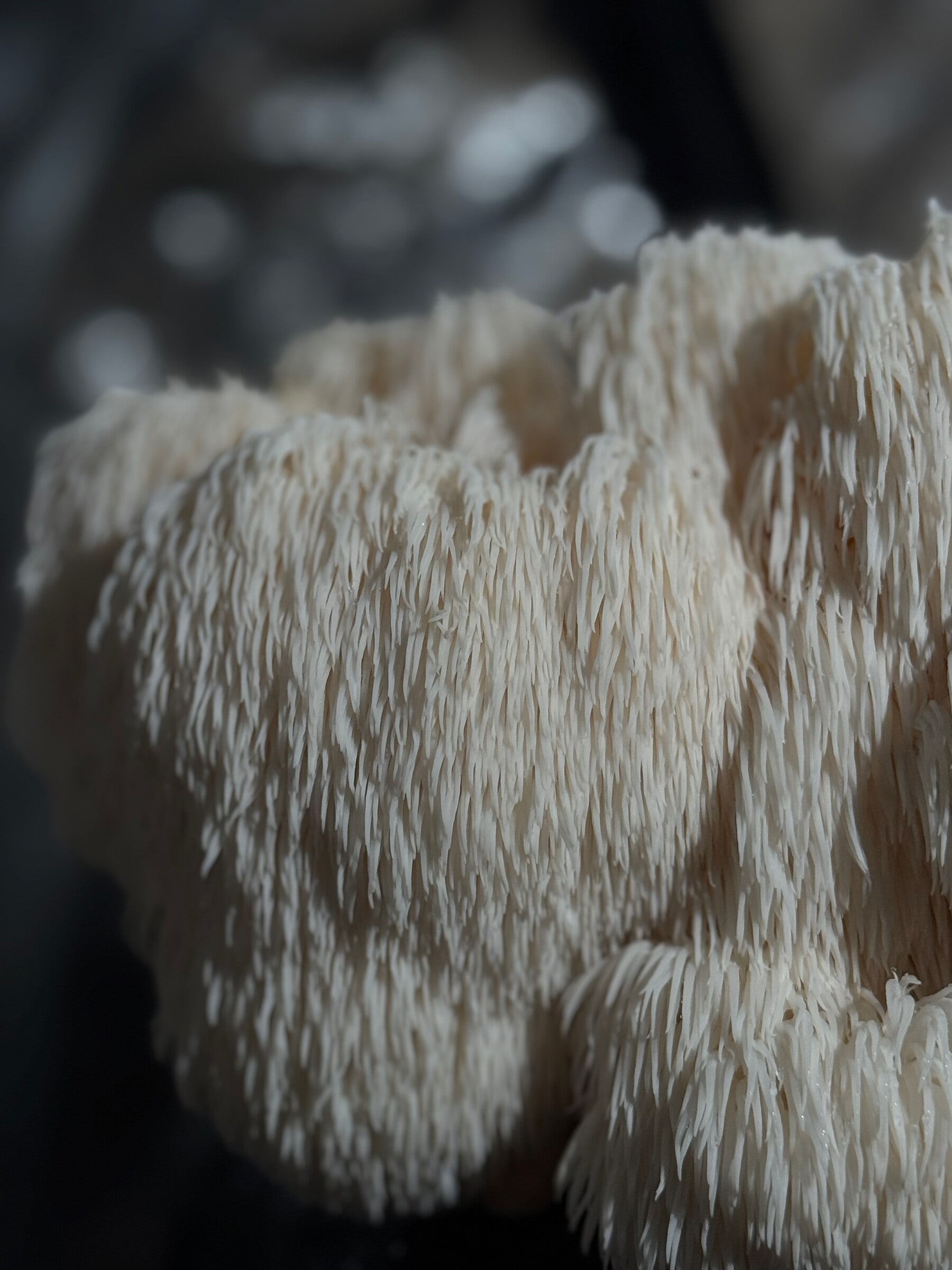
Fresh lion's mane
Fresh lion's mane (Hericium erinaceus) fruiting bodies grown by GREEBZ. Fresh lion's mane grown under controlled conditions in GREEBZ's own production. The product is supplied fresh after harvest. Specifications - Format: fresh fruiting bodies - Unit of sale: 1 kg - Producer: GREEBZ
Made by us
On request
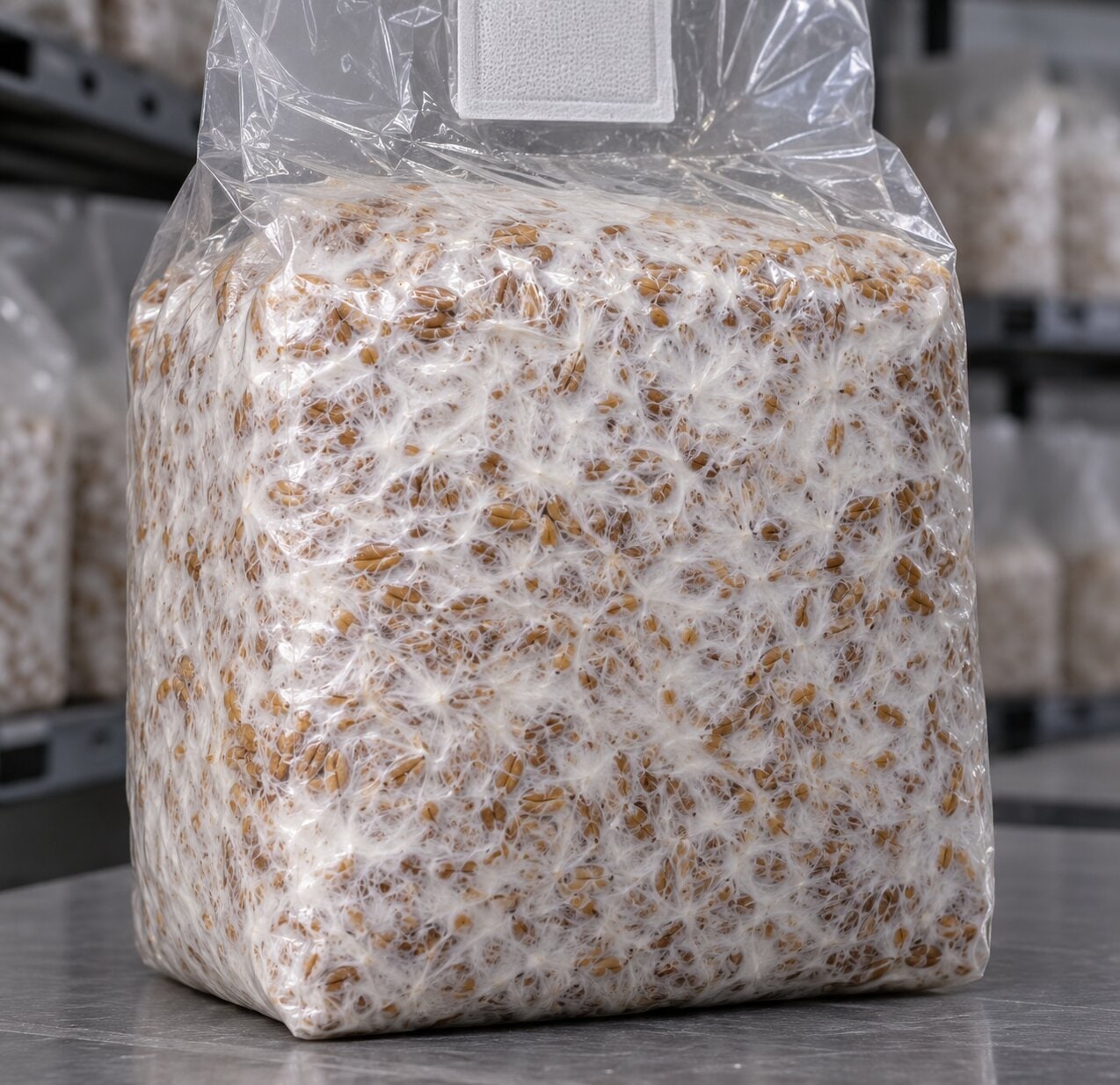
Master grain spawn — 5 kg bag
GREEBZ master grain spawn of the chosen culture. A pure culture on sterile grain substrate. Available in a choice of cultures — list the ones you need in your request. Master spawn is intended for further propagation and the production of production spawn. Grown from a pure culture under sterile laboratory conditions. Specifications - Format: grain spawn in a filter bag (grow bag), 5 kg - Substrate: sterile grain - Producer: GREEBZ
Made by us
On request
Other entries
Need help with your process?
Describe what's happening, even if you don't know the cause. We'll work it out together.