Preparing and sterilising grain: to boil or not to boil
How to bring grain to about 50% moisture and make it sterile: five moistening methods, gypsum and chalk, autoclave regimes for jars and bags, common mistakes.
Author: Volodymyr Sobol
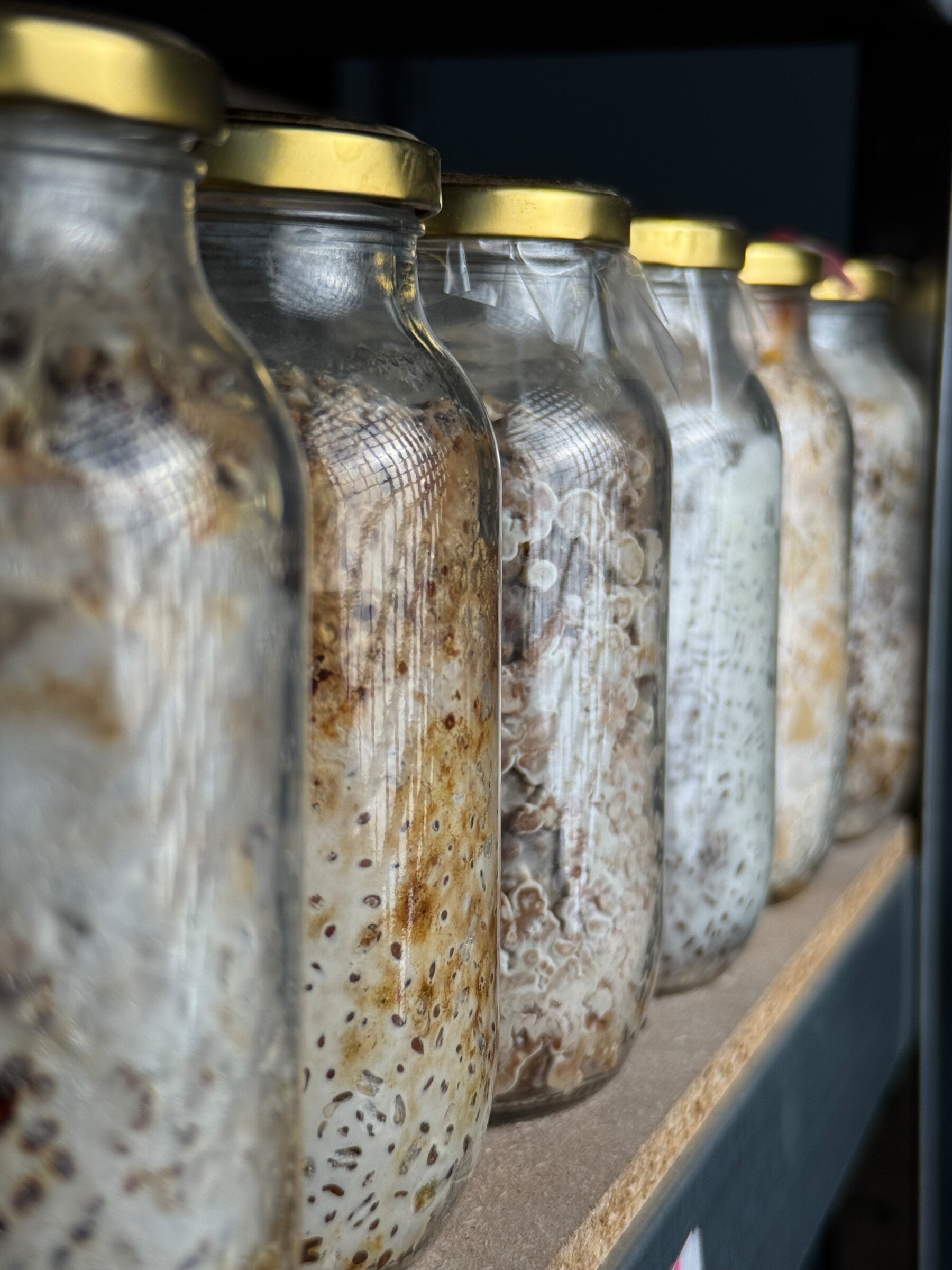
Grain preparation has to deliver two things at once: a kernel saturated with water inside and dry on the outside, and complete sterility. The "boil or not boil" debate is a debate about how to bring the grain to the right moisture content before sterilisation; pressure sterilisation itself is needed whichever method is used.
This article continues the piece on choosing a grain supplier: that one covers which grain to buy and how to check it, this one covers what to do with it before inoculation.
Why moisten and sterilise
The target moisture content of the prepared grain is about 50%. Spawn laboratory protocols give 48–50% (Indiaagronet) and 50% (patent US4063383), while growers keep to a range of 45–55% (Colorado Cultures). The optimum differs from grain to grain: in an experiment with oyster mushrooms, the suitable moisture content for maize was 50%, and for rice 27% (Afrida et al., 2021).
Sterilisation is needed because grain carries a heavy microbial load. In the outer layers of wheat grain, counts ranged from 5.8 × 10⁵ to 4.1 × 10⁶ CFU per gram (Laca et al., 2006), and among the bacteria cultured from the surface of stored wheat, 53.4% belonged to the genus Bacillus (Solanki et al., 2021). It is Bacillus that forms endospores, and some endospores survive up to 20 hours of boiling (OpenStax Microbiology).
Hence the main conclusion: boiling moistens the grain but does not sterilise it. Only saturated steam under pressure at 121 °C sterilises reliably.
Moistening methods
There are five working methods, and all of them give usable grain in the hands of those who have mastered them. We could not find controlled studies comparing these methods with one another; the only closely related experiment showed that for oyster mushrooms on wheat, 20 minutes of boiling was better than 10 minutes and better than unboiled grain (Hassan, Hisamudin, 2022).
| Method | How it is done | Advantages and risks |
|---|---|---|
| Soaking and brief boiling | Soak for 12–24 hours, then simmer for 10–20 minutes without a rolling boil (FreshCap; GroCycle). In an experiment with Hericium strains, the grain was soaked for 12–14 hours and boiled for 10–15 minutes (Gonkhom et al., 2022) | The most common method among growers. Soaking for more than 36 hours makes the grain sprout; in warm water it can ferment (mushroom growers' forums) |
| Boiling only | Boil 10 kg of wheat or sorghum for 10–15 minutes in 15 L of water and leave it in the hot water for another 15–25 minutes (Indiaagronet). Wheat for lion's mane was boiled for 20 minutes (Kumar, 2022) | Fast, suitable for large volumes; a common method in spawn laboratories in India. Overcooked grain cracks and sticks together |
| Soaking only | Soak for 15–24 hours, drain and surface-dry (mushroom growers' forums) | A minimum of cracked kernels. Reports are mixed: from "the best on rye" to "very dry grain and stalled growth" (mushroom growers' forums) |
| Dry grain with measured water, without soaking or boiling | Rye: 200 g of grain and 200 g of water per one-litre jar (mushroom growers' forums). Millet: 300–350 ml of water per 1 kg; wheat: 250–300 ml per 1 kg (Zombie Myco). The Pennsylvania State University laboratory works the same way: 250 ml of rye and 220 ml of warm water in a one-litre flask (Penn State) | The least work, precise moisture content in jars and flasks. Requires accurate weighing; in bags the grain absorbs water unevenly: dry at the top, wet at the bottom (mushroom growers' forums) |
| Scalding with hot water | Pour boiling water over the grain and let it swell (mushroom growers' forums). White millet can also simply be soaked for 3–4 hours right in the bag (Circular Harvest) | No boiling, and faster than cold soaking. With oats, growers report sticky clumps and under-hydration (mushroom growers' forums) |
Is soaking needed to deal with endospores
A widespread explanation on forums: during 12–24 hours of soaking, endospores germinate and become vulnerable to sterilisation. Some spawn producers say so too (FreshCap), but we could not find scientific confirmation of this for grain spawn. Growers themselves disagree: one experienced forum member believes that soaking only saturates the endospores with water and that long soaking can do harm; another, that the drying time matters more than the soaking time.
Surface drying
After boiling or soaking, the grain is spread out in a layer up to 2.5 cm deep for 20–40 minutes. Ready grain is matte, the kernels do not stick together, and a paper towel pressed onto it stays dry (Rhizofunga). Moisture on the surface of the kernels encourages bacterial contamination.
Additives: gypsum and chalk
Gypsum keeps the kernels from sticking together, and chalk or lime brings the pH to 6.5–7.5 (Indiaagronet). They are mixed into the moistened grain before packing.
| Source | Gypsum (CaSO₄) | Chalk or lime (CaCO₃) |
|---|---|---|
| Laboratory protocol, India | 120 g per 9 kg of boiled grain | 30 g per 9 kg of boiled grain |
| Assam State spawn laboratory | 200 g per 10 kg of dry grain | 50 g per 10 kg of dry grain |
| Penn State | 1 teaspoon per 250 ml of rye | 2 teaspoons per 250 ml of rye |
| Kumar, 2022 — wheat for lion's mane | 2% | 0.5% |
| Growers | 1–2% of the dry grain weight | usually not added |
In an experiment with oyster mushroom mycelium, the best growth came from a mixture of 1% lime and 1% gypsum (Afzal et al., 2019). With lion's mane it is worth being careful with chalk: in an experiment on agar its strains grew best at pH 4–5.5 (Gonkhom et al., 2022), although other studies give pH 6–7 (more on this in the article on pure culture on agar).
Sterilisation
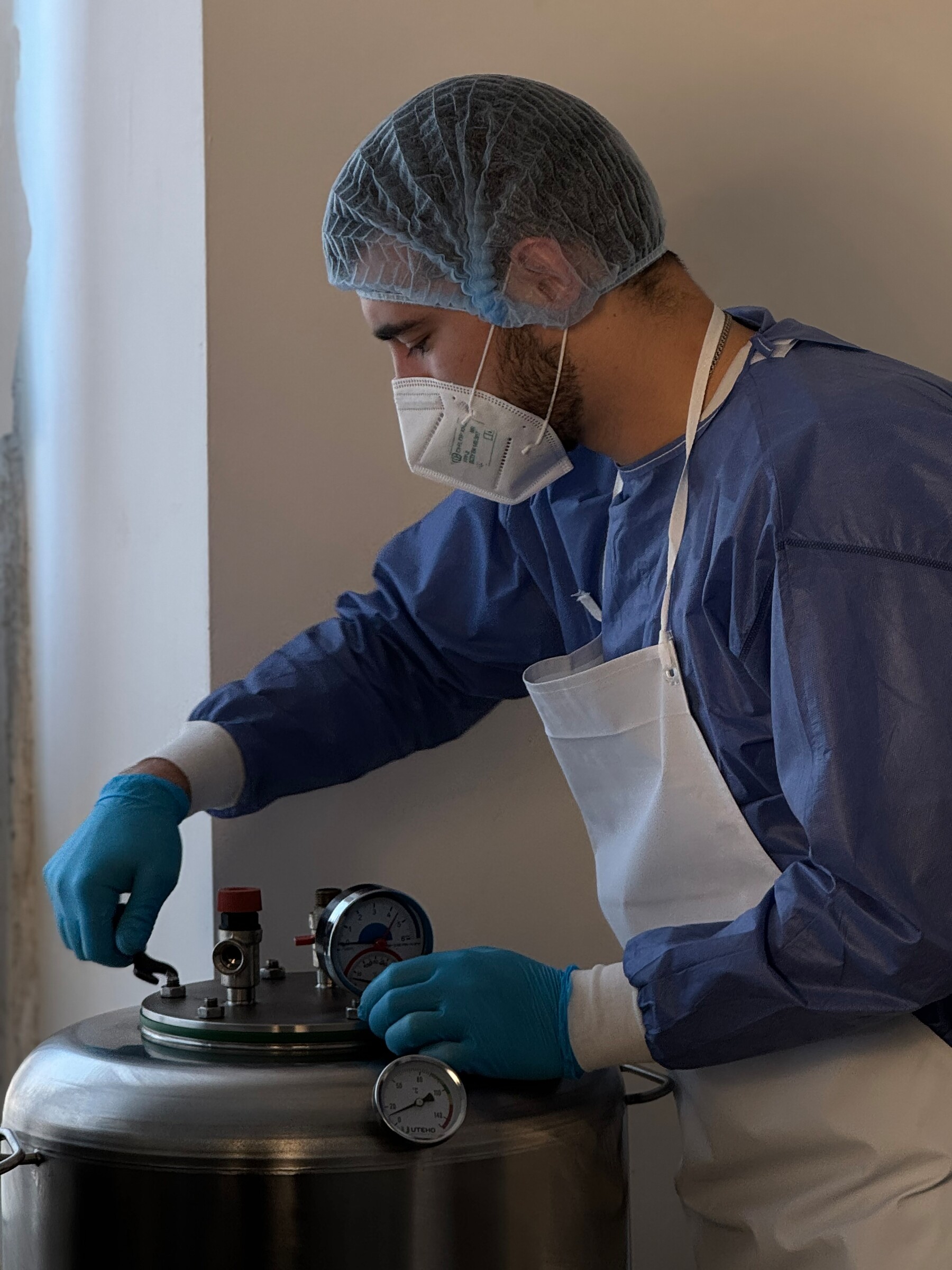
Grain is sterilised with saturated steam at 121 °C, that is, at a gauge pressure of 15 psi (about 1 atm). The time depends above all on how quickly the middle of the container heats up: large volumes need a longer exposure (OpenStax Microbiology). An ordinary laboratory load needs up to 30 minutes, while grain spawn needs "an hour or two" (Priorclave).
| Container | Regime | Source |
|---|---|---|
| 250 ml flask | 35 minutes at 121 °C | Penn State |
| 1 L flask | 45 minutes at 121 °C | Penn State |
| Bottles filled to ¾ | 30–45 minutes at 121 °C | FAO |
| Jars of about 1 L | 90 minutes at 15 psi; dense load — 90–120 minutes | FreshCap; Colorado Cultures |
| Bags of about 1.4 kg | 120–150 minutes at 15 psi | Rhizofunga; Midwest Grow Kits |
| Bags of 2–2.3 kg | 120–180 minutes at 15 psi | Colorado Cultures |
| Bottles and bags, laboratories in India | 1–2 hours at 20–22 psi (126 °C) | Indiaagronet; Assam State laboratory |
| Wheat for lion's mane | 2 hours at 121 °C | Kumar, 2022 |
Rules common to all regimes:
- Do not fill containers to the top: jars to ⅔–¾, bags no higher than the manufacturer's mark, without packing down (Colorado Cultures).
- Let the pressure drop naturally. Forced venting can draw non-sterile air into the container (Rhizofunga); cooling takes 8–12 hours (Colorado Cultures).
- Shake the grain after sterilisation: this evens out the moisture between the top and the bottom and keeps the grain from clumping (University of Florida).
- A large load lengthens the cycle. A failed sterilisation usually means Bacillus spores that survived in "cold spots" the steam did not reach (patent US6041544).
Without an autoclave
Fractional sterilisation, or tyndallisation, is heating with steam at 100 °C for 30 minutes on three consecutive days. Between heatings, the surviving spores germinate and are killed during the next one (Microbe Online). For grain the result is inconsistent: growers on forums report both 98% success and "50/50".
A dry-heat oven is not suitable for grain: dry heat sterilises only at 160–170 °C for 1–2 hours (CDC), and under such conditions the grain dries out.
Common mistakes
| Sign | Probable cause | What to change |
|---|---|---|
| Grain clumps together | Overwetting, wet surface, dehulled grain | Shorten the boiling, dry for longer, add gypsum, shake after sterilisation |
| Many cracked kernels | Overcooking; starch from cracked grain raises the risk of contamination (Simply Horticulture) | Simmer without a rolling boil; stop when a cut kernel is soft inside and its outer coat is intact |
| Dry grain, the mycelium stalls | Under-hydration: soaking only, or inaccurate measuring of the water | Add brief boiling or recalculate the water by weight |
| Grey-brown slime, sour smell | Bacteria: endospores survived sterilisation, or the grain surface was wet | Lengthen sterilisation, dry the surface better, use cleaner grain |
| Contamination at the centre of the bag | The steam did not heat the middle through: too little time or too dense a load | Increase the time, use smaller bags, leave gaps between them |
| The grain has sprouted | Soaking for more than 36 hours or in the warm | Shorten soaking to 12 hours |
It is worth keeping count of the contamination rate. In an experiment with spawn on sorghum, 12.66% of the containers were contaminated, on pearl millet 20.66%, and triple autoclaving reduced contamination by at most 98.66% (Gupta et al., 2020).
Lion's mane has two peculiarities: the mycelium on grain is thin and can look like uncolonised grain (Field & Forest), and primordia, in growers' experience, appear soon after full colonisation, so ready spawn should not be kept for long.
Sequence of steps
The basic protocol is soaking with brief boiling; it is also the one used in the experiment with Hericium strains.
- Rinse the grain two or three times and pour off the chaff and dust.
- Soak for 12–14 hours in cold water.
- Simmer for 10–15 minutes without a rolling boil, until a cut kernel is soft inside.
- Drain and surface-dry in a layer up to 2.5 cm deep, until a paper towel stays dry.
- Mix in gypsum: 1–2% of the dry grain weight.
- Pack: jars to ⅔–¾, bags no higher than the manufacturer's mark.
- Sterilise at 121 °C: jars of about 1 L for 90 minutes, bags from 120 minutes.
- Let the pressure drop naturally, cool, and shake the grain before inoculation.
- Record the weight of the dry and the prepared grain, the regime and the share of contaminated containers — this will let you compare methods on your own grain.
Sources
Scientific publications and guidelines:
- Gonkhom D. et al. (2022). Optimal conditions for mycelial growth of medicinal mushrooms belonging to the genus Hericium. Mycological Progress, 21, 82.
- Hassan S. R., Hisamudin M. A. (2022). Optimization of mycelium growth condition of Pleurotus ostreatus sp (oyster mushroom) for seed production. AIP Conference Proceedings, 2541, 020001.
- Afrida S. et al. (2021). An Investigation of Spawn Growth of Pleurotus ostreatus in Heat-Tolerant Plastic Bags Using Rice and Corn as Substrates. Advances in Biological Sciences Research.
- Kumar S. (2022). Evaluation of Hericium erinaceus (Lion's Mane) mushroom strains on different substrates. The Pharma Innovation Journal, 11(6), 379–384.
- Laca A. et al. (2006). Distribution of microbial contamination within cereal grains. Journal of Food Engineering, 72(4), 332–338.
- Solanki M. K. et al. (2021). Analysis of Stored Wheat Grain-Associated Microbiota Reveals Biocontrol Activity among Microorganisms against Mycotoxigenic Fungi. Journal of Fungi, 7(9), 781.
- Gupta S., Kumar S., Singh R., Summuna B. (2020). Management of contaminants in mushroom spawn. Indian Journal of Agricultural Sciences, 90(5), 1000–1003.
- Afzal R. et al. (2019). Efficacy of Grain Spawn and Lime/Gypsum Ratio on Mycelial Growth of Oyster Mushroom. Advances in Biotechnology & Microbiology, 13(5).
- Penn State. Spawn preparation.
- FAO. A manual on spawn production.
- University of Florida. SS663: Isolation of Mother Cultures and Preparation of Spawn for Oyster Mushroom Cultivation.
- Indiaagronet. Spawn production; Assam State spawn laboratory.
- OpenStax. Microbiology, 13.2 Using Physical Methods to Control Microorganisms.
- CDC. Other Sterilization Methods: dry heat.
- Priorclave. Grain sterilisation for mushroom cultivation.
- Microbe Online. Moist heat sterilization.
- Patents US4063383 and US6041544.
Websites of spawn producers and practising growers:
- FreshCap. How to make perfect grain spawn.
- GroCycle. How to make grain spawn.
- Rhizofunga. How to make grain spawn.
- Colorado Cultures. Rye grain spawn; How to sterilize grain bags.
- Zombie Myco. No-soak grain spawn tek.
- Circular Harvest. Crafting exceptional grain spawn.
- Midwest Grow Kits. Mushroom grain and grain spawn guide.
- Simply Horticulture. Grain spawn guide.
- Field & Forest. Lion's mane millet grain spawn.
- Amateur mushroom growers' forums: discussions of soaking, dry loading, scalding, endospores, tyndallisation and lion's mane on grain, cited in the text as "mushroom growers' forums".
Related mushrooms
Materials for growing
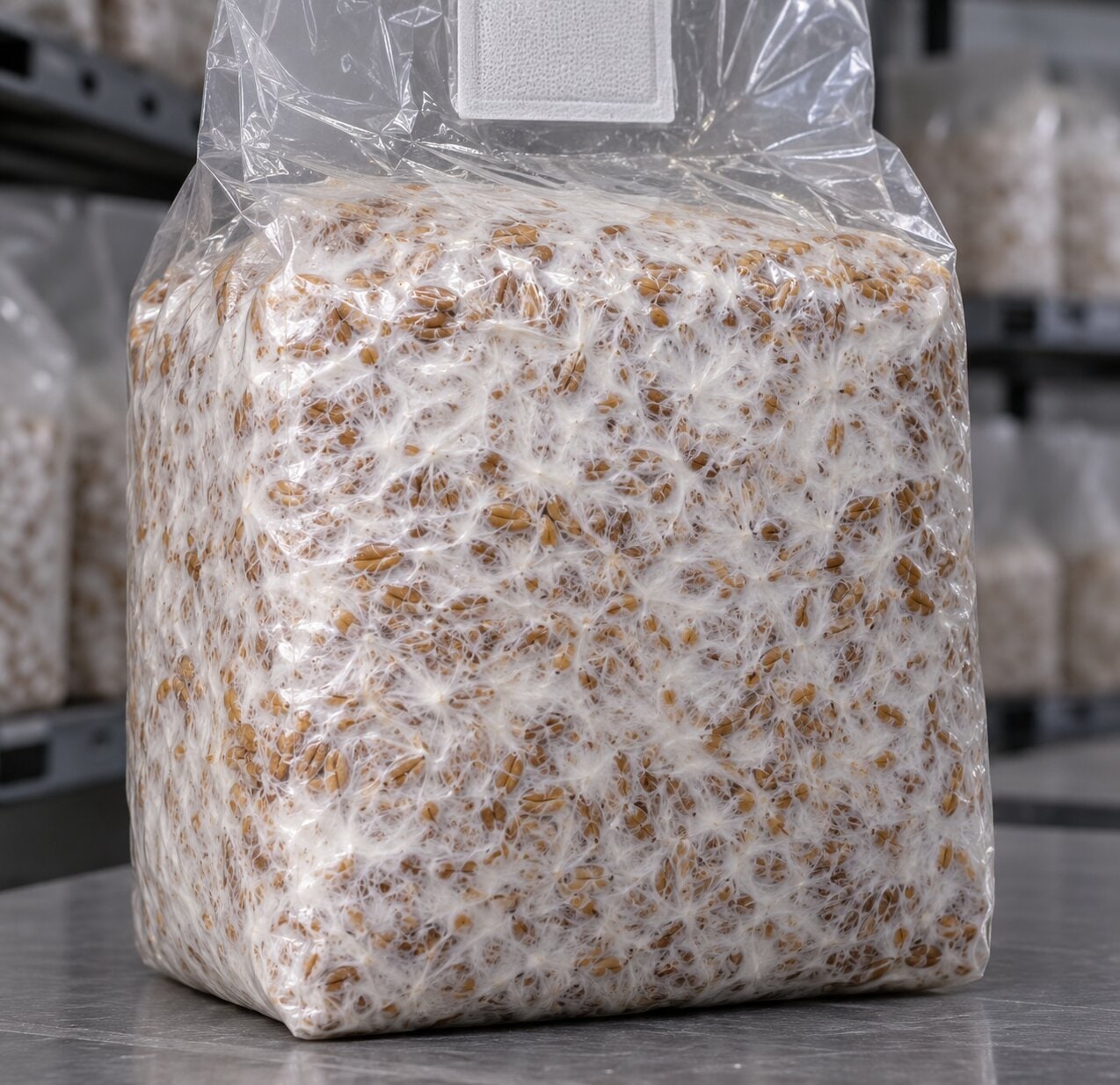
Master grain spawn — 5 kg bag
GREEBZ master grain spawn of the chosen culture. A pure culture on sterile grain substrate. Available in a choice of cultures — list the ones you need in your request. Master spawn is intended for further propagation and the production of production spawn. Grown from a pure culture under sterile laboratory conditions. Specifications - Format: grain spawn in a filter bag (grow bag), 5 kg - Substrate: sterile grain - Producer: GREEBZ
Made by us
On request
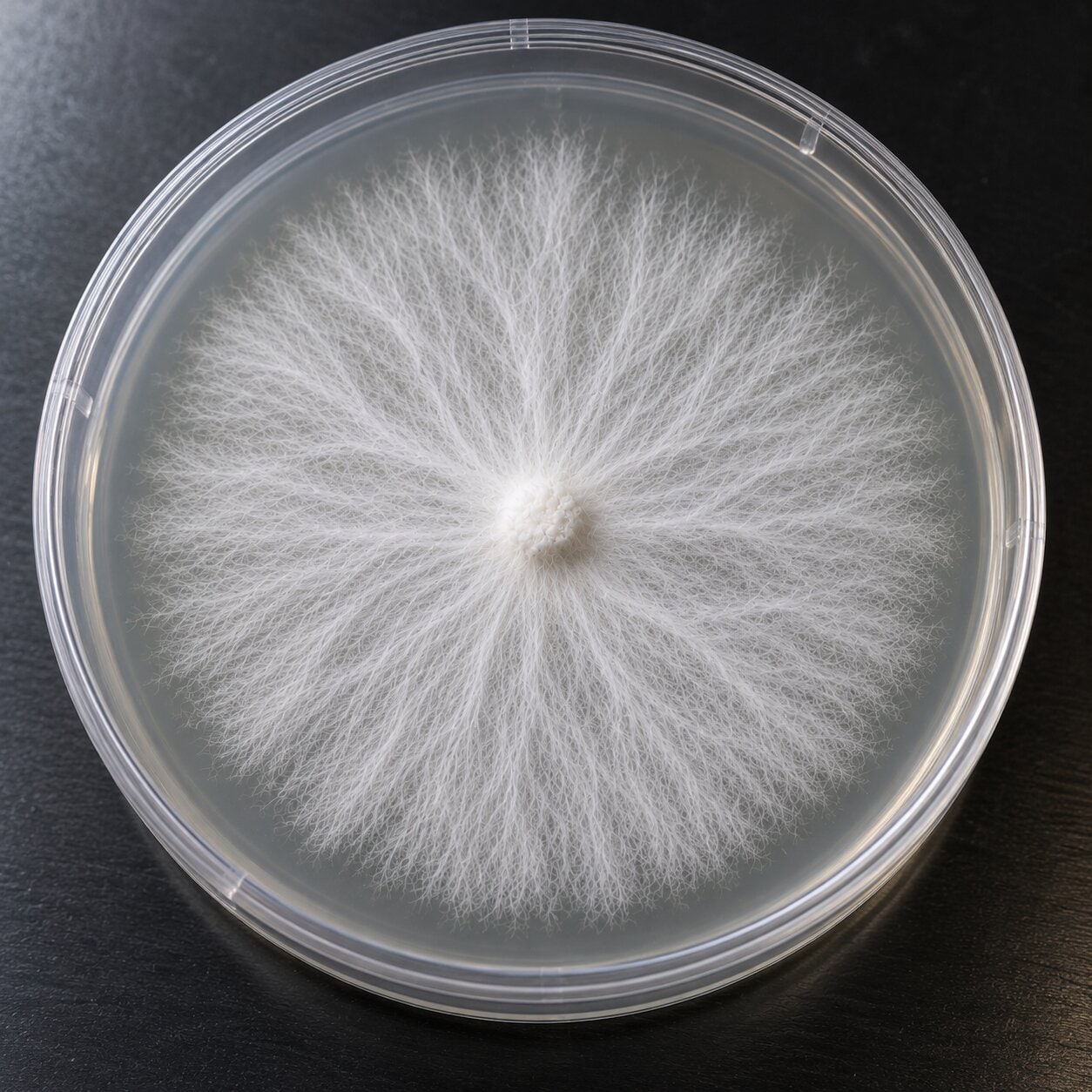
Pure mushroom culture — Petri dish
Pure GREEBZ mushroom cultures on a sterile agar nutrient medium. Available in a choice of cultures — list the ones you need in your request. Pure mushroom cultures grown under laboratory conditions on a sterile agar nutrient medium in Petri dishes. They are intended for further propagation of the culture, transfer to fresh nutrient medium and the production of grain spawn. One chosen culture = one Petri dish. Specifications - Format: pure culture on a sterile agar nutrient medium in a Petri dish - Producer: GREEBZ
Made by us
On request
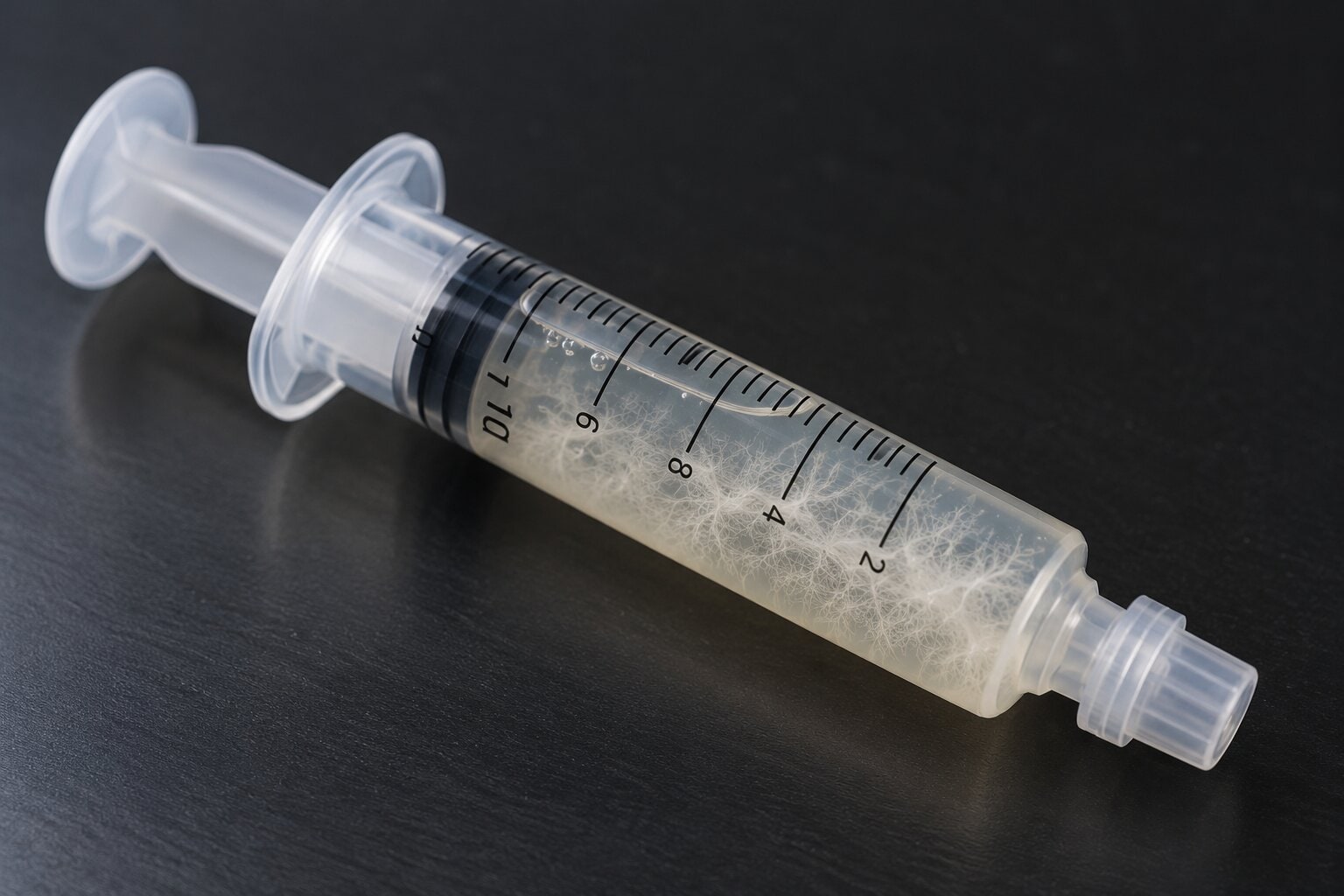
Liquid culture — 10 ml Luer Lock syringe
Pure GREEBZ mushroom liquid cultures. Available in a choice of cultures — list the ones you need in your request. The liquid culture is grown from a pure culture under sterile laboratory conditions. It is intended for inoculating grain substrate and producing grain spawn. Specifications - Format: liquid culture in a sterile Luer Lock syringe, 10 ml - Producer: GREEBZ
Made by us
On request
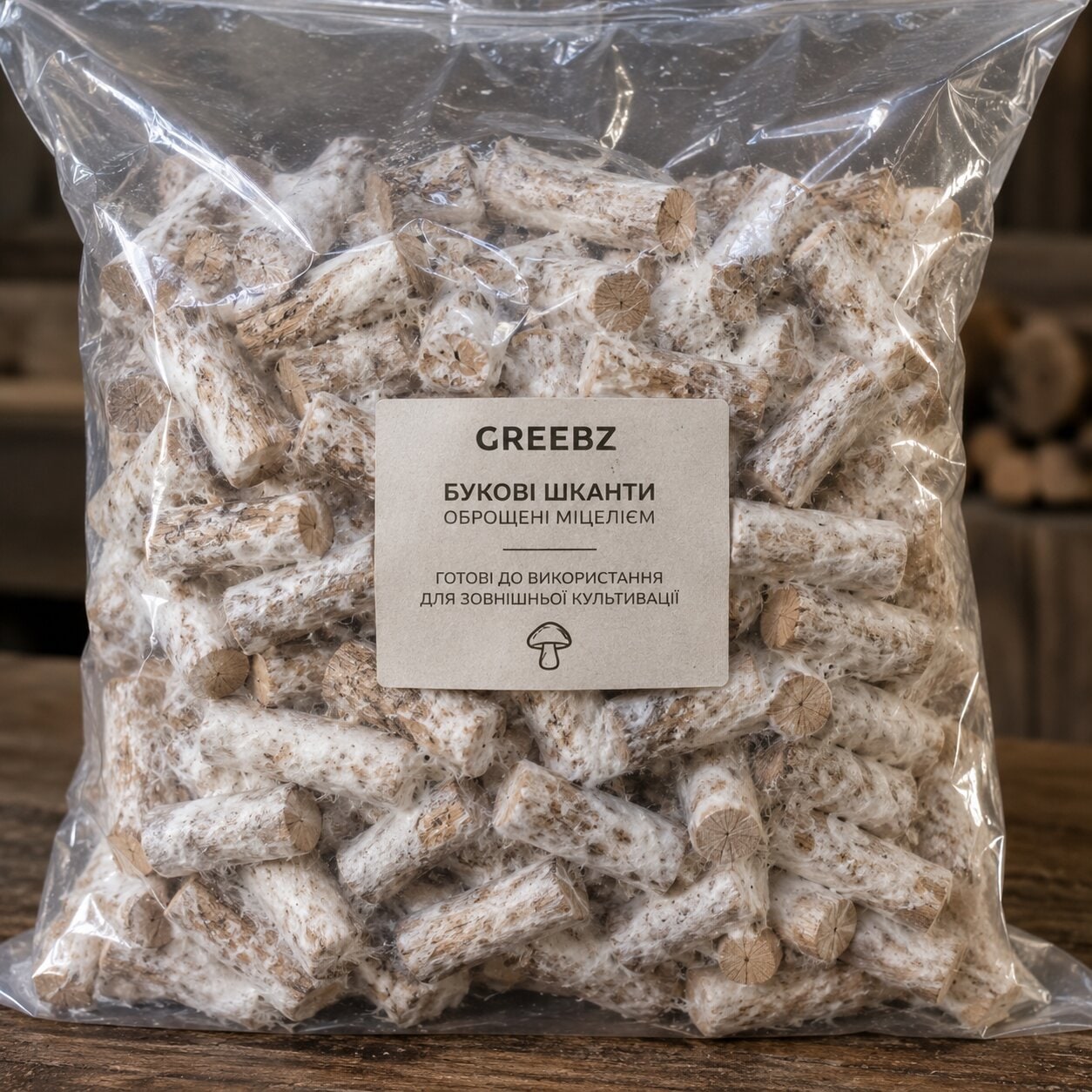
Beech plug spawn colonised with mycelium
Beech dowels colonised with the mycelium of the chosen culture. Ready to use for growing mushrooms outdoors on wood. Pack of 250–300 g. Available in a choice of cultures — list the ones you need in your request. One chosen culture = one pack of dowels. What's included - Beech dowels colonised with the mycelium of the chosen culture Important: wax and cotton wadding are not included. What you'll need for inoculation For working with the dowels we also recommend preparing: - Wax — to seal the holes after inserting the dowels. It closes the inoculation site and protects it from drying out and from the outside environment. - Cotton wadding — can be used for extra treatment and closing of the prepared holes. You will also need: - a drill; - a drill bit of the right diameter for the dowel; - a tool for inserting the dowels; - wood suitable for cultivation. Wax, cotton wadding and tools are bought separately. Specifications - Format: beech dowels colonised with the mycelium of the chosen culture - Pack weight: 250–300 g - Producer: GREEBZ
Made by us
On request
Other entries
Need help with your process?
Describe what's happening, even if you don't know the cause. We'll work it out together.