Choosing a grain supplier for spawn
Which grain to use for grain spawn, what to check in a batch, which documents to ask the supplier for and what to test: heavy metals, mycotoxins, EU and Ukrainian limits.
Author: Volodymyr Sobol
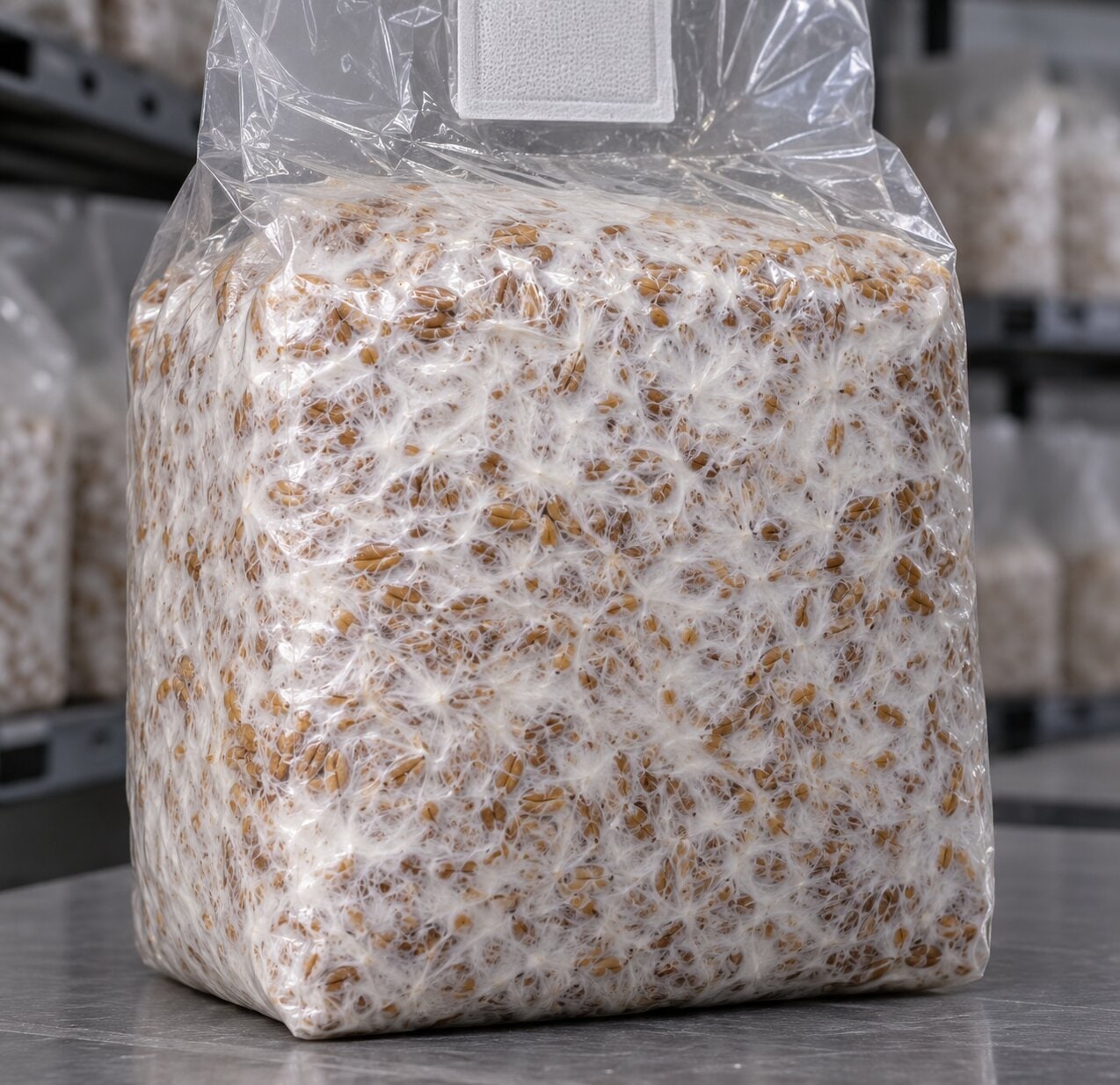
After the strain, grain is the second point where production can break down before it has even started. Mycelium is multiplied on grain and then used to inoculate the entire substrate, so a contaminated, chemically treated or inconsistent batch spoils everything that follows.
This article covers which grain is used for spawn, what to look for in a batch, which documents to ask the supplier for and which laboratory tests are worth doing.
Which grain is used
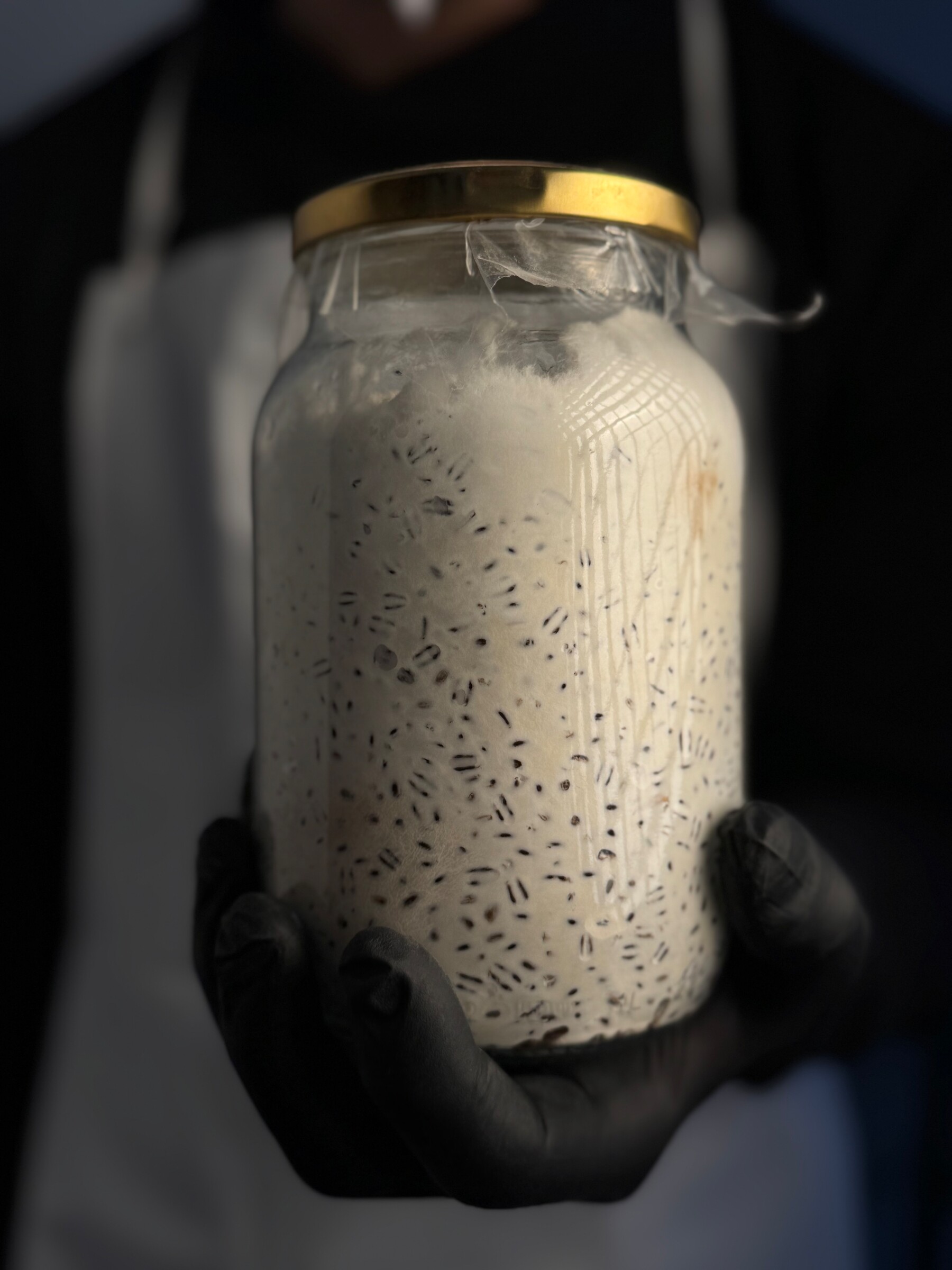
There is no single best grain for all species: in trials, sorghum, millet, maize and wheat each came out on top, depending on the mushroom species. For lion's mane (Hericium erinaceus) there is little data: in one study all five strains of the genus Hericium grew best on wheat grain; in another, rice with 1% chalk proved to be the best master spawn.
| Grain | What studies showed | What growers say |
|---|---|---|
| Rye | The base grain in the Pennsylvania State University recipe (Penn State) | Absorbs the most water and suits most species, but has a narrow hydration window: over-hydrated rye clumps and invites bacteria (FreshCap) |
| Wheat | The best mycelial growth of five Hericium strains among the cereal grains (Gonkhom et al., 2022) | Prepared like rye, but absorbs less water and cracks more easily; cheap and often cleaner than rye (FreshCap; growers' forums) |
| Millet | Pearl millet (bajra) gave the fastest colonisation in oyster mushroom and Hypsizygus ulmarius (Kaur et al., 2025; Aditya et al., 2022) | The smallest grain, which means the most inoculation points; buy it unhulled, because polished millet clumps (FreshCap; growers' forums) |
| Sorghum | The best for button mushroom, oyster mushroom and Calocybe indica (Gupta et al., 2016); the fastest colonisation in shiitake (Shanmugaraj et al., 2025). But in one study two oyster mushroom species did not grow on sorghum at all (Kaur et al., 2025) | Common among commercial producers, cheap as animal feed; its tough hull withstands sterilisation (FreshCap) |
| Oats | — | Cheap and does not clump; buy it in the hull, ideally triple-cleaned (growers' forums) |
| Maize | The fastest colonisation in oyster mushroom — 9.4 days; the highest yield of Pleurotus eous (Ufitinema et al., 2023; Negi et al., 2026). In shiitake — the slowest colonisation | Few inoculation points, slow colonisation, expensive (FreshCap) |
| Rice | The best master spawn of H. erinaceus: 99% rice grain and 1% CaCO₃ (Nguyen et al., 2018) | Brown rice overcooks, turns sticky and gets contaminated more often (FreshCap) |
| Barley | In a study with two oyster mushroom species, the mycelium did not grow on barley (Kaur et al., 2025) | Overcooks; a lot of broken grain (FreshCap) |
The classic way of preparing grain spawn is described, for example, in patent US6041544: dry grain (rye, millet, wheat, sorghum or another), water, chalk and, optionally, gypsum. Growers give the same advice that the study results point to: consistent, clean grain from a single supplier matters more than the search for the "ideal" type (Mycology Simplified).
What to look for in the grain itself
The first rule: never use treated seed grain. In the EU, seed treated with plant protection products for sowing may not be used even as feed (Regulation (EC) 767/2009, Annex III). On growers' forums people write that spores do not germinate on fungicide-treated grain, and that washing is unlikely to remove the seed treatment.
| Characteristic | Guideline | Source |
|---|---|---|
| Moisture | Wheat — no more than 14.0%, rye — 14.5%, maize — 15.0%. For long-term storage FAO gives 13% | DSTU 3768:2019, overview; DSTU 4522:2006; DSTU 4525:2006; FAO |
| Foreign matter | Rye — up to 2.0%, wheat — 1–3% depending on the class | the same DSTU standards |
| Ergot in rye | No more than 0.05% | DSTU 4522:2006 |
| Pests | Pest infestation of the grain is not allowed. Growers often find weevils in feed grain and link them to grain that was bagged too moist | DSTU; growers' forums |
| Broken grain | Damaged kernels release starch, slow the mycelium down and raise the risk of contamination | Growers' forums |
| Debris | Dust, chaff, twigs, small stones, admixtures of other grains; the most consistent grain is triple-cleaned | Growers' forums |
| Smell | A sour or sweetish fermented smell points to bacteria | Growers' forums |
| Grain age | Rye that had been stored for a year gave failed batches with yeast — the experience of one grower | Growers' forums |
Growers link bacterial contamination of grain spawn — greyish-brown slime, an unpleasant smell, wet-looking kernels — specifically to dirty grain: bacterial endospores survive sterilisation. According to an estimate by the mycologist Paul Stamets, cited by an autoclave manufacturer, a gram of rye carries about 300,000 bacteria and 12,000 fungi, and some batches considerably more (Priorclave).
Grain documents
Ask the supplier for two documents for the specific batch: one on quality and one on safety. The national standards for rye and maize explicitly provide for this: every batch is accompanied by a certificate on the content of pesticides, toxic elements, mycotoxins and radionuclides, and maize also by a quality statement or quality certificate (DSTU 4522:2006; DSTU 4525:2006).
Check four things in the documents:
- the crop, class and harvest year;
- moisture, foreign matter and pest infestation;
- the test date, and that the report refers to this particular batch;
- which safety parameters were measured and with what result.
Organic certificate
The word "organic" means nothing without a certificate. In Ukraine the certificate is issued by a certification body and is valid for 15 months, and the operator is entered in the State Register of Operators (State Service on Food Safety and Consumer Protection).
Check the certificate in four steps:
- Ask for a copy of the certificate — the buyer has the right to demand one (RBC-Ukraine, citing the State Service on Food Safety and Consumer Protection).
- Check the validity period and make sure the certificate lists the very crop you are buying.
- Find the supplier in the State Register of Operators — a file that can be downloaded from the website of the Ministry of Economy.
- Check the supplier in the certification body's database, for example in the client list of Organic Standard, and a certificate issued to the EU standard in the public TRACES search.
An organic certificate confirms the production method, not the test results for a specific batch, so it does not replace a laboratory report. In July 2026 a new law on organic production, No. 4921-IX, was published; most of its provisions will take effect three years later — on 21 July 2029 (Debet-Kredit).
Laboratory tests
Mushrooms accumulate heavy metals from the substrate, cadmium most strongly of all. In a market survey of nine species of cultivated mushrooms, the cadmium, lead and arsenic content of the fruiting bodies correlated significantly with their content in the substrate (Huang et al., 2015). The oyster mushroom has a high capacity to take up cadmium and zinc (Murtić et al., 2024), and in pink oyster the cadmium content rose from 1.8 to 23.8 mg/kg dry weight along with the contamination of the substrate (Murtić et al., 2025).
For grain spawn, which is added to the substrate at a spawn rate of 3–5% (Dong et al., 2026), the grain is only a small share of the mushroom's nutrition. But if the grain is the whole substrate — as in the production of mycelial biomass on grain — everything that is in the grain ends up in the finished product. In that case testing the batch is a must.
| Parameter | EU maximum level | Ukrainian maximum level |
|---|---|---|
| Lead, mg/kg | 0.20 | 0.20 |
| Cadmium, mg/kg | Rye, barley — 0.050; common wheat, oats, millet, sorghum, maize — 0.10; rice — 0.15; durum wheat — 0.18 | Cereals other than wheat and rice — 0.10; wheat and rice — 0.20 |
| Aflatoxin B1 / sum of aflatoxins, µg/kg | 2.0 / 4.0 | 2.0 / 4.0 |
| Ochratoxin A, µg/kg | 5.0 | 5.0 |
| Deoxynivalenol (DON), µg/kg | 1000; durum wheat and maize — 1500; oats with husk — 1750 | 1250; durum wheat, oats and maize — 1750 |
| Zearalenone, µg/kg | 100; maize — 350 | 100; maize — 350 |
| T-2 and HT-2 toxins, µg/kg | 50; maize and durum wheat — 100; barley — 150; oats with husk — 1250 | No numerical level set |
| Ergot sclerotia, g/kg | 0.2, except maize and rice | 0.5, except maize and rice |
The EU levels are for unprocessed grain and come from Regulation (EU) 2023/915 and its amendments (base text; DON, 2024/1022; T-2 and HT-2, 2024/1038; ergot, 2024/1808). The Ukrainian levels come from the Regulation on maximum levels of certain contaminants in foodstuffs (Ministry of Health Order No. 368 as amended by Order No. 1238 of 22 May 2020).
Three notes on the table:
- Nitrates. Neither the EU nor Ukraine has a maximum level of nitrates for grain: the limits apply to vegetables and baby food (Regulation (EU) 1258/2011). The test can be done, but there is no limit for grain to compare the result with.
- Arsenic and mercury. The Ukrainian regulation has no line for grain; there is only inorganic arsenic for rice. DSTU 4522:2006 gives older limits for food-grade rye: arsenic — 0.2 mg/kg, mercury — 0.03 mg/kg.
- Pesticides. In the EU, maximum residue levels are set for each substance separately, and for substances not listed a default level of 0.01 mg/kg applies (European Commission).
How to compare suppliers
On forums, bulk feed grain is named as the cheapest source, but it is also the one linked to most problems: debris, pests and inconsistency between batches.
| Grain source | Advantages | Risks |
|---|---|---|
| Bulk feed grain | The lowest price | Debris, weevils; growers on forums disagree about fungicides in feed rye |
| Seed grain | Usually cleaner than feed grain | May be treated with fungicides and be almost unusable for some species (growers' forums) |
| Organic food-grade grain | Spawn producers advise buying organic where possible, because conventional grain may be treated with fungicides (FreshCap; Circular Harvest) | Higher price; the certificate has to be checked |
| Directly from a farmers' cooperative | Local grain of known origin; this is how one American spawn producer buys (Mossy Creek) | Quality depends on the harvest and the storage conditions |
The sources offer no ready-made protocol for checking a new batch; below is a minimum put together from individual growers' tips.
- Inspect and smell the dry grain: debris, broken kernels, pests, off odours.
- Rinse a sample two or three times and see how much chaff and dust floats to the top (Rhizofunga).
- Hydrate a trial portion. After hydration, a paper towel pressed against the grain should stay free of wet spots, and the kernels should not stick together (Rhizofunga).
- Sterilise and inoculate a trial batch of jars with your own proven culture. Record the share of contaminated jars and the colonisation time.
- Compare with the previous batch, and only then order a large volume.
Lion's mane has a peculiarity: its mycelium on grain is thin and barely visible, so a fully colonised jar can look uncolonised (Field & Forest; growers' forums).
Step by step
- Choose the type of grain for your mushroom and your strain: compare two or three options in trial batches.
- Use food-grade or feed grain, never treated seed grain.
- Ask for documents for the batch: on quality and on the content of pesticides, toxic elements and mycotoxins.
- If the grain is declared organic, check the certificate in the register and with the certification body.
- Assess the grain itself: moisture, debris, broken kernels, pests, smell.
- Order a laboratory test for lead, cadmium and mycotoxins, especially if the grain goes into the finished product.
- Run a trial batch of jars and record the share of contaminated jars and the colonisation time.
- Work with a single supplier and repeat the checks with every new harvest.
Sources
Scientific publications:
- Gonkhom D. et al. (2022). Optimal conditions for mycelial growth of medicinal mushrooms belonging to the genus Hericium. Mycological Progress, 21, 82.
- Nguyen B. T. et al. (2018). Identification of Optimal Culture Conditions for Mycelial Growth and Cultivation of Monkey Head Mushrooms (Hericium erinaceus). Vietnam Journal of Agricultural Sciences, 1(2), 117–126.
- Kaur M., Gupta P. K., Kousar N., Mishra S. K. (2025). Screening of different cereals grains as substrates for spawn development of Pleurotus eous and Pleurotus florida. International Journal of Advanced Biochemistry Research, 9(5), 903–907.
- Aditya et al. (2022). Evaluation of Different Grain Substrates for Spawn Production and Yield Performance of Blue Oyster Mushroom. Indian Journal of Ecology. DOI: 10.55362/IJE/2022/3838.
- Gupta S., Kumar S., Gupta M., Mantoo A., Singh R. (2016). Evaluation of different grains and supplements for production of quality spawn of different mushrooms. Indian Phytopathology, 69, 706–711.
- Shanmugaraj C. et al. (2025). Optimizing Spawn Production and Yield of Shiitake Mushroom (Lentinula edodes). International Journal of Economic Plants, 12(2), 1–7.
- Ufitinema B. et al. (2023). Mycelial growth of oyster mushroom in spawn made using different cereal grains, sawdust and vermiculite as substrate. Mushroom Research, 32(1), 35–40.
- Negi V. et al. (2026). Evaluation of various spawn grains and locally available substrates for the production of Pleurotus eous. Applied Biological Research, 28(1), 121–129.
- Dong H. T. et al. (2026). Mushroom Spawn and Its Effects on Mushroom Growth and Development: A Systematic Review. Agronomy, 16(3), 391.
- Huang Q.-Q. et al. (2015). Market Survey and Risk Assessment for Trace Metals in Edible Fungi and the Substrate Role in Accumulation of Heavy Metals. Journal of Food Science, 80(7).
- Murtić S. et al. (2024). Heavy metals accumulation in the oyster mushroom basidiomes cultivated on different substrates. Acta Mycologica, 59.
- Murtić S. et al. (2025). Evaluation of cadmium accumulation in pink oyster mushrooms cultivated on the cadmium contaminated substrates. Czech Journal of Food Sciences, 43(4), 283–290.
Regulations and reference pages:
- Regulation (EU) 2023/915 on maximum levels for certain contaminants in food; amendments 2024/1022, 2024/1038, 2024/1808.
- Регламент максимальних рівнів окремих забруднюючих речовин у харчових продуктах [Regulation on maximum levels of certain contaminants in foodstuffs] — Order of the Ministry of Health of Ukraine No. 368 as amended by Order No. 1238 of 22 May 2020.
- Regulation (EC) 767/2009, Annex III — ban on treated seed in feed.
- Regulation (EU) 1258/2011 — nitrates.
- European Commission: legislation on pesticide residues.
- ДСТУ 4522:2006 "Жито" [DSTU 4522:2006 Rye]; ДСТУ 4525:2006 "Кукурудза" [DSTU 4525:2006 Maize]; огляд ДСТУ 3768:2019 "Пшениця" [overview of DSTU 3768:2019 Wheat].
- FAO: safe grain moisture for storage.
- Держпродспоживслужба: порядок сертифікації органічного виробництва [State Service on Food Safety and Consumer Protection: organic certification procedure]; registers on the Ministry of Economy website; Organic Standard; TRACES.
Websites of spawn producers and practising growers:
- FreshCap. Different types of grain spawn.
- Penn State. Spawn preparation.
- Rhizofunga. How to make grain spawn.
- Priorclave. Grain sterilisation for mushroom cultivation.
- Circular Harvest. Crafting exceptional grain spawn.
- Mycology Simplified. Millet vs milo vs corn.
- Field & Forest. Lion's mane millet grain spawn; Mossy Creek. FAQ.
- Patent US6041544.
- Amateur mushroom growers' forums: discussions of grain choice, fungicides, pests and bacterial contamination, marked in the text as "growers' forums".
Related mushrooms
Materials for growing
Master grain spawn — 5 kg bag
GREEBZ master grain spawn of the chosen culture. A pure culture on sterile grain substrate. Available in a choice of cultures — list the ones you need in your request. Master spawn is intended for further propagation and the production of production spawn. Grown from a pure culture under sterile laboratory conditions. Specifications - Format: grain spawn in a filter bag (grow bag), 5 kg - Substrate: sterile grain - Producer: GREEBZ
Made by us
On request
Pure mushroom culture — Petri dish
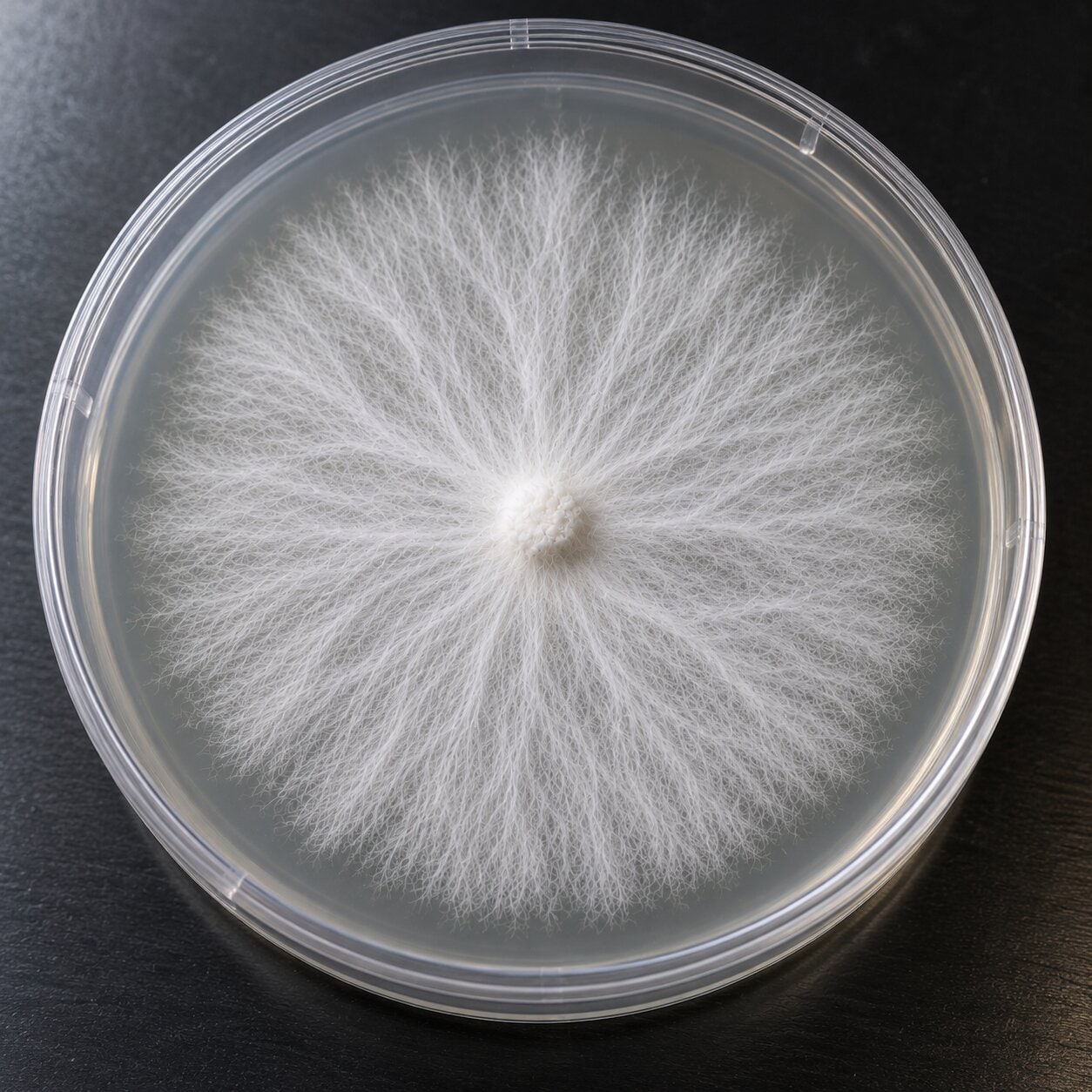
Pure GREEBZ mushroom cultures on a sterile agar nutrient medium. Available in a choice of cultures — list the ones you need in your request. Pure mushroom cultures grown under laboratory conditions on a sterile agar nutrient medium in Petri dishes. They are intended for further propagation of the culture, transfer to fresh nutrient medium and the production of grain spawn. One chosen culture = one Petri dish. Specifications - Format: pure culture on a sterile agar nutrient medium in a Petri dish - Producer: GREEBZ
Made by us
On request
Liquid culture — 10 ml Luer Lock syringe
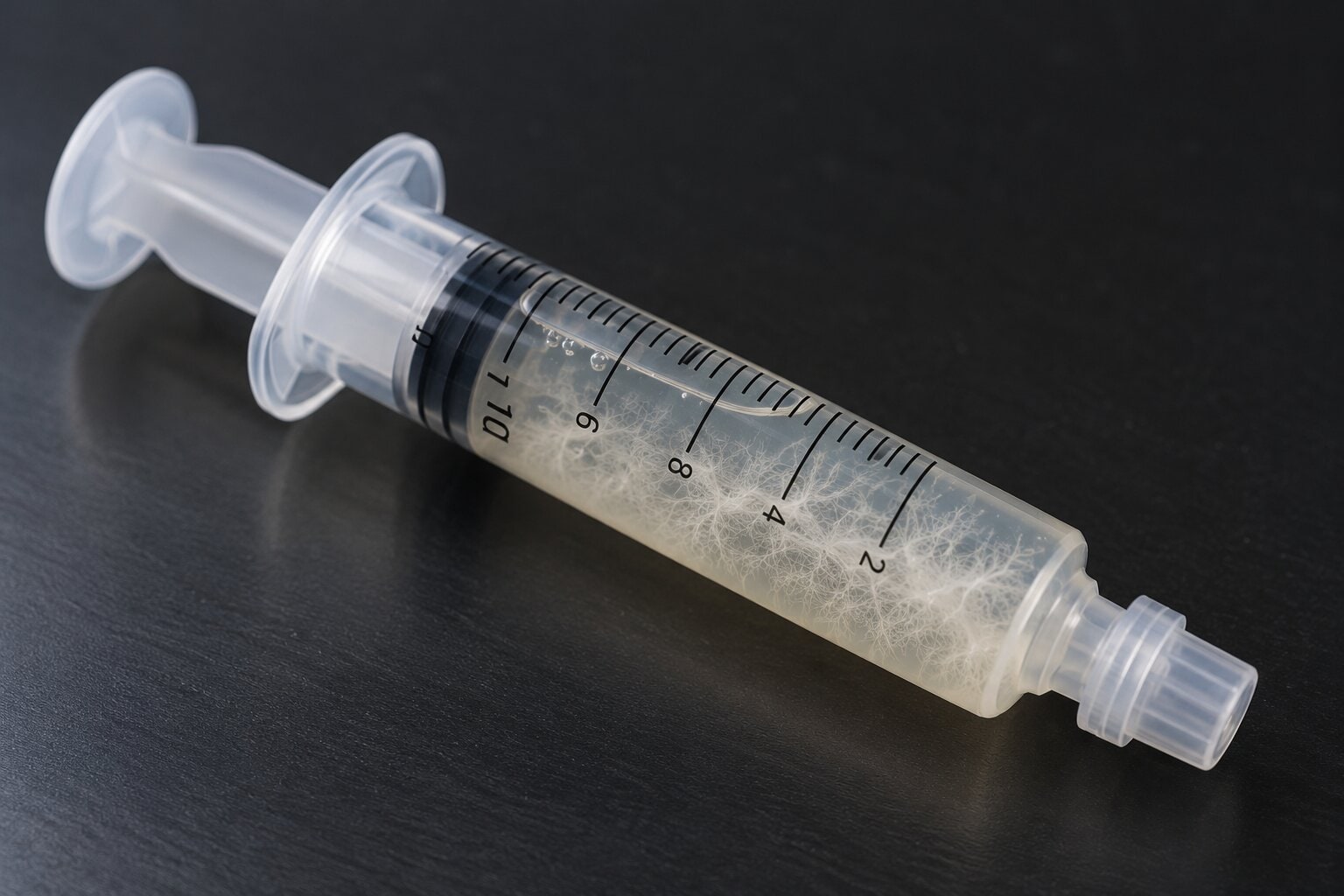
Pure GREEBZ mushroom liquid cultures. Available in a choice of cultures — list the ones you need in your request. The liquid culture is grown from a pure culture under sterile laboratory conditions. It is intended for inoculating grain substrate and producing grain spawn. Specifications - Format: liquid culture in a sterile Luer Lock syringe, 10 ml - Producer: GREEBZ
Made by us
On request
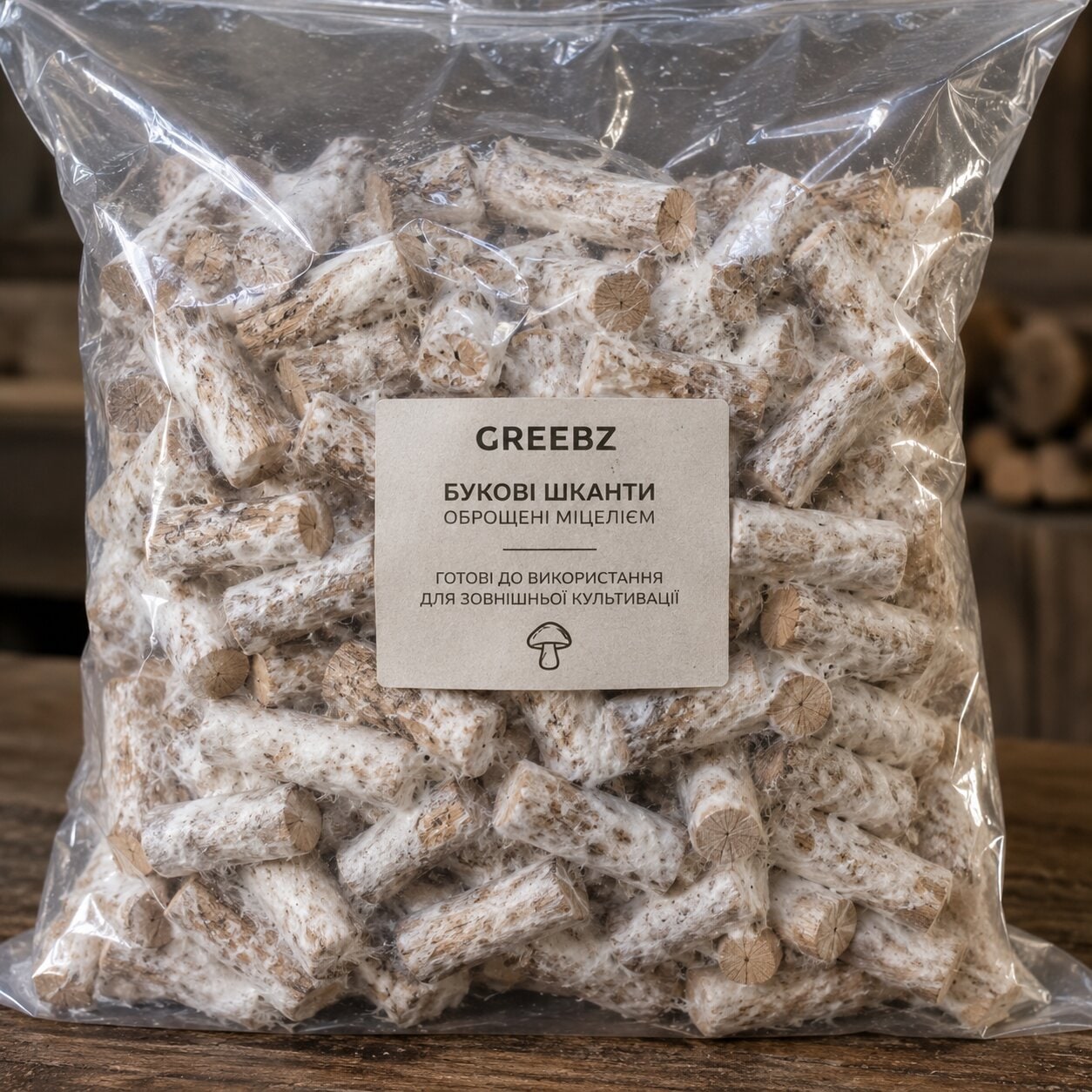
Beech plug spawn colonised with mycelium
Beech dowels colonised with the mycelium of the chosen culture. Ready to use for growing mushrooms outdoors on wood. Pack of 250–300 g. Available in a choice of cultures — list the ones you need in your request. One chosen culture = one pack of dowels. What's included - Beech dowels colonised with the mycelium of the chosen culture Important: wax and cotton wadding are not included. What you'll need for inoculation For working with the dowels we also recommend preparing: - Wax — to seal the holes after inserting the dowels. It closes the inoculation site and protects it from drying out and from the outside environment. - Cotton wadding — can be used for extra treatment and closing of the prepared holes. You will also need: - a drill; - a drill bit of the right diameter for the dowel; - a tool for inserting the dowels; - wood suitable for cultivation. Wax, cotton wadding and tools are bought separately. Specifications - Format: beech dowels colonised with the mycelium of the chosen culture - Pack weight: 250–300 g - Producer: GREEBZ
Made by us
On request
Other entries
Need help with your process?
Describe what's happening, even if you don't know the cause. We'll work it out together.