Pink oyster
Pleurotus djamor
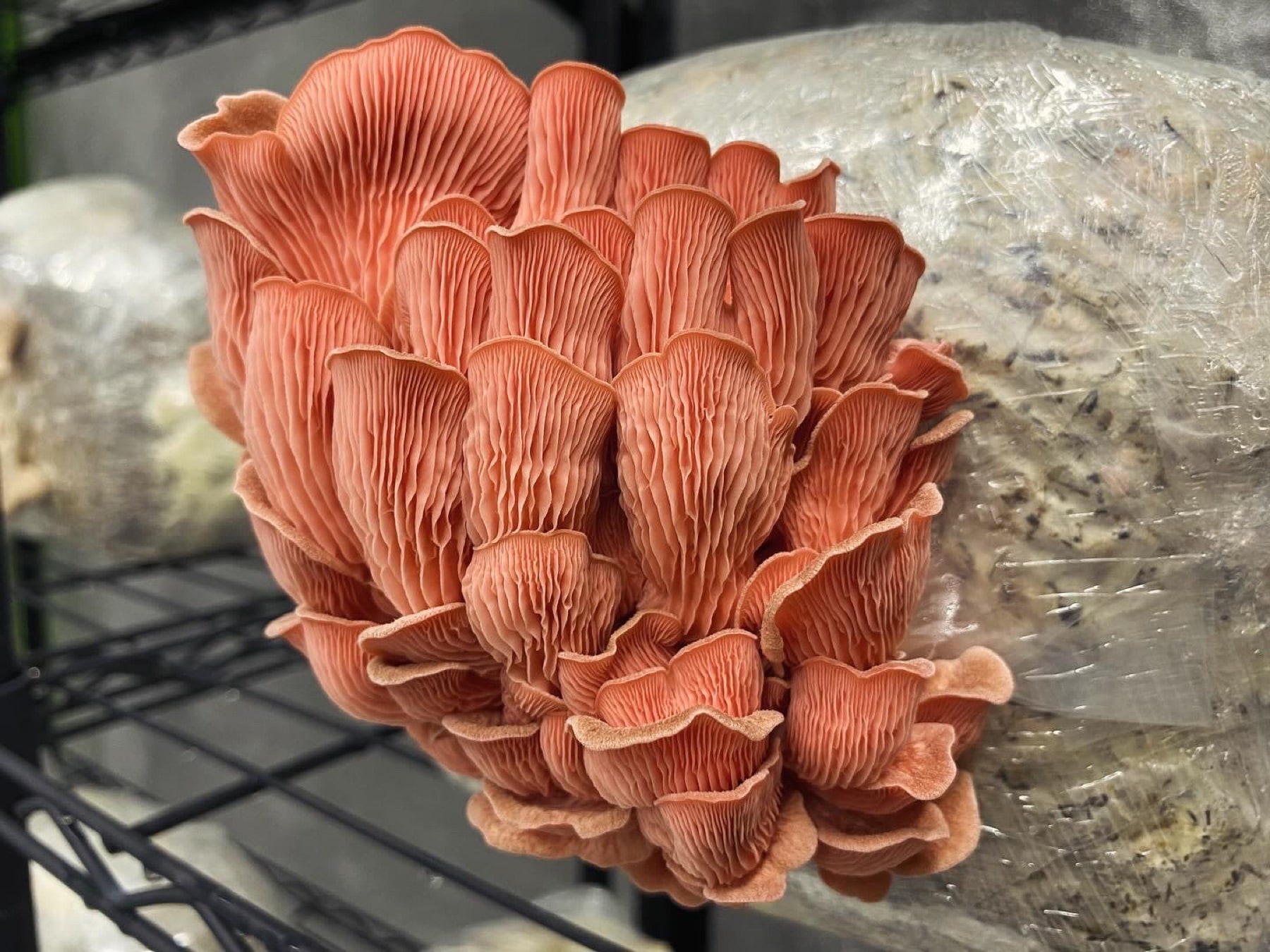
A warmth-loving oyster species with characteristic pink fruiting bodies. It colonises lignocellulosic substrates quickly, and after harvest the fruiting bodies lose their market appearance relatively fast.
Difficulty: Beginner
Why it interests me
What interests me about the pink oyster is how clearly growing conditions show up in the appearance of the fruiting bodies. It's a fast, warmth-loving species that shows well how the culture reacts to temperature, air exchange and the state of the substrate. And the bright colour makes the result especially visible.
How we work with it
01
Pure culture
02
grain spawn
03
prepared substrate block
04
colonisation
05
fruiting
- Culture
- We start with a pure culture on an agar nutrient medium. The way it is inoculated further depends on the species and the cultivation technology.
Cultivation guidelines
- Substrate
- Prepared straw, hardwood sawdust or another lignocellulosic substrate.
- Incubation
- 25–30 °C · no intense light · until the substrate is fully colonised.
- Fruiting
- 22–28 °C · RH 85–95% · diffused light · regular air exchange; avoid significant CO₂ build-up while fruiting bodies form.
- On logs
- Wood species: poplar, willow
These are reference guidelines for Pleurotus djamor, summarised from specialist sources. Actual parameters may vary with the strain, substrate and equipment.
Materials for growing
Made to order: when you request a quote, mention “Pink oyster”.
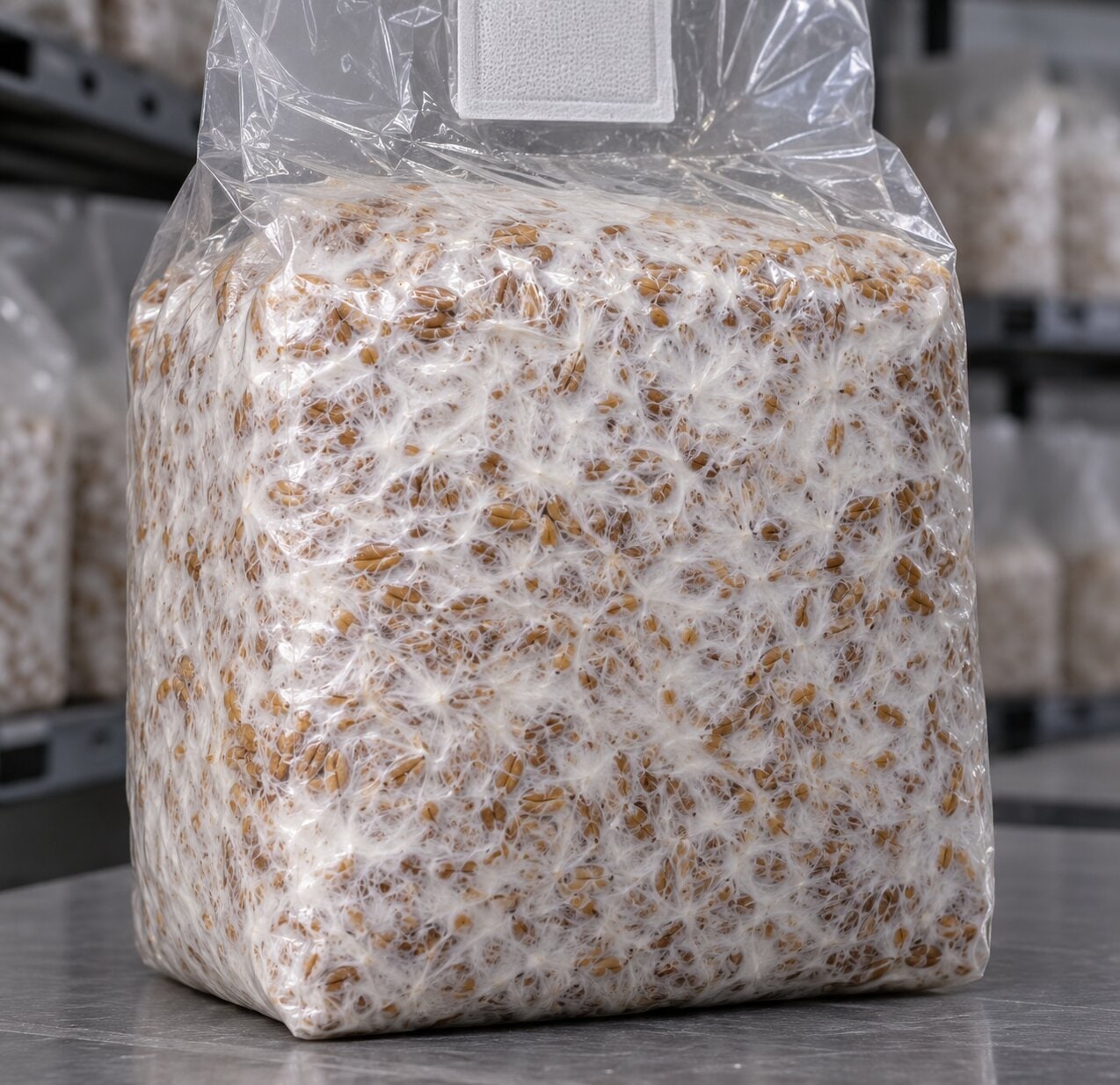
Master grain spawn — 5 kg bag
GREEBZ master grain spawn of the chosen culture. A pure culture on sterile grain substrate. Available in a choice of cultures — list the ones you need in your request. Master spawn is intended for further propagation and the production of production spawn. Grown from a pure culture under sterile laboratory conditions. Specifications - Format: grain spawn in a filter bag (grow bag), 5 kg - Substrate: sterile grain - Producer: GREEBZ
Made by us
On request
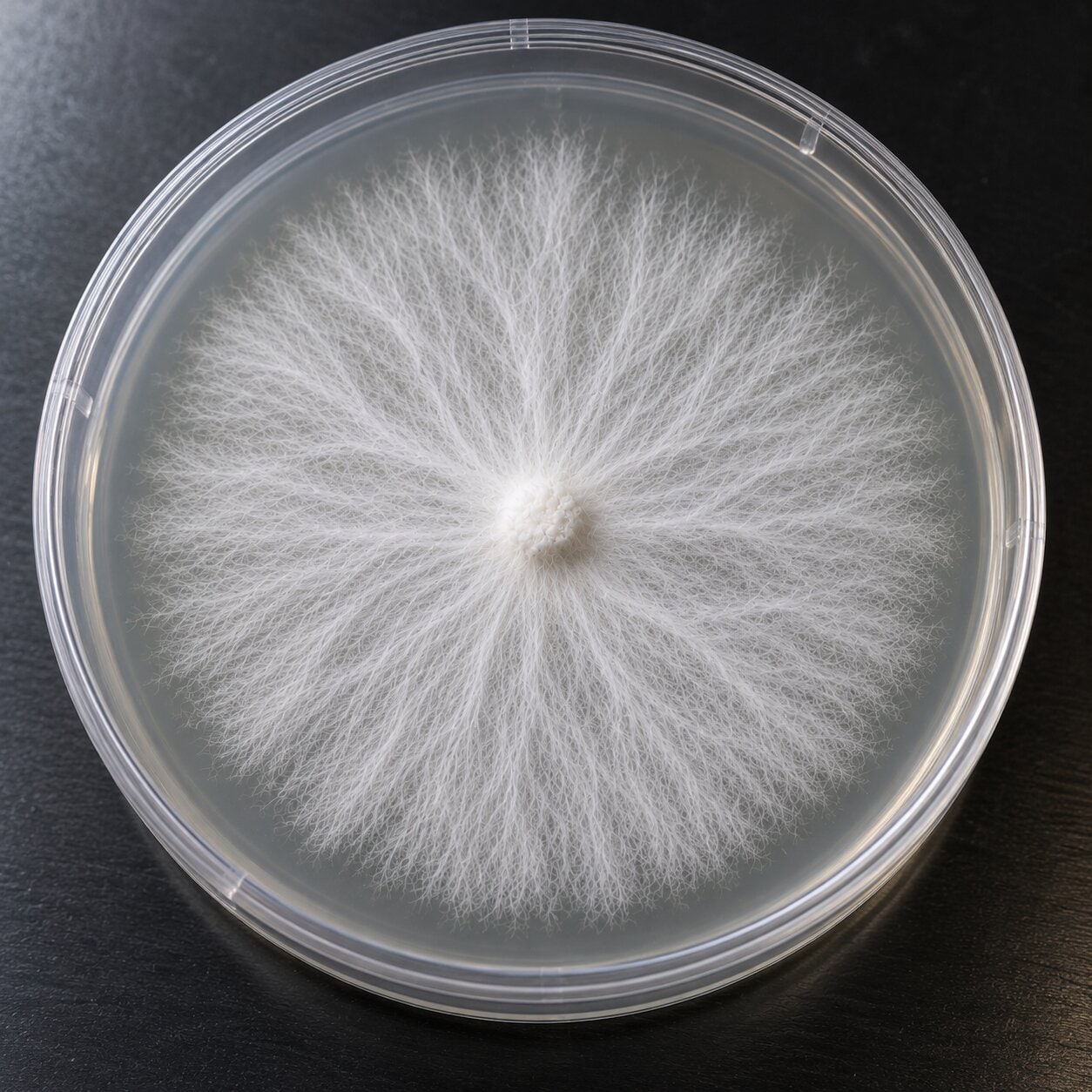
Pure mushroom culture — Petri dish
Pure GREEBZ mushroom cultures on a sterile agar nutrient medium. Available in a choice of cultures — list the ones you need in your request. Pure mushroom cultures grown under laboratory conditions on a sterile agar nutrient medium in Petri dishes. They are intended for further propagation of the culture, transfer to fresh nutrient medium and the production of grain spawn. One chosen culture = one Petri dish. Specifications - Format: pure culture on a sterile agar nutrient medium in a Petri dish - Producer: GREEBZ
Made by us
On request
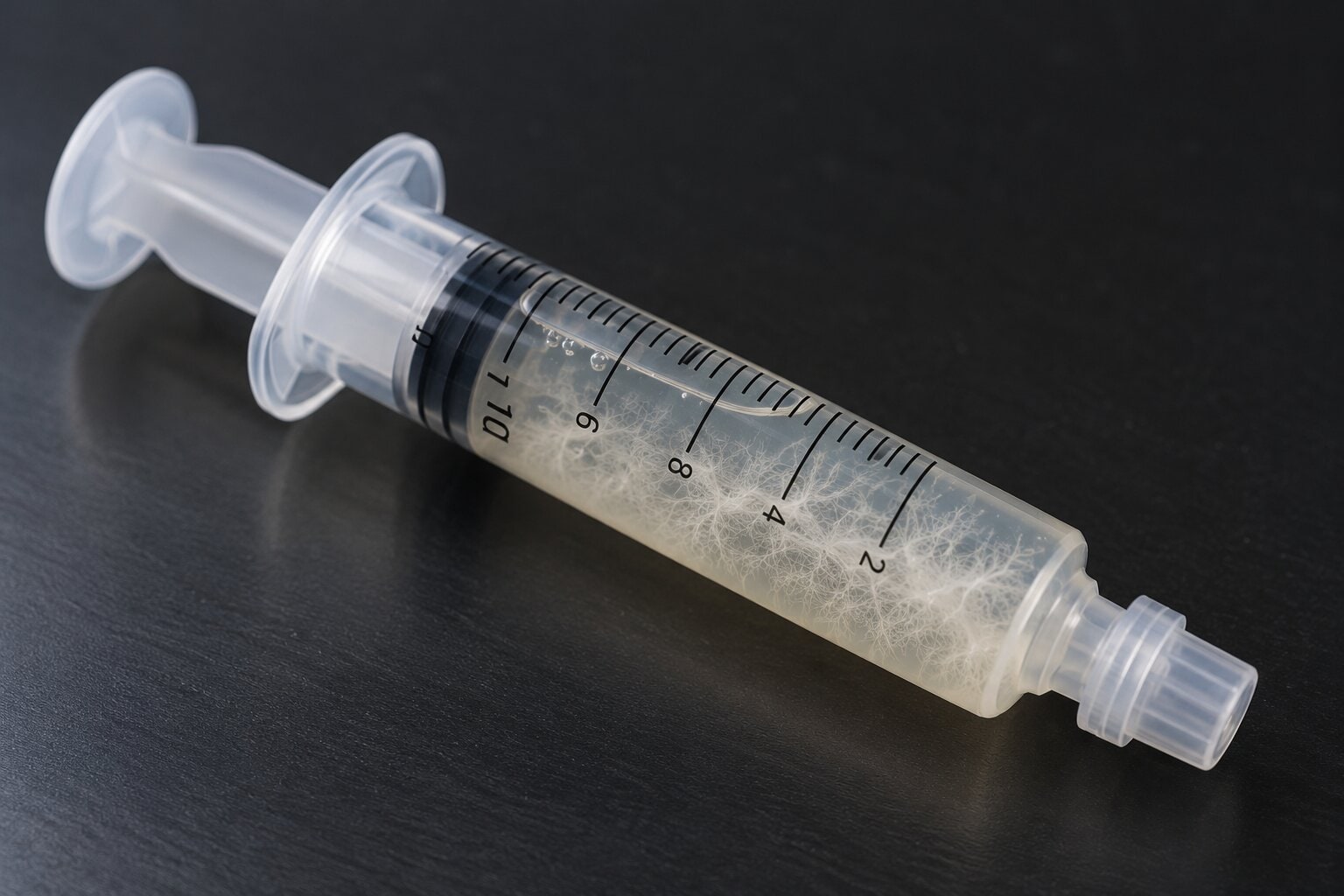
Liquid culture — 10 ml Luer Lock syringe
Pure GREEBZ mushroom liquid cultures. Available in a choice of cultures — list the ones you need in your request. The liquid culture is grown from a pure culture under sterile laboratory conditions. It is intended for inoculating grain substrate and producing grain spawn. Specifications - Format: liquid culture in a sterile Luer Lock syringe, 10 ml - Producer: GREEBZ
Made by us
On request
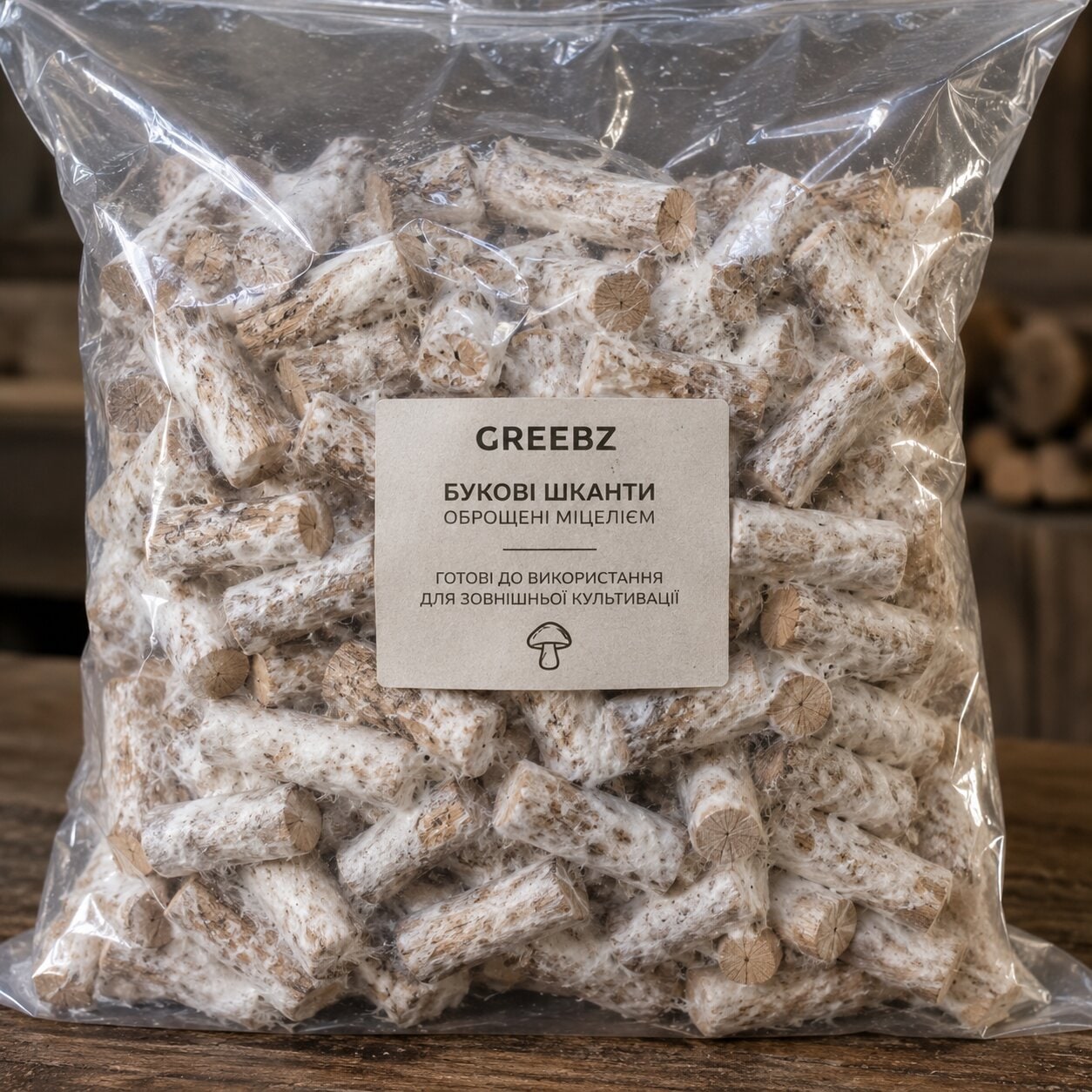
Beech plug spawn colonised with mycelium
Beech dowels colonised with the mycelium of the chosen culture. Ready to use for growing mushrooms outdoors on wood. Pack of 250–300 g. Available in a choice of cultures — list the ones you need in your request. One chosen culture = one pack of dowels. What's included - Beech dowels colonised with the mycelium of the chosen culture Important: wax and cotton wadding are not included. What you'll need for inoculation For working with the dowels we also recommend preparing: - Wax — to seal the holes after inserting the dowels. It closes the inoculation site and protects it from drying out and from the outside environment. - Cotton wadding — can be used for extra treatment and closing of the prepared holes. You will also need: - a drill; - a drill bit of the right diameter for the dowel; - a tool for inserting the dowels; - wood suitable for cultivation. Wax, cotton wadding and tools are bought separately. Specifications - Format: beech dowels colonised with the mycelium of the chosen culture - Pack weight: 250–300 g - Producer: GREEBZ
Made by us
On request
In the lab journal
Cultivation
Harvesting mushrooms: at what stage to pick and what to do right after
Signs of maturity in oyster mushrooms, shiitake, lion's mane, reishi and cordyceps, how harvest stage affects composition, how to cool fresh mushrooms and why a mask is needed for oyster harvests.
Cultivation
Fruiting and induction: when and how to signal the mushroom
What switches mycelium from growth to fruiting: temperature, humidity, CO₂ and light. How oyster mushrooms, shiitake, king oyster, pioppino, lion's mane, reishi and cordyceps move to fruiting.
Want to grow pink oyster yourself but don't know where to start? Write to me — I'll help you choose a culture or material for your way of growing.